
Catalogue Search | MBRL


Are you sure you want to remove the book from the shelf?

{{itemTitle}}
67
result(s) for
"Adjouadi, Malek"
Sort by:

Effects of Clouds and Shadows on the Use of Independent Component Analysis for Feature Extraction
One of the persistent challenges in multispectral image analysis is the interference caused by dense cloud cover and its resulting shadows, which can significantly obscure surface features. This becomes especially problematic when attempting to monitor surface changes over time using satellite imagery, such as from Landsat-8. In this study, rather than simply masking visual obstructions, we aimed to investigate the role and influence of clouds within the spectral data itself. To achieve this, we employed Independent Component Analysis (ICA), a statistical method capable of decomposing mixed signals into independent source components. By applying ICA to selected Landsat-8 bands and analyzing each component individually, we assessed the extent to which cloud signatures are entangled with surface data. This process revealed that clouds contribute to multiple ICA components simultaneously, indicating their broad spectral influence. With this influence on multiple wavebands, we managed to configure a set of components that could perfectly delineate the extent and location of clouds. Moreover, because Landsat-8 lacks cloud-penetrating wavebands, such as those in the microwave range (e.g., SAR), the surface information beneath dense cloud cover is not captured at all, making it physically impossible for ICA to recover what is not sensed in the first place. Despite these limitations, ICA proved effective in isolating and delineating cloud structures, allowing us to selectively suppress them in reconstructed images. Additionally, the technique successfully highlighted features such as water bodies, vegetation, and color-based land cover differences. These findings suggest that while ICA is a powerful tool for signal separation and cloud-related artifact suppression, its performance is ultimately constrained by the spectral and spatial properties of the input data. Future improvements could be realized by integrating data from complementary sensors—especially those operating in cloud-penetrating wavelengths—or by using higher spectral resolution imagery with narrower bands.
Journal Article

A distributed multitask multimodal approach for the prediction of Alzheimer’s disease in a longitudinal study
Predicting the progression of Alzheimer’s Disease (AD) has been held back for decades due to the lack of sufficient longitudinal data required for the development of novel machine learning algorithms. This study proposes a novel machine learning algorithm for predicting the progression of Alzheimer’s disease using a distributed multimodal, multitask learning method. More specifically, each individual task is defined as a regression model, which predicts cognitive scores at a single time point. Since the prediction tasks for multiple intervals are related to each other in chronological order, multitask regression models have been developed to track the relationship between subsequent tasks. Furthermore, since subjects have various combinations of recording modalities together with other genetic, neuropsychological and demographic risk factors, special attention is given to the fact that each modality may experience a specific sparsity pattern. The model is hence generalized by exploiting multiple individual multitask regression coefficient matrices for each modality. The outcome for each independent modality-specific learner is then integrated with complementary information, known as risk factor parameters, revealing the most prevalent trends of the multimodal data. This new feature space is then used as input to the gradient boosting kernel in search for a more accurate prediction. This proposed model not only captures the complex relationships between the different feature representations, but it also ignores any unrelated information which might skew the regression coefficients. Comparative assessments are made between the performance of the proposed method with several other well-established methods using different multimodal platforms. The results indicate that by capturing the interrelatedness between the different modalities and extracting only relevant information in the data, even in an incomplete longitudinal dataset, will yield minimized prediction errors.
Journal Article

Benchmarking Dataset of Signals from a Commercial MEMS Magnetic–Angular Rate–Gravity (MARG) Sensor Manipulated in Regions with and without Geomagnetic Distortion
In this paper, we present the FIU MARG Dataset (FIUMARGDB) of signals from the tri-axial accelerometer, gyroscope, and magnetometer contained in a low-cost miniature magnetic–angular rate–gravity (MARG) sensor module (also known as magnetic inertial measurement unit, MIMU) for the evaluation of MARG orientation estimation algorithms. The dataset contains 30 files resulting from different volunteer subjects executing manipulations of the MARG in areas with and without magnetic distortion. Each file also contains reference (“ground truth”) MARG orientations (as quaternions) determined by an optical motion capture system during the recording of the MARG signals. The creation of FIUMARGDB responds to the increasing need for the objective comparison of the performance of MARG orientation estimation algorithms, using the same inputs (accelerometer, gyroscope, and magnetometer signals) recorded under varied circumstances, as MARG modules hold great promise for human motion tracking applications. This dataset specifically addresses the need to study and manage the degradation of orientation estimates that occur when MARGs operate in regions with known magnetic field distortions. To our knowledge, no other dataset with these characteristics is currently available. FIUMARGDB can be accessed through the URL indicated in the conclusions section. It is our hope that the availability of this dataset will lead to the development of orientation estimation algorithms that are more resilient to magnetic distortions, for the benefit of fields as diverse as human–computer interaction, kinesiology, motor rehabilitation, etc.
Journal Article

A transfer learning approach based on gradient boosting machine for diagnosis of Alzheimer’s disease
Early detection of Alzheimer's disease (AD) during the Mild Cognitive Impairment (MCI) could enable effective intervention to slow down the progression of the disease. Computer-aided diagnosis of AD relies on a sufficient amount of biomarker data. When this requirement is not fulfilled, transfer learning can be used to transfer knowledge from a source domain with more amount of labeled data than the desired target domain. In this study, an instance-based transfer learning framework is presented based on the gradient boosting machine (GBM). In GBM, a sequence of base learners is built, and each learner focuses on the errors (residuals) of the previous learner. In our transfer learning version of GBM (TrGB) a weighting mechanism based on the residuals of the base learners is defined for the source instances. Consequently, instances with different distribution than the target data will have a lower impact on the target learner. The target data in this study was obtained from the Mount Sinai dataset which is collected and processed in a collaborative 5-year project at the Mount Sinai medical center. The Alzheimer's Disease neuroimaging initiative (ADNI) dataset was used as the source domain. The experimental results showed that the proposed TrGB algorithm could improve the classification accuracy by 1.5% and 4.5% for CN vs. MCI and multiclass classifications, respectively, compared to the conventional methods. Also, using the TrGB model and transferred knowledge from the CN vs. AD classification of the source domain, the average score of early MCI vs. late MCI classification improved by 5%.
Journal Article
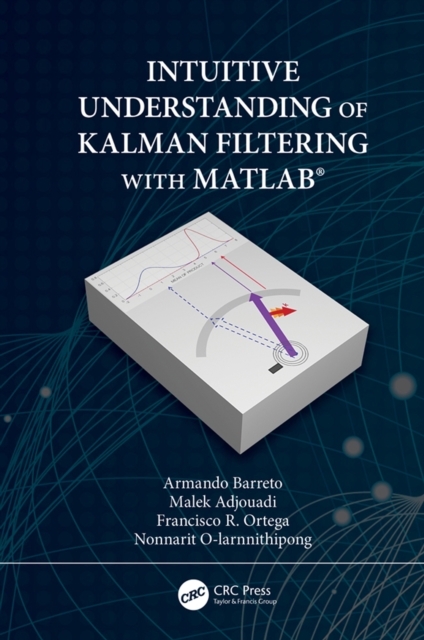
Intuitive Understanding of Kalman Filtering with MATLAB
The emergence of affordable micro sensors, such as MEMS Inertial Measurement Systems, which are being applied in embedded systems and Internet-of-Things devices, has brought techniques such as Kalman Filtering, capable of combining information from multiple sensors or sources, to the interest of students and hobbyists. This will book will develop just the necessary background concepts, helping a much wider audience of readers develop an understanding and intuition that will enable them to follow the explanation for the Kalman Filtering algorithm.
Key Features:
Provides intuitive understanding of Kalman Filtering approach
Succinct overview of concepts to enhance accessibility and appeal to wide audience
Interactive learning techniques with code examples
eBook

Robust Orientation Estimation from MEMS Magnetic, Angular Rate, and Gravity (MARG) Modules for Human–Computer Interaction
While the availability of low-cost micro electro-mechanical systems (MEMS) accelerometers, gyroscopes, and magnetometers initially seemed to promise the possibility of using them to easily track the position and orientation of virtually any object that they could be attached to, this promise has not yet been fulfilled. Navigation-grade accelerometers and gyroscopes have long been the basis for tracking ships and aircraft, but the signals from low-cost MEMS accelerometers and gyroscopes are still orders of magnitude poorer in quality (e.g., bias stability). Therefore, the applications of MEMS inertial measurement units (IMUs), containing tri-axial accelerometers and gyroscopes, are currently not as extensive as they were expected to be. Even the addition of MEMS tri-axial magnetometers, to conform magnetic, angular rate, and gravity (MARG) sensor modules, has not fully overcome the challenges involved in using these modules for long-term orientation estimation, which would be of great benefit for the tracking of human–computer hand-held controllers or tracking of Internet-Of-Things (IoT) devices. Here, we present an algorithm, GMVDμK (or simply GMVDK), that aims at taking full advantage of all the signals available from a MARG module to robustly estimate its orientation, while preventing damaging overcorrections, within the context of a human–computer interaction application. Through experimental comparison, we show that GMVDK is more robust to magnetic disturbances than three other MARG orientation estimation algorithms in representative trials.
Journal Article

Interaction Glove for 3-D Virtual Environments Based on an RGB-D Camera and Magnetic, Angular Rate, and Gravity Micro-Electromechanical System Sensors
This paper presents the theoretical foundation, practical implementation, and empirical evaluation of a glove for interaction with 3-D virtual environments. At the dawn of the “Spatial Computing Era”, where users continuously interact with 3-D Virtual and Augmented Reality environments, the need for a practical and intuitive interaction system that can efficiently engage 3-D elements is becoming pressing. Over the last few decades, there have been attempts to provide such an interaction mechanism using a glove. However, glove systems are currently not in widespread use due to their high cost and, we propose, due to their inability to sustain high levels of performance under certain situations. Performance deterioration has been observed due to the distortion of the local magnetic field caused by ordinary ferromagnetic objects present near the glove’s operating space. There are several areas where reliable hand-tracking gloves could provide a next generation of improved solutions, such as American Sign Language training and automatic translation to text and training and evaluation for activities that require high motor skills in the hands (e.g., playing some musical instruments, training of surgeons, etc.). While the use of a hand-tracking glove toward these goals seems intuitive, some of the currently available glove systems may not meet the accuracy and reliability levels required for those use cases. This paper describes our concept of an interaction glove instrumented with miniature magnetic, angular rate, and gravity (MARG) sensors and aided by a single camera. The camera used is an off-the-shelf red, green, and blue–depth (RGB-D) camera. We describe a proof-of-concept implementation of the system using our custom “GMVDK” orientation estimation algorithm. This paper also describes the glove’s empirical evaluation with human-subject performance tests. The results show that the prototype glove, using the GMVDK algorithm, is able to operate without performance losses, even in magnetically distorted environments.
Journal Article
Scenic routing navigation using property valuation
Extensive prior work has provided methods for the optimization of routing based on weights assigned to travel duration, and/or travel cost, and/or the distance traveled. Routing can be in various modalities, such as by car, on foot, by bicycle, via public transit, or by boat. A typical method of routing involves building a graph comprised of street segments, assigning a normalized weighted value to each segment, and then applying the weighted-shorted path algorithm to the graph in order to find the best route. Some users desire that the routing suggestion include consideration pertaining to the scenic-architectural quality of the path. For example, a user may seek a leisure walk via what they might deem as visually attractive architecture. Here, we are proposing a method to quantify such user preferences and scenic quality and to augment the standard routing methods by giving weight to the scenic quality. That is, instead of suggesting merely the time and cost-optimal route, we will find the best route that is tailored towards the user’s scenic quality preferences as an additional criterion to the time and cost. The proposed method uniquely weighs the scenic interest or residential street segments based on the property valuation data.
Journal Article
A Tensorized Multitask Deep Learning Network for Progression Prediction of Alzheimer’s Disease
Using advances in machine learning for the diagnosis of Alzheimer's disease (AD) has attracted a lot of interest in recent years. However, most studies have focused on either identifying the subject's status through classification algorithms or on predicting their cognitive scores through regression methods, neglecting the potential association between these tasks. Motivated by the need to enhance the prospects for early diagnosis along with the ability to predict future disease states, this paper proposes a deep neural network based on modality fusion, kernelization, and tensorization to perform multiclass classification and longitudinal regression simultaneously within a unified multitask framework. More specifically, the proposed method explores the relationship between classification and longitudinal regression tasks to boost the efficacy of the final model in dealing with both tasks. Different multimodality scenarios are investigated, and complementary aspects of the multimodal features are exploited to simultaneously delineate the subject’s label and predict related cognitive scores at future timepoints from baseline. The proposed framework has been evaluated on a longitudinal Alzheimer’s Disease Neuroimaging Initiative (ADNI) cohort, involving 1117 subjects (328 CN, 191 MCI-C, 441 MCI-NC, and 157 AD). The overall accuracy for multiclass classification of the proposed KTMnet method is 66.85±3.77. The prediction results show an average RMSE of 2.32±0.52 and a correlation of 0.71±5.98 for predicting MMSE throughout the time points. These results are compared to state-of-the-art techniques reported in the literature. A discovery from the multitasking of this consolidated machine learning framework is that a set of hyperparameters that optimize the prediction results may not necessarily be the same as those that would optimize the multiclass classification, and vice versa if the processing order is reversed. In other words, there is a breakpoint at which enhancing further the results of one process could lead to the downgrading of the accuracy for the other.
Journal Article

A Low-Interaction Automatic 3D Liver Segmentation Method Using Computed Tomography for Selective Internal Radiation Therapy
This study introduces a novel liver segmentation approach for estimating anatomic liver volumes towards selective internal radiation treatment (SIRT). The algorithm requires minimal human interaction since the initialization process to segment the entire liver in 3D relied on a single computed tomography (CT) slice. The algorithm integrates a localized contouring algorithm with a modified k-means method. The modified k-means segments each slice into five distinct regions belonging to different structures. The liver region is further segmented using localized contouring. The novelty of the algorithm is in the design of the initialization masks for region contouring to minimize human intervention. Intensity based region growing together with novel volume of interest (VOI) based corrections is used to accomplish the single slice initialization. The performance of the algorithm is evaluated using 34 liver CT scans. Statistical experiments were performed to determine consistency of segmentation and to assess user dependency on the initialization process. Volume estimations are compared to the manual gold standard. Results show an average accuracy of 97.22% for volumetric calculation with an average Dice coefficient of 0.92. Statistical tests show that the algorithm is highly consistent (P=0.55) and independent of user initialization (P=0.20 and Fleiss’ Kappa=0.77±0.06).
Journal Article