
Catalogue Search | MBRL


Are you sure you want to remove the book from the shelf?

{{itemTitle}}
2
result(s) for
"Aggarwal, Neil Krishan author"
Sort by:

Media persuasion in the Islamic State
Since the declaration of the War on Terror in 2001, militant groups such as al-Qaeda and the Islamic State have used the Internet to disseminate their message and persuade people to violence. While many books have studied their operational strategies and battlefield tactics, Media Persuasion in the Islamic State is the first to analyze the culture and psychology of militant persuasion. Drawing upon decades of research in cultural psychiatry, cultural psychology, and psychiatric anthropology, Neil Krishan Aggarwal investigates how the Islamic State has convinced people to engage in violence since its founding in 2003. Through analysis of hundreds of articles, speeches, videos, songs, and bureaucratic documents in English and Arabic, the book traces how the jihadist Abu Musab al-Zarqawi created a new culture and psychology, one that would pit Sunni Muslims against all others after the U.S.-led invasion. Aggarwal tracks how Osama bin Laden and al-Zarqawi disagreed over the goal of militancy in jihad before reaching a dâetente in 2004 and how al-Qaeda in Iraq merged with five other groups to diffuse its militant cultural identity in 2006 before taking advantage of the Syrian civil war to emerge as the Islamic State. Aggarwal offers a definitive analysis of how culture is created, debated, and disseminated within militant organizations like the Islamic State. Psychiatrists, psychologists, and area-studies experts will find a comprehensive, systematic method for analyzing culture and psychology so they can partner with political scientists, policy makers, and counterterrorism experts in crafting counter-messaging strategies against militants.
BOOK
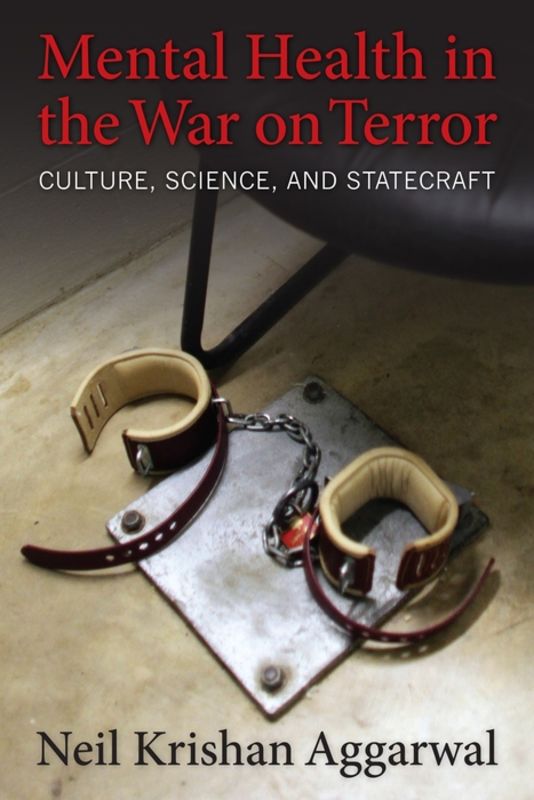
Mental health in the war on terror
Neil Krishan Aggarwal's timely study finds that mental-health and biomedical professionals have created new forms of knowledge and practice in their desire to understand and fight terrorism. In the process, the state has used psychiatrists and psychologists to furnish knowledge on undesirable populations, and psychiatrists and psychologists have protected state interests. Professional interpretation, like all interpretations, is subject to cultural forces. Drawing on cultural psychiatry and medical anthropology, Aggarwal analyzes the transformation of definitions for normal and abnormal behavior in a vast array of sources: government documents, professional bioethical debates, legal motions and opinions, psychiatric and psychological scholarship, media publications, and policy briefs. Critical themes emerge on the use of mental health in awarding or denying disability to returning veterans, characterizing the confinement of Guantánamo detainees, contextualizing the actions of suicide bombers, portraying Muslim and Arab populations in psychiatric and psychological scholarship, illustrating bioethical issues in the treatment of detainees, and supplying the knowledge and practice to deradicalize terrorists. Throughout, Aggarwal explores this fascinating, troublesome transformation of mental-health science into a potential instrument of counterterrorism.
eBook