
Catalogue Search | MBRL


Are you sure you want to remove the book from the shelf?

{{itemTitle}}
23
result(s) for
"Ahern, James C. M"
Sort by:

The origins of modern humans : biology reconsidered
\"This work provides an update of an award-winning classic, which introduced the major competing theories in human evolution. The coverage now features new fossil and molecular evidence, such as the genetic evidence including evolutionary inferences drawn from assesments of modern humans and large segments of the genome of the Neanderthal. The inclusion of younger scholars also enhances the work, leading to a comprehensive and vibrant current edition\"-- Provided by publisher.
Book

Radiographic analysis and virtual cleaning of a bioarchaeological remain enclosed in mineral deposits from a limestone cave
In limestone caves, environmental processes often cause alterations of human or animal skeletal remains, complicating classical analytical methods. Exemplary, a proximal femoral skeletal fragment, enclosed by a thick layer of speleothemic calcite deposits, was discovered during the exploration of the Bedara cave in Žumberak, Croatia. An examination without removal of the surrounding mineral deposits, possibly leading to damage of the specimen, was, therefore, desirable.
We describe and discuss the applied techniques, including clinical computed tomography, virtual cleaning by a specially developed segmentation protocol using an open-source DICOM viewer, and virtual visualisation and dimensioning using computer-aided design software, so that this “hidden” specimen could be non-invasively examined in great detail. We also report on the circumstances and origin of the find, the results of radiocarbon dating, and its anatomical and taxonomic identification, according to which, the bone fragment belonged to a wild boar (
Sus scrofa
) from the timeframe of the Middle Eneolithic Retz-Gajary culture in the region (4,781 ± 35 years before present). This study provides a reference for future paleontological and anthropological analyses, seeking to unlock the enormous potential of anatomical studies of comparable skeletal remains that are either petrified or enclosed in speleothemic deposits.
Journal Article

Prehistoric massacre revealed. Perimortem cranial trauma from Potočani, Croatia
During archaeological rescue excavations carried out in 2007 at Potočani in continental Croatia, a pit containing numerous human skeletal remains (MNI = 41) was discovered. The remains were mostly articulated but also commingled and showed no clear pattern of organization. There were no associated artifacts, just a few pottery fragments probably belonging to the Copper Age Lasinja Culture (c. 4300 to 3950 Anthropological analyses suggest the presence of individuals of all ages and both sexes with many crania exhibiting various perimortem injuries. Three human bone samples from different layers were dated to around 4100 cal BCE by radiocarbon analysis. These radiocarbon dates combined with other aspects of archaeological context, indicate that the deposition was a single episode rather than a long-term accumulation. All this suggests a single violent encounter (massacre). Here we present results of the bioarchaeological analysis of four adult crania with clear signs of perimortem trauma. These include blunt force trauma as well as cuts and penetrating injuries indicating the use of different weapons/tools.
Journal Article

THE END OF ARCHAEOLOGICAL DISCOVERY
Except for the addition of modern material remains, the archaeological record is a finite resource, which means that, at some point in the future, there will be nothing left to find. In this paper, we model trends in archaeological discovery based on the growth of the field and the probability of site discovery. We compare this model to seven diverse datasets of archaeological discovery trends: (1) all sites from the state of Wyoming, USA; (2) high-altitude archaeological sites from the state of Colorado, USA; (3) mostly complete Neandertal crania; (4) monumental sites of the Maya Classic period; (5) proboscidean kill/scavenge sites globally; (6) Upper Paleolithic sites from Europe; and (7) a compilation of shipwreck discoveries. We forecast discovery trends over the current century. We show that, for all datasets, rates of discovery are in decline, and some segments of the record are near depletion. Con la excepción de la añadidura de restos materiales modernos, el registro arqueológico es un recurso finito, lo cual significa que en algún momento en el futuro no quedará nada por descubrir. Es este trabajo modelamos las tendencias en descubrimientos arqueológicos sobre la base del crecimiento del campo y la probabilidad de descubrimiento de sitios. Comparamos este modelo con siete conjuntos de datos de tendencias de descubrimientos arqueológicos: 1) todos los sitios del estado de Wyoming, EUA; 2) los sitios de alta elevación en el estado de Colorado, EUA; 3) los cráneos de Neandertales casi completos; 4) los sitios monumentales mayas del Periodo Clásico; 5) los sitios de matanza y carnicería de proboscídeos alrededor del globo; 6) los sitios europeos del Paleolítico Superior; y 7) una compilación de descubrimientos de naufragios. También predecimos las tendencias en el descubrimiento de sitios en el siglo presente. Mostramos que, para todos los conjuntos, el ritmo de descubrimientos va disminuyendo y en algunos segmentos el registro se encuentra casi agotado.
Journal Article

New research on the Late Pleistocene in the Lim Channel, Istria
As a part of the multidisciplinary project entitled ‘Archaeological Investigations into the Late Pleistocene and Early Holocene of the Lim Channel, Istria’, archaeological research has been conducted at four sites: Romuald's Cave, Abri Kontija 002, Pećina at Rovinjsko Selo and Lim 001 (Figure 1). There is much debate on issues related to biological and behavioural continuity, to patterns of changes and adaptations during this crucial period, and to external factors (e.g. changes in ecology and climate). For example, a clearer insight is needed into how climatic change affects the ecology of specific regions, including changing sea levels. Additionally, there continues to be debate centring on who produced the earliest (Initial) Upper Palaeolithic industries in Europe. To achieve a more precise insight into long-term diachronic changes and cultural relations around the Adriatic, and to document the presence of Middle and Upper Palaeolithic humans in Istria, we concentrated on a single microregion (the Lim Channel in Istria, Croatia). Here we report work on the two sites that to date have yielded Pleistocene material: Romuald's Cave and Abri Kontija 002.
Journal Article
The origins of modern humans
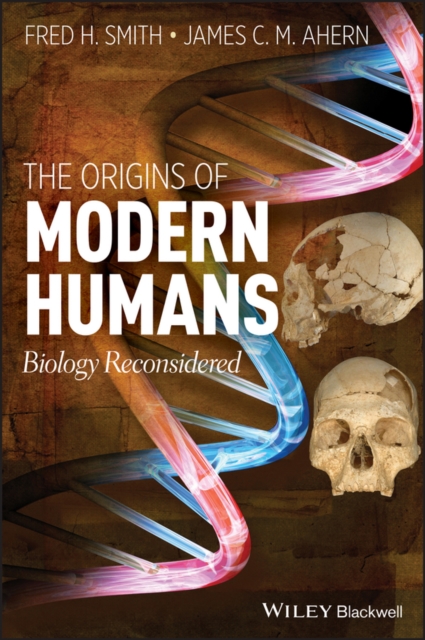
This update to the award-winning The Origins of Modern Humans: A World Survey of the Fossil Evidence covers the most accepted common theories concerning the emergence of modern Homo sapiens—adding fresh insight from top young scholars on the key new discoveries of the past 25 years. The Origins of Modern Humans: Biology Reconsidered allows field leaders to discuss and assess the assemblage of hominid fossil material in each region of the world during the Pleistocene epoch. It features new fossil and molecular evidence, such as the evolutionary inferences drawn from assessments of modern humans and large segments of the Neandertal genome. It also addresses the impact of digital imagery and the more sophisticated morphometrics that have entered the analytical fray since 1984.
eBook

