
Catalogue Search | MBRL


Are you sure you want to remove the book from the shelf?

{{itemTitle}}
115
result(s) for
"Aiello, Lucia"
Sort by:

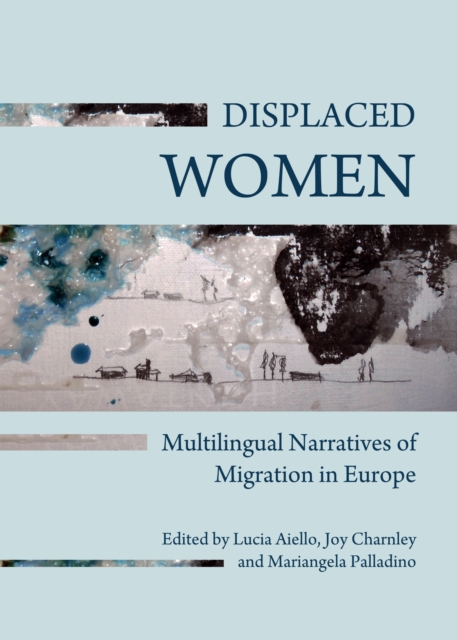
Displaced Women
The essays included in this volume mostly originate from the conference organised by the editors at Glasgow Womens Library in March 2012. Language, multilingual narratives and interaction between cultures and languages were key themes of the conference. Interdisciplinary and international, the conference, like this edited volume, brought together specialists working in a range of fields and provided an opportunity for exchanges between historians, sociologists, scientists and literary schola.
eBook

Digital Skill Evolution in an Industrial Relationship: Professional Figure in Online Communities
Crowdsourcing is a powerful mechanism for doing online work and allows for collaboration. By now, in the media and in business on the Internet, crowdsourcing is recognized as an innovative form of value creation that needs taken seriously. This article provides a framework to propose the relation between crowds and tutorship; it considers the tutor of a crowd as a strategic professional figure in an online community. This is done by the consideration of the different roles, activities and tasks of a tutor through the field analysis of a platform of one company that uses crowdsourcing. This tutor is examined based on the middle-of-the-road theoretical positioned from Porter and Kramer, the value creation, and Suermann and Franzoni, the crows science user contribution patterns. The recently evolution of crowd platforms considers the interaction between companies and crowds based on a “Community of Practice” model of Zucchermaglio and Talamo. Value analysis also considers the differences in roles and tasks in relation to where crowd activity is placed into the value chain of company. In crowdsourcing, “digital people” live in a digital society where every individual has a role and operates in an online community, and those have force points and weakness points. The tutor cans also monitor these points, and push interaction and activities of the crowd. The main theoretical contribution is the looking gap in literature and contributing work to this. Through a qualitative analysis, this article provides evidence of the main activities and the role of digital tutors in an online community. The method utilized is netnography through an online participation and observation of a researcher. In this work, professional figures and new technologies are weighed, and human resource management must consider this as it creates value. This article concludes that a tutor of crowds has a positive behavior, they can stimulate crowds. These positive and active behaviors effect crowd attitudes about the benefits of the community, their expectations, and opinions all of which are fundamental for the growth of online community.
Journal Article

\Looking at the 'Crack'd Mirror': Narratives of Restoration and Anticipation in Grazia Deledda's La madre and Anna Banti's \Artemisia
According to Ricoeur, the functions of reaffirmation and rupture regulate our mode of representation of past and future. Ricoeur presents repetition as not only an alternative to the \"dechronologization\" of the plot and the \"logical abolition of time,\" but also as a function that \"generates the movement back from objective time to originary temporality\" (32).\\n She knew very well that the punishment she meant to inflict upon the man with whom she had sinned was her own punishment too; but now a merciful God spoke to her with the voices of the old men and women and innocent children, and bade her beware of her own self, counseled her to seek salvation.] (188, 218) The \"voices\" of common sense advise this wealthy and well-established young lady to listen to her passions and feelings, but also to exercise control over those passions that may prove detrimental to her personal image within the community as well as to her privileged social status.
Journal Article

Fedor Dostoevskii in Britain: The Tale of an Untalented Genius
This article explores two aspects of the reception of Fedor Dostoevskii in Britain: the early diffidence shown by British intellectuals towards Dostoevskii's novels and the apparently antithetical manifestations of the 'Dostoevskii cult'. The reticence towards Dostoevskii, even in the period of the so-called 'cult', bears witness to the difficulty that British intellectuals had in coming to terms with the innovative power of Dostoevskii's form. The argument is developed through a close examination of three authors' impressions of Dostoevskii and his work: John Middleton Murry, Arnold Bennett, and Virginia Woolf. The results dissent from general assumptions on such authors' positions vis-à-vis the modernist project.
Journal Article


Rede social de apoio de maes com deficiencia intelectual
Este estudo caracterizou a rede de apoio de mães com deficiência intelectual e analisou a opinião das pessoas que lhes fornecem apoio. Participaram do estudo cinco mães com deficiência intelectual e oito fontes de apoio. Foram realizadas entrevistas de levantamento de dados, entrevista com as mães sobre apoio social e entrevista com as fontes de apoio acerca do apoio fornecido. Os resultados demonstraram restrita rede social, constituída majoritariamente por familiares e por apoio prático, além de histórias de vida difíceis. Tais dados apontam a necessidade de serviços que favoreçam o aumento da rede social dessas mães e o tipo de apoio, e a importância de futuros estudos que investiguem os aspectos envolvidos no isolamento social e na maternidade dessas mulheres.
Journal Article

Inventário Portage Operacionalizado para Crianças com Baixa Visão: Uma Análise de Especialistas
In Brazil, there is a lack of instruments to assess the development of children with visual impairments. Accordingly, this study aimed to describe the adaptation procedure of the Operationalized Portage Inventory for children with low vision. For children between 0 to 6 years of age, the OPI consists of 580 items distributed in 6 different areas of development. Three psychologists, experts in children's development, visual impairment, and OPI operationalizing, respectively, took part in adapting the OPI to the Brazilian context. In order to evaluate their agreement on the OPI items, a minimum agreement index of 90% was considered. In total, 43.1% (248 items) of the 580 items were adapted. The domains exhibiting the highest and lowest adaptation requirements were Cognition (65.7%, 71 items) and Self-care (15.2%, 16 items), respectively. Changes proposed by the experts concerned one or more elements of each item, such as material, condition, criterium, and/or response.
No Brasil, há poucos instrumentos destinados à avaliação do desenvolvimento de crianças com deficiência visual. Diante desse cenário, o objetivo deste trabalho foi descrever o procedimento da adaptação do Inventário Portage Operacionalizado para crianças com baixa visão. O Inventário é destinado a crianças de 0 a 6 anos, contém 580 itens organizados em seis áreas do desenvolvimento. Três psicólogas, uma especialista em desenvolvimento infantil, outra em deficiência visual e a autora da operacionalização do IPO, de forma independente, selecionaram e modificaram os itens que requeriam adaptação. Para aferir a concordância entre elas, foi estabelecido um índice mínimo de acordo de 90%. Foram adaptados 43,10% (248) dos 580 itens. As áreas que apresentaram maior e menor necessidade de adaptação foram Cognição=65,7% (71) e Autocuidados=15,23% (16). As adaptações propostas incidiram sobre um ou mais componentes de cada item: material, condição, critério e/ou resposta.
En Brasil, hay escasos instrumentos destinados a la evaluación del desarrollo de niños con baja visión. En respuesta a esta situación, este trabajo tuvo como objetivo describir el paso de la adaptación del Inventario Portage Operacionalizado para niños con baja visión. Este instrumento es destinado para niños de cero a seis años y consta 580 ítems organizados en seis áreas principales de desarrollo. Tres psicólogas, una especialista en desarrollo infantil, otra en discapacidad visual y una de las autoras del inventario Portage, seleccionaron y modificaron los ítems necesarios. Las especialistas acordaron un índice de concordancia mínimo del 90%. De los 580 ítems del instrumento, se adaptó el 43,1% (248). Las áreas de cognición (65,7%; 71 ítems); y autocuidado (15,23%; 16 ítems) presentaron la mayor y menor necesidad de adaptación, respectivamente. Las adaptaciones propuestas por las especialistas incidieron sobre uno o más componentes de cada ítem: material, condición, criterio y/o respuesta.
Journal Article
Social support networks for mothers with intellectual disability
This study characterized the support network offered to mothers with intellectual disability and analyzed the views of people who provide them support. Five mothers with intellectual disability and eight sources of support participated in the study. An interview about social support was conducted with the mothers and another interview about the support provided was conducted with the sources of support for data collection. The results showed limited social network, mainly consisted by family members and practical support, and difficult life histories as well. These data indicate the need for services that increase the social network of those mothers and the types of support, and that favor the importance of future studies to investigate the issues involved in social isolation and maternity of such women.
Journal Article
The reception of fedor dostoevskii in britain (1869-1935)
This thesis explores the participation of women in trade union activity at local level. The central question it addresses is why do women participate in trade unions at this level? It identifies the factors that shape and influence women's participation and, in particular, the role of gender. In addition the thesis critically exatnines the concept of women's interests. The methodological approach is that of a case study of women activists in the South Wales and Western division of the Union of Shop, Distributive and Allied Workers (USDA W), and a principal case study of women activists in the South and West area of the Banking, Insurance and Finance Union (BIFU). In recent years there has been a growing body of research considering the role of women in trade unions. The main focus of these studies has been the barriers to women's participation. Where women's participation has been investigated the majority of studies have been concerned with women full time officers and 'senior' trade union leaders. Within trade union renewal debates women have been highlighted as one of the groups to target in recruitment campaigns. As such, it is appropriate to consider women's trade union participation at local level. The general literature suggests that people join and participate for traditional collective reasons. This proposition is critically examined. The findings present a model of trade union activity that differs significantly from typologies created to examine 'senior' women leaders. Equally, studies of women at local level which attach one ideological position to women's attitudes and behaviour are argued to fail to capture the diversity of views evident at local level. As such, the typology developed from this study places the WOlnen activists in four groups; the individualist, the collectivist, the carer and the equal rights representative. These groups reflect the context in which the women are situated and the varied interpretations of their activism. The findings suggest the problems of addressing equal opportunities through the union structures and raise, in particular, the difficulties of developing 'separatist' policies for women. Barriers to women's participation in trade unions remain significant for local level activism. The thesis suggests that trade union renewal strategies need to recognise the richness and diversity of attitudes and interests that women bring to the trade union movement.come across Dostoevskii the prophet, Dostoevskii the psychologist and so on. I also argue that the failure of intellectuals like Virginia Woolf and E. M. Forster to recognise the innovative force of Dostoevskii' s novels can be read in the light of their reticence to really break with a literary tradition, which they knew was on the verge of a definitive crisis. In the course of the thesis, it is shown how this reticence seriously undermines their project of renovation of the novelistic form. Thus, the final assumption of the thesis is that the difficulty that British intellectuals had in grasping the importance of Dostoevskii' s works for the development of the novelistic genre is partly due to the persistence of psychological criticism, which focused on authorial intentions rather than on the novels themselves, and partly to the attempt to inscribe Dostoevskii's novels within the Romantic or Victorian conventions of novel writing. In the final section of the Conclusion, I argue that Dostoevskii's experiments with the novelistic form situate his writings closer to the Modernist examples of novel writing than to the Romantic ones. A brief analysis of Stavrogin's Confession aims at clarifying this aspect. Finally, I stress that Western literary criticism has become more aware of the pioneering significance of Dostoevskii's form only in the Post-World War II period, while in Eastern Europe signals of recognition of the Innovative potential of Dostoevskii' s form emerge already by the early 1920s.
Dissertation