
Catalogue Search | MBRL


Are you sure you want to remove the book from the shelf?

{{itemTitle}}
22,015
result(s) for
"Ak"
Sort by:
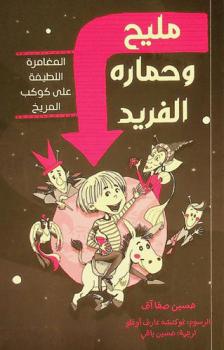
مليح وحماره الفريد : المغامرة اللطيفة على كوكب المريخ
تتحدث القصة عن مليح الذي يتوجه نحو قريته من أجل أن يقضي فيها عطلته الصيفية مع جده العزيز تورغوت. وبعدها ينطلق في مغامرة لا يمكن أن يتصورها العقل، مغامرة غريبة وعجيبة مع خشاف العنب اللذيذ الذي يصنعه جده تورغوت، مغامرة يشاركه فيها الحمار الصغير فستق الذي يفهم بالخشاف وبالكلام اللطيف. ولكن ... هل سيتمكن المغامر مليح والحمار الصغير فستق من إنقاذ الكوكب الأحمر \"المريخ\" من براثن الشرير غاسبر ؟ وهل سيتمكن من العثور على علاج لمرض الأمير الصغير ماجي ؟ وما هو سر طائر الروح هذا الذي ظهر أمامنا فجأة ؟ حسنا ... وهل يمكن أن يكون الأسم الحقيقي لكوكب المريخ مليح ؟ مليح وحماره الفريد فستق يدعوانكم لتنطلقوا معهما في مغامرة مثيرة ومضحكة !.
Book

Comparison of approaches for source attribution of ESBL-producing Escherichia coli in Germany
Extended-spectrum beta-lactamase (ESBL)-producing Escherichia (E . ) coli have been widely described as the cause of treatment failures in humans around the world. The origin of human infections with these microorganisms is discussed controversially and in most cases hard to identify. Since they pose a relevant risk to human health, it becomes crucial to understand their sources and the transmission pathways. In this study, we analyzed data from different studies in Germany and grouped ESBL-producing E . coli from different sources and human cases into subtypes based on their phenotypic and genotypic characteristics (ESBL-genotype, E . coli phylogenetic group and phenotypic antimicrobial resistance pattern). Then, a source attribution model was developed in order to attribute the human cases to the considered sources. The sources were from different animal species (cattle, pig, chicken, dog and horse) and also from patients with nosocomial infections. The human isolates were gathered from community cases which showed to be colonized with ESBL-producing E . coli . We used the attribution model first with only the animal sources (Approach A) and then additionally with the nosocomial infections (Approach B). We observed that all sources contributed to the human cases, nevertheless, isolates from nosocomial infections were more related to those from human cases than any of the other sources. We identified subtypes that were only detected in the considered animal species and others that were observed only in the human population. Some subtypes from the human cases could not be allocated to any of the sources from this study and were attributed to an unknown source. Our study emphasizes the importance of human-to-human transmission of ESBL-producing E . coli and the different role that pets, livestock and healthcare facilities may play in the transmission of these resistant bacteria. The developed source attribution model can be further used to monitor future trends. A One Health approach is necessary to develop source attribution models further to integrate also wildlife, environmental as well as food sources in addition to human and animal data.
Journal Article


Occupational health, safety and environmental risk assessment in textile production industry through a Bayesian BWM-VIKOR approach
Occupational risk assessment (ORA) is a process that consists of evaluating, ranking, and classifying the hazards and associated risks arising in any workplace from the viewpoint of occupational health and safety. Many ORA methods have been proposed in the literature, from a single independent expert to participatory methodologies made by group decision and simple to complex ones. In this paper, a holistic ORA is presented, which uses two important multi-attribute decision methods named Bayesian Best-Worst Method (Bayesian BWM) and VIseKriterijumska Optimizacija I Kompromisno Resenje (VIKOR). Bayesian BWM is used to determine the importance weights of six different assessment criteria, which are the probability of hazardous event (P), frequency (F), severity (S), detectability (D), cost (C) and sensitivity not to use personal protective equipment (SNP). Since the classical BWM finds solution to the weights of a number of criteria from only one expert's judgment, Bayesian BWM is preferred in this paper (1) to enable participation of a group of experts, (2) to aggregate the preferences of these multiple experts into consensus without loss of information and (3) to follow a probabilistic way for solving the ORA problem. The hazards are then ranked by VIKOR. The approach is implemented in the ORA process of a textile production plant. Results of risk analysis showed that electricity hazard and associated risks constitute the highest risk ratings. These hazards arise from the product, process, human and working environment. The associated risks are evaluated, prioritized, and detailed control measures are proposed. This study made comparisons with the classical BWM-VIKOR approach to demonstrate the proposed approach's difference and practicality. Results can also help practitioners and risk analysts in formulating the improvement measures to increase the overall safety of the working environment further.
Journal Article
Assessment of occupational risks from human health and environmental perspectives: a new integrated approach and its application using fuzzy BWM and fuzzy MAIRCA
Occupational safety issues encountered in the worksite environment are the issues that companies should consider in improving their operations with a view to human health and environmental awareness. Many methods with different rationales have been existed in the literature to prioritize hazards according to their risk levels and to mitigate their consequences. In this study, a new model is developed for occupational risk assessment by merging two well-known multi-criteria decision-making methods named best and worst method (BWM) and multi attribute ideal real comparative analysis (MAIRCA) under fuzzy environment. The proposed model differentiates from other similar models by three aspects. First, it considers severity of a hazard and its associated risk from the human and environmental riskiness perspectives. Secondly, it applies fuzzy BWM (F-BWM) to calculate the relative importance of three risk factors named as “probability, frequency and severity” of traditional Fine–Kinney method. Thirdly, it applies fuzzy MAIRCA (F-MAIRCA) to rank hazards according to their risk level using importance values obtained by F-BWM. To show applicability of the approach, a case study of risk assessment in a marble factory is fulfilled. Additionally, a number of validation studies including benchmarking analysis with fuzzy VIKOR and fuzzy TOPSIS methods; a sensitivity analysis by varying importance weights of risk factors are carried out to highlight the solidity of the proposed approach.
Journal Article

A Comparative Analysis of Breast Cancer Detection and Diagnosis Using Data Visualization and Machine Learning Applications
In the developing world, cancer death is one of the major problems for humankind. Even though there are many ways to prevent it before happening, some cancer types still do not have any treatment. One of the most common cancer types is breast cancer, and early diagnosis is the most important thing in its treatment. Accurate diagnosis is one of the most important processes in breast cancer treatment. In the literature, there are many studies about predicting the type of breast tumors. In this research paper, data about breast cancer tumors from Dr. William H. Walberg of the University of Wisconsin Hospital were used for making predictions on breast tumor types. Data visualization and machine learning techniques including logistic regression, k-nearest neighbors, support vector machine, naïve Bayes, decision tree, random forest, and rotation forest were applied to this dataset. R, Minitab, and Python were chosen to be applied to these machine learning techniques and visualization. The paper aimed to make a comparative analysis using data visualization and machine learning applications for breast cancer detection and diagnosis. Diagnostic performances of applications were comparable for detecting breast cancers. Data visualization and machine learning techniques can provide significant benefits and impact cancer detection in the decision-making process. In this paper, different machine learning and data mining techniques for the detection of breast cancer were proposed. Results obtained with the logistic regression model with all features included showed the highest classification accuracy (98.1%), and the proposed approach revealed the enhancement in accuracy performances. These results indicated the potential to open new opportunities in the detection of breast cancer.
Journal Article

Franz Kafka’s “Das Urteil” (1913) as Media History: Writing–Cinema–AI
In this essay, I read Kafka’s 1913 story, “Das Urteil”, as positing an anachronistic media history, with Georg the son representing the older medium of writing, while his father stands in for the newer medium of cinema. The father–son conflict is thus refigured as an intergenerational media war. In addition, I suggest that the end of the story points toward a non-human mediation, which resembles artificial intelligence as imagined by Friedrich Kittler’s media theory.
Journal Article

A modified failure modes and effects analysis using interval-valued spherical fuzzy extension of TOPSIS method: case study in a marble manufacturing facility
Failure modes and effects analysis (FMEA) is a commonly used step-by-step approach to assess potential failures existing in a product or process design. In this paper, a modified FMEA model based on an interval-valued spherical fuzzy extension of technique for order preference by similarity to ideal solution (IVSF-TOPSIS) is proposed to cope with drawbacks of the traditional risk priority number (RPN) computation. Spherical fuzzy sets are the integration of Pythagorean fuzzy sets and neutrosophic sets. They provide more freedom to experts in decision making by including the degree of membership, non-membership, and hesitation of fuzzy sets. Therefore, initially, TOPSIS is merged with a special branch of spherical sets “interval-valued spherical fuzzy sets” to determine priorities of emerged failures. As a novelty to traditional RPN of FMEA, three parameters called cost, prevention, and effectiveness in addition to the existed parameters of severity, occurrence and detection are attached to the proposed approach. Weights of these parameters are determined via an interval-valued spherical weighted arithmetic mean operator (IVSWAM). As a demonstration, a case study in a marble manufacturing facility is provided to show the applicability of the novel model. Results show that the most crucial failure modes concern with the maintenance and repairing works of the factory and the lack of technical periodic checks of lifting vehicles regarding “block area: crane” failures. Some comparative and validation studies are also performed to test the solidity of the approach.
Journal Article

Inertial Sensor-Based Robust Gait Analysis in Non-Hospital Settings for Neurological Disorders
The gold standards for gait analysis are instrumented walkways and marker-based motion capture systems, which require costly infrastructure and are only available in hospitals and specialized gait clinics. Even though the completeness and the accuracy of these systems are unquestionable, a mobile and pervasive gait analysis alternative suitable for non-hospital settings is a clinical necessity. Using inertial sensors for gait analysis has been well explored in the literature with promising results. However, the majority of the existing work does not consider realistic conditions where data collection and sensor placement imperfections are imminent. Moreover, some of the underlying assumptions of the existing work are not compatible with pathological gait, decreasing the accuracy. To overcome these challenges, we propose a foot-mounted inertial sensor-based gait analysis system that extends the well-established zero-velocity update and Kalman filtering methodology. Our system copes with various cases of data collection difficulties and relaxes some of the assumptions invalid for pathological gait (e.g., the assumption of observing a heel strike during a gait cycle). The system is able to extract a rich set of standard gait metrics, including stride length, cadence, cycle time, stance time, swing time, stance ratio, speed, maximum/minimum clearance and turning rate. We validated the spatio-temporal accuracy of the proposed system by comparing the stride length and swing time output with an IR depth-camera-based reference system on a dataset comprised of 22 subjects. Furthermore, to highlight the clinical applicability of the system, we present a clinical discussion of the extracted metrics on a disjoint dataset of 17 subjects with various neurological conditions.
Journal Article

İNGİLİZ BASININA GÖRE BİRİNCİ DÜNYA SAVAŞI’NIN BAŞLARINDA TÜRK-YUNAN GERGİNLİĞİ (TEMMUZ- KASIM 1914)
Saraybosna’da 28 Haziran 1914 günü Sırp milliyetçileri tarafından gerçekleştirilen suikast, Avrupa’daki gerilimleri bir anda tetikleyerek devletler arası çatışmaların derinleşmesine zemin hazırlamıştır. Bu olay Avusturya-Macaristan İmparatorluğu’nun Sırbistan’a karşı sert bir tepki göstermesine yol açmış; Almanya, Rusya, Fransa ve İngiltere gibi büyük güçlerin de bu sürece müdahil olmasıyla savaş, bir ay gibi kısa bir süre sonra başlamıştır. Avusturya Arşidükü Franz Ferdinand’ın suikast ile öldürülmesi; Avrupa’da yükselen milliyetçilik, emperyalizm, ittifak sistemleri ve militarizmin bir sonucu olmuştur. Uluslararası diplomasinin yetersiz kaldığı bu süreçte devletler arasında yürütülen diplomatik yazışmalar, tehditkâr ültimatomlara dönüşmüştür. Özellikle Avusturya-Macaristan’ın savaş kararı alması üzerinde Almanya’nın etkisi, Rusya’nın Sırbistan’a verdiği destek ve nihayetinde Fransa ve İngiltere’nin pozisyonları savaşı kaçınılmaz kılmıştır. Avrupa’da bu gelişmeler yaşanırken 20. yüzyılın başlarında Ege ve Doğu Akdeniz, büyük güçlerin stratejik çıkarları doğrultusunda yoğun bir çatışma alanı olarak öne çıkmıştır. Bu bağlamda bölgedeki gerilimlerin önlenemez bir sonucu olarak Osmanlı Devleti ile Yunanistan arasında bir savaş çıkması beklenmiştir. Bu makale, Franz Ferdinand suikastının ardından Osmanlı Devleti’nin Birinci Dünya Savaşı’na fiilen dâhil olduğu döneme kadar geçen sürede, Türk-Yunan ilişkilerindeki diplomatik gerilimin İngiliz basınındaki yansımalarını analiz etmiştir. Suikast Avrupa’daki siyasi gerilimi artırdığı gibi Ege ve Doğu Akdeniz bölgesindeki diplomatik çatışmaları da derinleştirmiştir. İngiliz basınında yayımlanan haberler, Osmanlı-Yunan diplomatik krizinin olası bir savaşa dönüşme sürecine ilişkin gelişmeleri ve bu sürecin dinamikleri hakkında önemli ipuçları sunmuştur. Bu çalışma dönemin İngiliz basınında yer alan haber, makale ve köşe yazıları üzerinden, İngiliz basınının Osmanlı-Yunan gerilimini nasıl algıladığını ve bu algının Osmanlı Devleti’nin Birinci Dünya Savaşı başlarında uluslararası ilişkilerdeki stratejik kararlarına nasıl yansıdığını analiz etmeyi amaçlamıştır. Çalışmada İngiliz basınının olaylara yaklaşımı, Türk-Yunan diplomatik stratejilerinin yanı sıra bölgedeki jeopolitik dinamikler ışığında değerlendirilmiştir. Ayrıca Osmanlı Devleti ile Yunanistan’ın Doğu Akdeniz ve Ege Denizi’ndeki çıkarlarına yönelik tutumu ve bu tutumun savaş sürecine etkileri detaylandırılmaya çalışılmıştır.
Journal Article