
Catalogue Search | MBRL


Are you sure you want to remove the book from the shelf?

{{itemTitle}}
724,094
result(s) for
"Al"
Sort by:


Bridging the Leadership Gap: Developing a Culturally Adapted Leadership Program for Healthcare Professionals in Oman
Effective leadership is essential for high-performing healthcare systems, yet many leadership training programs lack contextual and cultural adaptability. In Oman, leadership development has historically focused on clinical expertise rather than strategic competencies. This study describes the development and implementation of a culturally adapted leadership training program tailored to the needs of Omani healthcare professionals.
A multiphase project-based learning approach was used to design and assess the program. A needs assessment survey was conducted among healthcare leaders to identify competency gaps. The program was then developed based on international best practices and customized to the Omani healthcare system. A rigorous selection process involved psychometric testing, personal leadership statements, and structured interviews. The eight-month program incorporated evidence-based leadership training, mentorship, and project-based labs. Evaluation was guided by the Kirkpatrick model, assessing knowledge, skills, and behavioral change. Post-program qualitative interviews explored participant experience.
The needs assessment (n = 16 senior hospital managers) identified gaps in strategic decision-making, crisis management, and interdisciplinary collaboration. The program addressed these needs through eight structured modules. Of 177 applicants, 38 were selected via a multilevel assessment process. Post-program interviews with a purposive sample revealed improvements in self-awareness, strategic capabilities, team collaboration, and leadership accountability. Participants emphasized the program's contextual relevance and its value in bridging theory and real-world practice.
This study demonstrates the feasibility and impact of a culturally tailored leadership development program in a healthcare setting. By integrating context-specific training with global leadership principles, the program addresses critical competency gaps and strengthens leadership capacity in Oman's healthcare system. Post-program feedback provided insights into the program's transformative potential. Future studies should examine the long-term impact of such programs on healthcare performance and patient outcomes.
Journal Article


Genetic analysis and outcomes of Omani children with steroid‐resistant nephrotic syndrome
Nephrotic syndrome (NS) is one of the most common kidney disorders seen by pediatric nephrologists and is defined by the presence of heavy proteinuria (>3.5 g/24 h), hypoalbuminemia (<3.5 g/dL), edema, and hyperlipidemia. Most children with NS are steroid-responsive and have a good prognosis following treatment with prednisolone. However, 10%-20% of them have steroid-resistant nephrotic syndrome (SRNS) and fail to respond to treatment. A significant proportion of these children progress to kidney failure.
This retrospective study aimed to determine the underlying genetic causes of SRNS among Omani children below 13 years old, over a 15-year period and included 77 children from 50 different families. We used targeted Sanger sequencing combined with next-generation sequencing approaches to perform molecular diagnostics.
We found a high rate of underlying genetic causes of SRNS in 61 (79.2%) children with pathogenic variants in the associated genes. Most of these genetically solved SRNS patients were born to consanguineous parents and variants were in the homozygous state. Pathogenic variants in NPHS2 were the most common cause of SRNS in our study seen in 37 (48.05%) cases. Pathogenic variants in NPHS1 were also seen in 16 cases, especially in infants with congenital nephrotic syndrome (CNS). Other genetic causes identified included pathogenic variants in LAMB2, PLCE1, MYO1E, and NUP93.
NPHS2 and NPHS1 genetic variants were the most common inherited causes of SRNS in Omani children. However, patients with variants in several other SRNS causative genes were also identified. We recommend screening for all genes responsible for SRNS in all children who present with this phenotype, which will assist in clinical management decisions and genetic counseling for the affected families.
Journal Article

The Experiences and Perceptions of Health-Care Workers During the COVID-19 Pandemic in Muscat, Oman: A Qualitative Study
Introduction
Predominantly, studies on COVID-19 report quantitative data that often miss the social implications and other determinants of health. The objective of this study was to explore the experiences and perceptions of health care workers (HCWs) in primary health care in the management of COVID-19 with respect to medical response experiences, socio-cultural and religious reforms, psychological impressions, and lessons learned.
Methods
This was a qualitative study using an empirical phenomenological approach. Six focus group discussions were conducted across various stakeholders working frontline in the management of COVID-19 (managerial, public health/field/community and primary care health centers). They participated in semi-structured, in-depth group discussions from 11th to 20th May 2020. All discussions were audio-recorded, transcribed verbatim and analyzed using thematic analysis.
Results
Forty participants were involved in this study. Three themes emerged related to the medical response experiences, including the rapid re-structuring of the PHC services, use of technology and challenges of working on COVID-19. Perceptions on the socio-cultural and religious reforms included changes in social and religious norms, and anticipated gaps in accessing health care among the vulnerable groups (elderly, expatriates, and individuals with low economic status). Perceptions on psychological disturbances were themed as consequences of social distancing, management of dead bodies, exhaustion among the health care workers, and risk of exposure. Finally, lessons learned were centered around building on the existing epidemiological and public health capacities, improving access to health care and overcoming resistance to change. Most participants labelled their experience in COVID-19 as an “experience of wisdom” in which learning was a continuous process.
Conclusion
This qualitative study amongst primary HCWs revealed certain aspects of response to COVID-19 in Muscat, Oman. Results has unfolded various aspects of COVID-19. The situation was perceived by primary HCWs as a new experience that challenged the primary health care; enforced the utilization of public health/epidemiological skills, and linked to unfavorable socio-religious and psychological events.
Journal Article

The Role of Convalescent Plasma and Tocilizumab in the Management of COVID-19 Infection: A Cohort of 110 Patients from a Tertiary Care Hospital in Oman
Aim
As Coronavirus Disease-2019 (COVID-19) pandemic continues to evolve, the search for safe and effective therapeutic interventions remain essential.
Methods
We conducted a retrospective cohort study on patients hospitalized with laboratory confirmed severe acute respiratory syndrome coronavirus-2 infection, comparing standard of care along with Convalescent Plasma with or without Tocilizumab (CP vs. CPT).
Results
A total of 110 patients were enrolled with an overall mean age of 50 ± 16 years. Patients on CPT were more likely to have had acute respiratory distress syndrome (77% vs. 42%;
p
< 0.001), sepsis (9.7% vs. 0;
p
= 0.036), chest X-ray abnormalities (71% vs. 44%;
p
= 0.004), intensive care unit admission (84% vs. 56%;
p
= 0.001) as well as being on mechanical ventilation (79% vs. 48%;
p
= 0.001). After CPT treatment, all measured inflammatory markers, except interleukine-6, showed an overall steady decline over time (all
p
-values <0.05) and the ventilatory parameters showed significant improvement of PaO
2
/FiO
2
ratio from 127 to 188 within 7 days (
p
< 0.001). Additionally, 52% (32/62) of the patients had favorable outcome, either as improvement of ventilatory parameters or extubation within 14 days of hospitalization. However, mortality rate in those on CPT was higher than those who received CP alone (24% vs. 8.3%;
p
= 0.041).
Conclusion
In patients with severe COVID-19 infection, using tocilizumab with convalescent plasma is associated with improvement in inflammatory and ventilatory parameters but no effect on mortality. These findings require validation from randomized clinical trials.
Journal Article
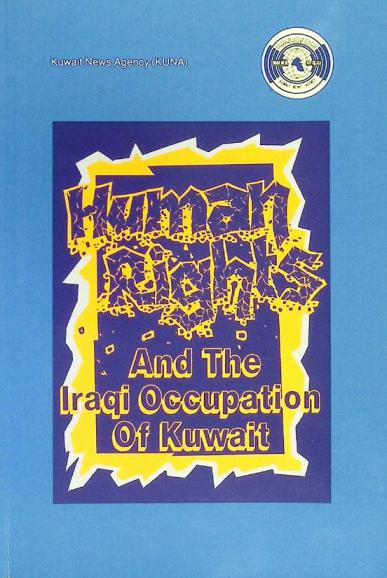
Human rights and the iraqi occupation of Kuwait
This book is a comprehensive documentary and legal record compiled by the Kuwait News Agency (KUNA) to monitor and archive human rights violations during the Iraqi invasion and occupation of the State of Kuwait (1990–1991). The report provides a systematic analysis of the atrocities committed against the civilian population, based on eyewitness testimonies, field reports, and international monitoring data. It covers a wide range of violations, including arbitrary detention, torture, extrajudicial killings, and the forced disappearance of Kuwaiti citizens and residents (the POWs and missing persons issue). Additionally, the book examines the environmental and economic crimes committed, such as the ignition of oil wells and the systematic looting of public and private property, framed within the context of International Humanitarian Law and the Universal Declaration of Human Rights. This work serves as a vital historical archive and a legal reference for researchers in international relations, human rights advocacy, and the history of the Arabian Gulf.
BOOK

Epidemiological, demographic, and clinical characteristics of 47 cases of Middle East respiratory syndrome coronavirus disease from Saudi Arabia: a descriptive study
Middle East respiratory syndrome (MERS) is a new human disease caused by a novel coronavirus (CoV). Clinical data on MERS-CoV infections are scarce. We report epidemiological, demographic, clinical, and laboratory characteristics of 47 cases of MERS-CoV infections, identify knowledge gaps, and define research priorities.
We abstracted and analysed epidemiological, demographic, clinical, and laboratory data from confirmed cases of sporadic, household, community, and health-care-associated MERS-CoV infections reported from Saudi Arabia between Sept 1, 2012, and June 15, 2013. Cases were confirmed as having MERS-CoV by real-time RT-PCR.
47 individuals (46 adults, one child) with laboratory-confirmed MERS-CoV disease were identified; 36 (77%) were male (male:female ratio 3·3:1). 28 patients died, a 60% case-fatality rate. The case-fatality rate rose with increasing age. Only two of the 47 cases were previously healthy; most patients (45 [96%]) had underlying comorbid medical disorders, including diabetes (32 [68%]), hypertension (16 [34%]), chronic cardiac disease (13 [28%]), and chronic renal disease (23 [49%]). Common symptoms at presentation were fever (46 [98%]), fever with chills or rigors (41 [87%]), cough (39 [83%]), shortness of breath (34 [72%]), and myalgia (15 [32%]). Gastrointestinal symptoms were also frequent, including diarrhoea (12 [26%]), vomiting (ten [21%]), and abdominal pain (eight [17%]). All patients had abnormal findings on chest radiography, ranging from subtle to extensive unilateral and bilateral abnormalities. Laboratory analyses showed raised concentrations of lactate dehydrogenase (23 [49%]) and aspartate aminotransferase (seven [15%]) and thrombocytopenia (17 [36%]) and lymphopenia (16 [34%]).
Disease caused by MERS-CoV presents with a wide range of clinical manifestations and is associated with substantial mortality in admitted patients who have medical comorbidities. Major gaps in our knowledge of the epidemiology, community prevalence, and clinical spectrum of infection and disease need urgent definition.
None.
Journal Article