
Catalogue Search | MBRL


Are you sure you want to remove the book from the shelf?

{{itemTitle}}
2
result(s) for
"Alaimo, Stacy, foreword"
Sort by:

Disability studies and the environmental humanities : toward an eco-crip theory
\"Although scholars in the environmental humanities have been exploring the dichotomy between \"wild\" and \"built\" environments for several years, few have focused on the field of disability studies, a discipline that enlists the contingency between environments and bodies as a foundation of its scholarship. On the other hand, scholars in disability studies have demonstrated the ways in which the built environment privileges some bodies and minds over others, yet they have rarely examined the ways in which toxic environments engender chronic illness and disability or how environmental illnesses disrupt dominant paradigms for scrutinizing disability\"--amazon.com
Book
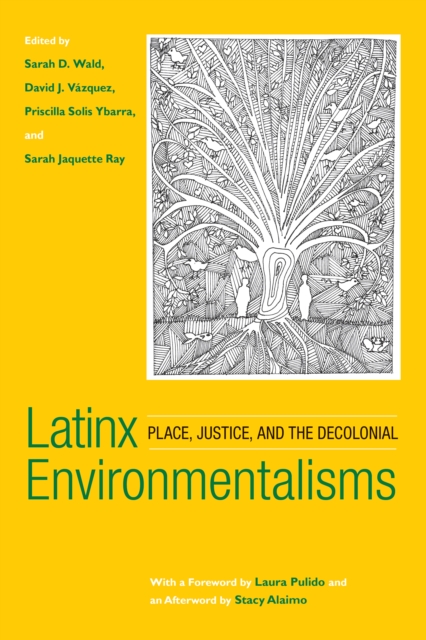
Latinx Environmentalisms
The whiteness of mainstream environmentalism often fails to account for the richness and variety of Latinx environmental thought. Building on insights of environmental justice scholarship as well as critical race and ethnic studies, the editors and contributors to Latinx Environmentalisms map the ways Latinx cultural texts integrate environmental concerns with questions of social and political justice.
Original interviews with creative writers, including Cherríe Moraga, Helena María Viramontes, and Héctor Tobar, as well as new essays by noted scholars of Latinx literature and culture, show how Latinx authors and cultural producers express environmental concerns in their work. These chapters, which focus on film, visual art, and literature—and engage in fields such as disability studies, animal studies, and queer studies—emphasize the role of racial capitalism in shaping human relationships to the more-than-human world and reveal a vibrant tradition of Latinx decolonial environmentalism.
Latinx Environmentalisms accounts for the ways Latinx cultures are environmental, but often do not assume the mantle of \"environmentalism.\"
eBook