
Catalogue Search | MBRL


Are you sure you want to remove the book from the shelf?

{{itemTitle}}
60
result(s) for
"Albarella, Umberto"
Sort by:

The history of British birds
\"The History of British Birds reviews our knowledge of avifaunal history over the last 15,000 years, setting it in its wider historical and European context. The authors, one an ornithologist the other an archaeologist, integrate a wealth of archaeological data to illuminate and enliven the story, indicating the extent to which climatic, agricultural, and social changes have affected the avifauna. They discuss its present balance, as well as predicting possible future changes.\" \"It is a popular misconception that bird bones are rarely preserved (compared with mammals), and cannot be reliably identified when they are found. The book explores both of these contentions, armed with a database of 9,000 records of birds that have been identified on archaeological sites. Most are in England, but sites elsewhere in Great Britain, Ireland, the Isle of Man, and the Channel Isles are included.\" \"This authoritative reference work will be of particular relevance to students and researchers in the fields of archaeology and avian biology, as well as a broader audience of general ornithologists and natural historians.\"--Jacket.
Book

Applying lead (Pb) isotopes to explore mobility in humans and animals
Lead (Pb) isotopes provide a complementary method to other provenance tools for tracking the origin and movement of humans and animals. The method is founded in the geographic distribution of Pb isotope ratios. However, unlike the Sr isotope method that is closely linked to the lithology of underlying rocks, Pb more closely reflects the tectonic regimes. This makes it particularly pertinent to use in Britain as there is major tectonic boundary (the Iapetus Suture) that runs between Berwick-upon-Tweed and the Solway Firth providing a compositional boundary in Pb isotope domains that approximates to the geographic areas of Scotland versus England and Wales. Modern pollution makes it difficult to use modern floral or faunal samples to characterize biosphere variation, and so we use geological datasets to define isoscape variation and present the first Pb isotope map of Britain. We have validated the use of these data form biosphere studies using well provenanced samples. Reference fields of diagnostic compositions, are created in μ- T space and these have been used in a test case to assess the geographic origins of Neolithic animals in Great Britain.
Journal Article
A morphometric system to distinguish sheep and goat postcranial bones
Distinguishing between the bones of sheep and goat is a notorious challenge in zooarchaeology. Several methodological contributions have been published at different times and by various people to facilitate this task, largely relying on a macro-morphological approach. This is now routinely adopted by zooarchaeologists but, although it certainly has its value, has also been shown to have limitations. Morphological discriminant criteria can vary in different populations and correct identification is highly dependent upon a researcher's experience, availability of appropriate reference collections, and many other factors that are difficult to quantify. There is therefore a need to establish a more objective system, susceptible to scrutiny. In order to fulfil such a requirement, this paper offers a comprehensive morphometric method for the identification of sheep and goat postcranial bones, using a sample of more than 150 modern skeletons as a basis, and building on previous pioneering work. The proposed method is based on measurements-some newly created, others previously published-and its use is recommended in combination with the more traditional morphological approach. Measurement ratios, used to translate morphological traits into biometrical attributes, are demonstrated to have substantial diagnostic potential, with the vast majority of specimens correctly assigned to species. The efficacy of the new method is also tested with Discriminant Analysis, which provides a successful verification of the biometrical indices, a statistical means to select the most promising measurements, and an additional line of analysis to be used in conjunction with the others.
Journal Article
Cattle management in an Iron Age/Roman settlement in the Netherlands: Archaeozoological and stable isotope analysis
Cattle were the predominant domestic animal in the Iron Age and Roman Netherlands, yet their management is still incompletely understood. Some aspects of cattle management, such as birth season and the provision of fodder, have received little or no attention so far. This paper is the first to investigate these aspects for the Iron Age and Roman Netherlands, through a case study of the site of Houten-Castellum. The rural settlement of Houten-Castellum was inhabited from the Middle Iron Age to the Middle Roman period, allowing a comparison between the Iron Age and Roman period. Excavations at this site have yielded a large, well-preserved animal bone assemblage. This paper investigates cattle husbandry by using an integrated approach, combining a multi-isotope analysis (oxygen, carbon and strontium) with archaeozoological and archaeobotanical results from Houten-Castellum and comparing the results with archaeobotanical evidence for fodder and evidence for dairy use for the Iron Age and Roman Netherlands in general. While our data set is small and results must therefore be interpreted cautiously, there is convincing evidence for an extended birth season in the Middle Iron Age, as well as the use of fodder.
Journal Article

An international, open-access dataset of dental wear patterns and associated broad age classes in archaeological cattle mandibles
Zooarchaeologists investigate past interactions between animals, humans, and their environments by analyzing the remains of archaeological fauna. Age-at-death distributions are fundamental to faunal analysis and are often estimated by comparing exposed dentine patterns to standardized tooth wear stages that have been associated with relative age classes. We present Bubona, an international dataset of dental wear patterns and associated broad age classes in archaeological cattle mandibles. Our open-access dataset of 1460 data entries from nine counties is being used to create tooth-type specific reference tables of probable age class attribution for cattle mandibles lacking complete dentition. Bubona is a valuable resource for the innovation of new systems of age estimation for cattle and it is the creators hope that researchers will continue to both help expand the dataset by contributing their own data, as well as utilize the data to refine and innovate age-at-death estimation methods.
Journal Article
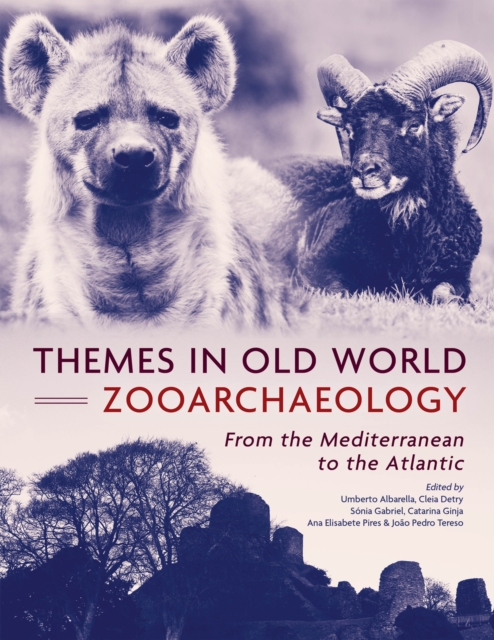
Themes in old world zooarchaeology : from the Mediterranean to the Atlantic
This new collection of papers from leading experts provides an overview of cutting-edge research in Old World zooarchaeology. The research presented here spans various areas across Europe, Western Asia and North Africa - from the Mediterranean to the Atlantic. Several chapters focus on Iberia, but the eastern Mediterranean and Britain are also featured.Thematically, the book covers many of the research areas where zooarchaeology can provide a significant contribution. These include animal domestication, bone modifications, fishing, fowling, economic and social status, as well as adaptation and improvement. The investigation of these topics is carried out using a diversity of approaches, thus making the book also a useful compendium of traditional as well as more recently developed methodological applications. All contributions aim to present zooarchaeology as a discipline that studies animals to understand people, and their richly diversified past histories. This will be a valuable source of information not just for specialists, but also for general archaeologists and, potentially, also historians, palaeontologists and geographers, who have an interest for the research themes discussed in the book.The book is dedicated to Simon Davis, who has been a genuine pioneer in the development of modern zooarchaeology. It presents hugely stimulating case studies from the core areas where Davis has worked in the course of his career.
eBook

Animal origin of 13th-century uterine vellum revealed using noninvasive peptide fingerprinting
Tissue-thin parchment made it possible to produce the first pocket Bibles: Thousands were made in the 13th century. The source of this parchment, often called “uterine vellum,” has been a long-standing controversy in codicology. Use of the Latin termabortivumin many sources has led some scholars to suggest that the skin of fetal calves or sheep was used. Others have argued that it would not be possible to sustain herds if so many pocket Bibles were produced from fetal skins, arguing instead for unexpected alternatives, such as rabbit. Here, we report a simple and objective technique using standard conservation treatments to identify the animal origin of parchment. The noninvasive method is a variant on zooarchaeology by mass spectrometry (ZooMS) peptide mass fingerprinting but extracts protein from the parchment surface by using an electrostatic charge generated by gentle rubbing of a PVC eraser on the membrane surface. Using this method, we analyzed 72 pocket Bibles originating in France, England, and Italy and 293 additional parchment samples that bracket this period. We found no evidence for the use of unexpected animals; however, we did identify the use of more than one mammal species in a single manuscript, consistent with the local availability of hides. These results suggest that ultrafine vellum does not necessarily derive from the use of abortive or newborn animals with ultrathin hides, but could equally well reflect a production process that allowed the skins of maturing animals of several species to be rendered into vellum of equal quality and fineness.
Journal Article

Distinguishing Wild Boar from Domestic Pigs in Prehistory: A Review of Approaches and Recent Results
New methods permit archaeologists to distinguish between wild boar and domestic pigs with greater confidence than has been hitherto possible. Metrical methods are the most commonly used; these are reviewed. Assemblages containing a wider range of measurements (as measured by the coefficient of variation [V]) than is found in one population suggest that two populations of different-sized pigs were present, probably indicating separate wild and domestic populations with little or no interbreeding. These assemblages, sometimes taken to indicate animals 'intermediate' between wild and domestic, are clear evidence of full domestication. Other traditional means of diagnosing domestication based on age at death (the killing of many young animals) and biogeography (the export of the animal beyond its natural range, especially to islands) are particularly problematic when applied to pigs. New methods include the frequency of Linear Enamel Hypoplasia, which may increase due to domestication-induced stress, the study of diet through isotopes and dental microwear, and the examination of population histories through ancient and modern DNA and geometric morphometrics. These are all promising but should not be considered in isolation: many problems remain.
Journal Article

Worldwide phylogeography of wild boar reveals multiple centers of pig domestication
Mitochondrial DNA (mtDNA) sequences from 686 wild and domestic pig specimens place the origin of wild boar in island Southeast Asia (ISEA), where they dispersed across Eurasia. Previous morphological and genetic evidence suggested pig domestication took place in a limited number of locations (principally the Near East and Far East). In contrast, new genetic data reveal multiple centers of domestication across Eurasia and that European, rather than Near Eastern, wild boar are the principal source of modern European domestic pigs.
Journal Article

Ancient DNA, pig domestication, and the spread of the Neolithic into Europe
The Neolithic Revolution began 11,000 years ago in the Near East and preceded a westward migration into Europe of distinctive cultural groups and their agricultural economies, including domesticated animals and plants. Despite decades of research, no consensus has emerged about the extent of admixture between the indigenous and exotic populations or the degree to which the appearance of specific components of the \"Neolithic cultural package\" in Europe reflects truly independent development. Here, through the use of mitochondrial DNA from 323 modern and 221 ancient pig specimens sampled across western Eurasia, we demonstrate that domestic pigs of Near Eastern ancestry were definitely introduced into Europe during the Neolithic (potentially along two separate routes), reaching the Paris Basin by at least the early 4th millennium B.C. Local European wild boar were also domesticated by this time, possibly as a direct consequence of the introduction of Near Eastern domestic pigs. Once domesticated, European pigs rapidly replaced the introduced domestic pigs of Near Eastern origin throughout Europe. Domestic pigs formed a key component of the Neolithic Revolution, and this detailed genetic record of their origins reveals a complex set of interactions and processes during the spread of early farmers into Europe.
Journal Article