
Catalogue Search | MBRL


Are you sure you want to remove the book from the shelf?

{{itemTitle}}
32
result(s) for
"Albo, Gregory"
Sort by:

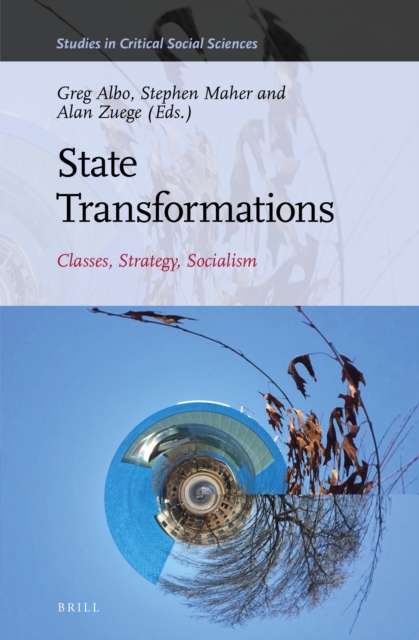
State Transformations
It is often remarked that critical - and especially Marxist - state theory began to lose its central place in the study of comparative politics in the 1980s. Ironically, this shift occurred just as neoliberal policies were transforming the social form and spatial scales of the state, radically restructuring the practices of state economic intervention, and extending the capabilities of the coercive arms of the state. This volume addresses the 'impoverishment of state theory' over the last decades and insists on the continued salience of class analysis to the study of states. The book's title, State Transformations, reflects several central themes in the comparative study of states: the neoliberal restructuring of capitalist states, the changing economic and political architecture of imperialism, and the prospects of a democratic transformation of capitalist states. The essays collected here on these themes are in honor and memory of Leo Panitch, whose influential body of work has shaped debates on the state, imperialism, and socialism over the past four decades. Contributors are: Clyde W. Barrow, Caio Bugiato, Frank Deppe, Ruth Felder, Ana Garcia, Sam Gindin, Doug Henwood, Martijn Konings, Colin Leys, Sebnem Oguz, Bryan D. Palmer, Dennis Pilon, Larry Savage, Charles Smith, Michalis Spourdalakis and Hilary Wainwright.
eBook

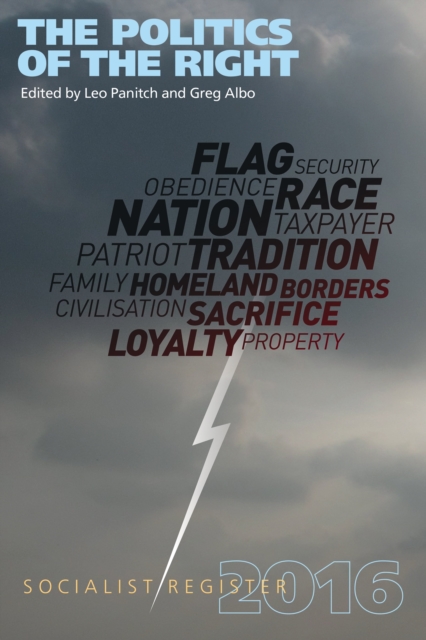
The Politics of the Right
Today the Left faces new challenges from political forces amassing on the radical right. The 52nd volume of the Socialist Register presents a serious calibration and a careful political mapping of these forces. It addresses pivotal questions on the reordering of the new right. These essays - very broad in terms of themes and places - speak to the global challenges the new right poses for the left at this historical moment. * What is the nature of the right's populism, nationalism and militarism? * What is the social base and organizational strength and range of far right political forces? * To what extent are they influencing mainstream parties and opinion? * How have they penetrated state institutions?* What role do state security services and police forces play?* Does our political situation today require comparison with 1930s Fascism? * How should the left respond to defend democratic and human rights?
eBook


Neoliberalism, the State, and the Left: A Canadian Perspective
An assessment of the left today must begin with an analysis of neoliberalism. Neoliberalism is not a monolithic ideology or political program. There is unevenness in the universalization of the neoliberal project in North America as elsewhere.
Journal Article
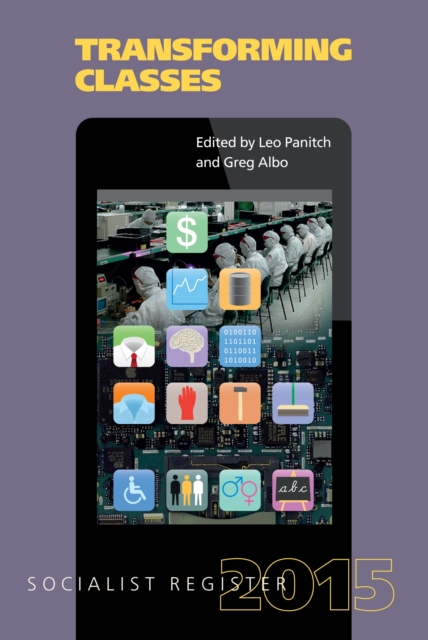
Transforming Classes
For more than half a century, the Socialist Register has brought together some of the sharpest thinkers from around the globe to address the pressing issues of our time. Founded by Ralph Miliband and John Saville in London in 1964, SR continues their commitment to independent and thought-provoking analysis, free of dogma or sectarian positions. Transforming Classes is a compendium of socialist thought today and a clarifying account of class struggle in the early twenty-first-century, from China to the United States.
eBook

European Capitalism Today: Between the Euro and the Third Way
The globalization of trade has driven Europe into a new economic course. The European Union has finally managed to integrate the regional economy that resulted in the establishment of single currency, the Euro. However, the integration was only regional and not global.
Journal Article
The World Economy, Market Imperatives and Alternatives
The dominance of neoliberal economic and social thinking in the 1990s attests to the search by countries of diverse socioeconomic structures for a way to survive in the future. This neoliberal market-oriented thinking, however, should be tempered with humanistic considerations.
Journal Article