
Catalogue Search | MBRL


Are you sure you want to remove the book from the shelf?

{{itemTitle}}
141
result(s) for
"Alexander Uribe"
Sort by:
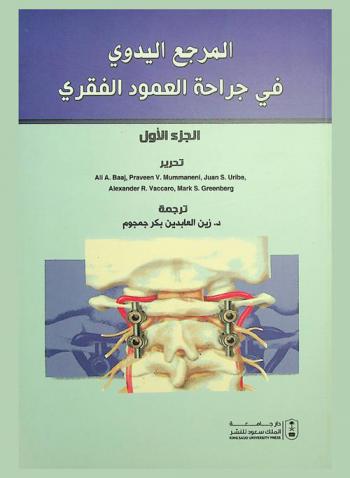
المرجع اليدوي في جراحة العمود الفقري
هذا الكتاب هو المرجع الأول من نوعه باللغة العربية في مجال جراحة العمود الفقري ويعتبر إضافة مهمة للمكتبة الطبية والعلمية العربية ويقدم هذا الكتاب المعلومات الأساسية والتقنيات اللازمة للممارسة الحديثة لجراحة العمود الفقري، بأسلوب مكثف مع ما يلزم من أشكال إيضاحية وجداول تلخيصية وملحقات قيمة حول موضعة المريض وأنواع المقومات الفقرية ومقاييس النتائج وقد تم إعداد الكتاب بطريقة منهجية وتعليمية متميزة بحيث يبدأ كل فصل فيه بتحديد النقاط الرئيسة ويختتم شرح الموضوع بتسجيل المعلومات المهمة تحت مسمى \"لآلئ جراحية\" وبعدد من الأسئلة لتحفيز القارئ على مراجعة صحة المعلومة التي بقيت في ذاكرته، إلى جانب قائمة من المراجع المقترحة للراغبين في مزيد من المعلومات ويتميز هذا الكتاب بحداثة وبوفرة المعلومات التي يقدمها مما يجعله مرجعا عمليا لا غنى عنه لجميع العاملين والمتدربين في مجال جراحة العمود الفقري.
Book

The wMel Strain of Wolbachia Reduces Transmission of Chikungunya Virus in Aedes aegypti
New approaches to preventing chikungunya virus (CHIKV) are needed because current methods are limited to controlling mosquito populations, and they have not prevented the invasion of this virus into new locales, nor have they been sufficient to control the virus upon arrival. A promising candidate for arbovirus control and prevention relies on the introduction of the intracellular bacterium Wolbachia into Aedes aegypti mosquitoes. This primarily has been proposed as a tool to control dengue virus (DENV) transmission; however, evidence suggests Wolbachia infections confer protection for Ae. aegypti against CHIKV. Although this approach holds much promise for limiting virus transmission, at present our understanding of the ability of CHIKV to infect, disseminate, and be transmitted by wMel-infected Ae. aegypti currently being used at Wolbachia release sites is limited.
Using Ae. aegypti infected with the wMel strain of Wolbachia that are being released in Medellin, Colombia, we report that these mosquitoes have reduced vector competence for CHIKV, even with extremely high viral titers in the bloodmeal. In addition, we examined the dynamics of CHIKV infection over the course of four to seven days post feeding. Wolbachia-infected mosquitoes remained non-infective over the duration of seven days, i.e., no infectious virus was detected in the saliva when exposed to bloodmeals of moderate viremia, but CHIKV-exposed, wild type mosquitoes did have viral loads in the saliva consistent with what has been reported elsewhere. Finally, the presence of wMel infection had no impact on the lifespan of mosquitoes as compared to wild type mosquitoes following CHIKV infection.
These results could have an impact on vector control strategies in areas where Ae. aegypti are transmitting both DENV and CHIKV; i.e., they argue for further exploration, both in the laboratory and the field, on the feasibility of expanding this technology beyond DENV.
Journal Article
Reduced dengue incidence following city-wide wMel Wolbachia mosquito releases throughout three Colombian cities: Interrupted time series analysis and a prospective case-control study
The introduction of Wolbachia (wMel strain) into Aedes aegypti mosquitoes reduces their capacity to transmit dengue and other arboviruses. Randomised and non-randomised studies in multiple countries have shown significant reductions in dengue incidence following field releases of wMel-infected Ae. aegypti. We report the public health outcomes from phased, large-scale releases of wMel-Ae. aegypti mosquitoes throughout three contiguous cities in the Aburrá Valley, Colombia.
Following pilot releases in 2015-2016, staged city-wide wMel-Ae. aegypti deployments were undertaken in the cities of Bello, Medellín and Itagüí (3.3 million people) between October 2016 and April 2022. The impact of the Wolbachia intervention on dengue incidence was evaluated in two parallel studies. A quasi-experimental study using interrupted time series analysis showed notified dengue case incidence was reduced by 95% in Bello and Medellín and 97% in Itagüí, following establishment of wMel at ≥60% prevalence, compared to the pre-intervention period and after adjusting for seasonal trends. A concurrent clinic-based case-control study with a test-negative design was unable to attain the target sample size of 63 enrolled virologically-confirmed dengue (VCD) cases between May 2019 and December 2021, consistent with low dengue incidence throughout the Aburrá Valley following wMel deployments. Nevertheless, VCD incidence was 45% lower (OR 0.55 [95% CI 0.25, 1.17]) and combined VCD/presumptive dengue incidence was 47% lower (OR 0.53 [95% CI 0.30, 0.93]) among participants resident in wMel-treated versus untreated neighbourhoods.
Stable introduction of wMel into local Ae. aegypti populations was associated with a significant and sustained reduction in dengue incidence across three Colombian cities. These results from the largest contiguous Wolbachia releases to-date demonstrate the real-world effectiveness of the method across large urban populations and, alongside previously published results, support the reproducibility of this effectiveness across different ecological settings.
NCT03631719.
Journal Article
Large-scale releases and establishment of wMel Wolbachia in Aedes aegypti mosquitoes throughout the Cities of Bello, Medellín and Itagüí, Colombia
The wMel strain of Wolbachia has been successfully introduced into Aedes aegypti mosquitoes and has been shown to reduce the transmission of dengue and other Aedes-borne viruses. Here we report the entomological results from phased, large-scale releases of Wolbachia infected Ae. aegypti mosquitoes throughout three contiguous cities located in the Aburrá Valley, Colombia.
Local wMel Wolbachia-infected Ae. aegypti mosquitoes were generated and then released in an initial release pilot area in 2015-2016, which resulted in the establishment of Wolbachia in the local mosquito populations. Subsequent large-scale releases, mainly involving vehicle-based releases of adult mosquitoes along publicly accessible roads and streets, were undertaken across 29 comunas throughout Bello, Medellín and Itagüí Colombia between 2017-2022. In 9 comunas these were supplemented by egg releases that were undertaken by staff or community members. By the most recent monitoring, Wolbachia was found to be stable and established at consistent levels in local mosquito populations (>60% prevalence) in the majority (67%) of areas.
These results, from the largest contiguous releases of wMel Wolbachia mosquitoes to date, highlight the operational feasibility of implementing the method in large urban settings. Based on results from previous studies, we expect that Wolbachia establishment will be sustained long term. Ongoing monitoring will confirm Wolbachia persistence in local mosquito populations and track its establishment in the remaining areas.
Journal Article
Eco-epidemiological analysis of rickettsial seropositivity in rural areas of Colombia: A multilevel approach
Rickettsiosis is a re-emergent infectious disease without epidemiological surveillance in Colombia. This disease is generally undiagnosed and several deadly outbreaks have been reported in the country in the last decade. The aim of this study is to analyze the eco-epidemiological aspects of rickettsial seropositivity in rural areas of Colombia where outbreaks of the disease were previously reported. A cross-sectional study, which included 597 people living in 246 households from nine hamlets in two municipalities of Colombia, was conducted from November 2015 to January 2016. The survey was conducted to collect sociodemographic and household characteristics (exposure) data. Blood samples were collected to determine the rickettsial seropositivity in humans, horses and dogs (IFA, cut-off = 1/128). In addition, infections by rickettsiae were detected in ticks from humans and animals by real-time PCR targeting gltA and ompA genes. Data was analyzed by weighted multilevel clog-log regression model using three levels (person, household and hamlets) and rickettsial seropositivity in humans was the main outcome. Overall prevalence of rickettsial seropositivity in humans was 25.62% (95%CI 22.11-29.12). Age in years (PR = 1.01 95%CI 1.01-1.02) and male sex (PR = 1.65 95%CI 1.43-1.90) were risk markers for rickettsial seropositivity. Working outdoors (PR = 1.20 95%CI 1.02-1.41), deforestation and forest fragmentation for agriculture use (PR = 1.75 95%CI 1.51-2.02), opossum in peridomiciliary area (PR = 1.56 95%CI 1.37-1.79) and a high proportion of seropositive domestic animals in the home (PR20-40% vs <20% = 2.28 95%CI 1.59-3.23 and PR>40% vs <20% = 3.14 95%CI 2.43-4.04) were associated with rickettsial seropositivity in humans. This study showed the presence of Rickettsia antibodies in human populations and domestic animals. In addition, different species of rickettsiae were detected in ticks collected from humans and animals. Our results highlighted the role of domestic animals as sentinels of rickettsial infection to identify areas at risk of transmission, and the importance of preventive measures aimed at curtailing deforestation and the fragmentation of forests as a way of reducing the risk of transmission of emergent and re-emergent pathogens.
Journal Article

The Bethesda system for reporting thyroid cytopathology in Colombia: Correlation with histopathological diagnoses in oncology and non-oncology institutions
To determine the correlation between the results of thyroid fine-needle aspirations interpreted using the Bethesda system and final histopathological reports for patients at an oncology hospital (OH) and non-oncology hospitals (NOHs).
A retrospective, cross-sectional, descriptive study was performed to compare the cytology and histopathology results for patients with thyroid nodules in three Colombian hospitals. The final correlation of diagnoses between the two methods is reported. In Colombia, the health system provides the existence of general care hospitals and hospitals specializing in care of patients with cancer.
A total of 196 reports were reviewed, of which 53% were from OH and 47% were from NOHs. A greater proportion of category V (37.5%) was diagnosed at the OH, whereas NOHs diagnosed a greater proportion of category II (42.3%). The global correlation between diagnoses made using cytology and histopathology was 93.3% for categories V and VI (based on the final malignant diagnosis) and 86.9% for benign category II. Significant differences between institution types were observed when category IV and V and malignant histopathology were compared (56.3% OH vs. 23.5% NOH; P = 0.05 for category IV, 97.4% OH vs. 82.3% NOH; P = 0.03 for category V), while no significant difference between institution types was observed when category II and final benign diagnosis were compared (P = 0.6).
The Bethesda system for thyroid cytology correlates adequately with final histopathological diagnosis in Colombia. Significant differences were identified in the diagnostic correlation for malignant lesions between the OH and NOHs in categories IV and V caused by selection bias of the population.
Journal Article

The impact of city-wide deployment of Wolbachia-carrying mosquitoes on arboviral disease incidence in Medellín and Bello, Colombia: study protocol for an interrupted time-series analysis and a test-negative design study version 2; peer review: 2 approved, 1 approved with reservations
Background: Dengue, chikungunya and Zika are viral infections transmitted by
Aedes aegypti mosquitoes, and present major public health challenges in tropical regions. Traditional vector control methods have been ineffective at halting disease transmission. The World Mosquito Program has developed a novel approach to arbovirus control using
Ae. aegypti stably transfected with the
Wolbachia bacterium, which have significantly reduced ability to transmit dengue, Zika and chikungunya in laboratory experiments. Field releases in eight countries have demonstrated
Wolbachia establishment in local
Ae. aegypti populations.
Methods: We describe a pragmatic approach to measuring the epidemiological impact of city-wide
Wolbachia deployments in Bello and Medellín, Colombia. First, an interrupted time-series analysis will compare the incidence of dengue, chikungunya and Zika case notifications before and after
Wolbachia releases, across the two municipalities. Second, a prospective case-control study using a test-negative design will be conducted in one quadrant of Medellín. Three of the six contiguous release zones in the case-control area were allocated to receive the first
Wolbachia deployments in the city and three to be treated last, approximating a parallel two-arm trial for the >12-month period during which
Wolbachia exposure remains discordant. Allocation, although non-random, aimed to maximise balance between arms in historical dengue incidence and demographics. Arboviral disease cases and arbovirus-negative controls will be enrolled concurrently from febrile patients presenting to primary care, with case/control status classified retrospectively following laboratory diagnostic testing. Intervention effect is estimated from an aggregate odds ratio comparing
Wolbachia-exposure odds among test-positive cases versus test-negative controls.
Discussion: The study findings will add to an accumulating body of evidence from global field sites on the efficacy of the
Wolbachia method in reducing arboviral disease incidence, and can inform decisions on wider public health implementation of this intervention in the Americas and beyond.
Trial registration: ClinicalTrials.gov:
NCT03631719. Registered on 15 August 2018.
Journal Article

CHARGE Syndrome in a Newborn with Rearrangement of Chromosomes 15 and Y. Case Report
Preterm neonate of 35+4 weeks, delivered by cesarean section due to non-reassuring fetal status. Prenatal ultrasound history of intrauterine growth restriction, cardiac malformations, and suspected central nervous system abnormalities. At birth, the neonate presented with a dysmorphic syndrome, choanal atresia, low ear implantation with bilateral malformation of the auricular pavilions and micropenis. The karyotype reported variants in chromosomes 15 and Y. A medical genetics specialist clinically diagnosed CHARGE syndrome. The patient received multidisciplinary management, requiring invasive mechanical ventilation, tracheostomy, thoracostomy and gastrostomy. He was discharged but readmitted due to aspiration pneumonia and died before a molecular diagnosis of the presence of a pathogenic variant for CHD7 could be made. This report constitutes a case of clinical diagnosis of CHARGE syndrome that presented structural alterations in chromosomes 15 and Y, which have not been described or associated in the literature as responsible for the etiology of this syndrome.
Journal Article

Correction: Large-scale releases and establishment of wMel Wolbachia in Aedes aegypti mosquitoes throughout the Cities of Bello, Medellín and Itagüí, Colombia
[This corrects the article DOI: 10.1371/journal.pntd.0011642.].
Journal Article
Correction: Large-scale releases and establishment of wMel Wolbachia in Aedes aegypti mosquitoes throughout the Cities of Bello, Medellín and Itagüí, Colombia
[This corrects the article DOI: 10.1371/journal.pntd.0011642.].
Journal Article