
Catalogue Search | MBRL


Are you sure you want to remove the book from the shelf?

{{itemTitle}}
142
result(s) for
"Allison, Brendan"
Sort by:
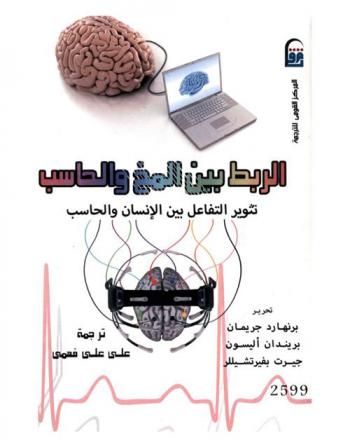
الربط بين المخ والحاسب : تثوير التفاعل بين الإنسان والحاسب
يتناول الكتاب مشكلات صعبة ومفتوحة في طليعة العلم الحديث، بما في ذلك مشكلات ونقاشات فلسفية ذات صلة، ومع ذلك فإنها تسعى إلى تقديم مواضيعها بطريقة يمكن الوصول بها أيضا إلى المثقفين علميا غير المتخصصين الذين يرغبون في اكتساب نظرة ثاقبة إلى تداعيات أعمق وأسئلة رائعة معنية. هذه السلسلة تعكس الحاجة إلى المنهج الأساسي ومتعدد التخصصات في العلوم الحديثة. كما أنها تهدف إلى تشجيع العلماء النشطاء في جميع المجالات للتفكير حول القضايا المهمة وربما المثيرة للجدل خارج تخصصاتهم.
Book

The Changing Face of P300 BCIs: A Comparison of Stimulus Changes in a P300 BCI Involving Faces, Emotion, and Movement
One of the most common types of brain-computer interfaces (BCIs) is called a P300 BCI, since it relies on the P300 and other event-related potentials (ERPs). In the canonical P300 BCI approach, items on a monitor flash briefly to elicit the necessary ERPs. Very recent work has shown that this approach may yield lower performance than alternate paradigms in which the items do not flash but instead change in other ways, such as moving, changing colour or changing to characters overlaid with faces.
The present study sought to extend this research direction by parametrically comparing different ways to change items in a P300 BCI. Healthy subjects used a P300 BCI across six different conditions. Three conditions were similar to our prior work, providing the first direct comparison of characters flashing, moving, and changing to faces. Three new conditions also explored facial motion and emotional expression. The six conditions were compared across objective measures such as classification accuracy and bit rate as well as subjective measures such as perceived difficulty. In line with recent studies, our results indicated that the character flash condition resulted in the lowest accuracy and bit rate. All four face conditions (mean accuracy >91%) yielded significantly better performance than the flash condition (mean accuracy = 75%).
Objective results reaffirmed that the face paradigm is superior to the canonical flash approach that has dominated P300 BCIs for over 20 years. The subjective reports indicated that the conditions that yielded better performance were not considered especially burdensome. Therefore, although further work is needed to identify which face paradigm is best, it is clear that the canonical flash approach should be replaced with a face paradigm when aiming at increasing bit rate. However, the face paradigm has to be further explored with practical applications particularly with locked-in patients.
Journal Article


Brain Computer Interface Treatment for Motor Rehabilitation of Upper Extremity of Stroke Patients—A Feasibility Study
Numerous recent publications have explored Brain Computer Interfaces (BCI) systems as rehabilitation tools to help subacute and chronic stroke patients recover upper extremity movement. Recent work has shown that BCI therapy can lead to better outcomes than conventional therapy. BCI combined with other techniques such as Functional Electrical Stimulation (FES) and Virtual Reality (VR) allows to the user restore the neurological function by inducing the neural plasticity through improved real-time detection of motor imagery (MI) as patients perform therapy tasks.
Fifty-one stroke patients with upper extremity hemiparesis were recruited for this study. All participants performed 25 sessions with the MI BCI and assessment visits to track the functional changes before and after the therapy.
The results of this study demonstrated a significant increase in the motor function of the paretic arm assessed by Fugl-Meyer Assessment (FMA-UE), ΔFMA-UE = 4.68 points,
< 0.001, reduction of the spasticity in the wrist and fingers assessed by Modified Ashworth Scale (MAS), ΔMAS-wrist = -0.72 points (
= 0.83),
< 0.001, ΔMAS-fingers = -0.63 points (
= 0.82),
< 0.001. Other significant improvements in the grasp ability were detected in the healthy hand. All these functional improvements achieved during the BCI therapy persisted 6 months after the therapy ended. Results also showed that patients with Motor Imagery accuracy (MI) above 80% increase 3.16 points more in the FMA than patients below this threshold (95% CI; [1.47-6.62],
= 0.003). The functional improvement was not related with the stroke severity or with the stroke stage.
The BCI treatment used here was effective in promoting long lasting functional improvements in the upper extremity in stroke survivors with severe, moderate and mild impairment. This functional improvement can be explained by improved neuroplasticity in the central nervous system.
Journal Article

Comparison of Dry and Gel Based Electrodes for P300 Brain–Computer Interfaces
Most brain-computer interfaces (BCIs) rely on one of three types of signals in the electroencephalogram (EEG): P300s, steady-state visually evoked potentials, and event-related desynchronization. EEG is typically recorded non-invasively with electrodes mounted on the human scalp using conductive electrode gel for optimal impedance and data quality. The use of electrode gel entails serious problems that are especially pronounced in real-world settings when experts are not available. Some recent work has introduced dry electrode systems that do not require gel, but often introduce new problems such as comfort and signal quality. The principal goal of this study was to assess a new dry electrode BCI system in a very common task: spelling with a P300 BCI. A total of 23 subjects used a P300 BCI to spell the word \"LUCAS\" while receiving real-time, closed-loop feedback. The dry system yielded classification accuracies that were similar to those obtained with gel systems. All subjects completed a questionnaire after data recording, and all subjects stated that the dry system was not uncomfortable. This is the first field validation of a dry electrode P300 BCI system, and paves the way for new research and development with EEG recording systems that are much more practical and convenient in field settings than conventional systems.
Journal Article
Complete Locked-in and Locked-in Patients: Command Following Assessment and Communication with Vibro-Tactile P300 and Motor Imagery Brain-Computer Interface Tools
Many patients with locked-in syndrome (LIS) or complete locked-in syndrome (CLIS) also need brain-computer interface (BCI) platforms that do not rely on visual stimuli and are easy to use. We investigate command following and communication functions of mindBEAGLE with 9 LIS, 3 CLIS patients and three healthy controls. This tests were done with vibro-tactile stimulation with 2 or 3 stimulators (VT2 and VT3 mode) and with motor imagery (MI) paradigms. In VT2 the stimulators are fixed on the left and right wrist and the participant has the task to count the stimuli on the target hand in order to elicit a P300 response. In VT3 mode an additional stimulator is placed as a distractor on the shoulder and the participant is counting stimuli either on the right or left hand. In motor imagery mode the participant is instructed to imagine left or right hand movement. VT3 and MI also allow the participant to answer yes and no questions. Healthy controls achieved a mean assessment accuracy of 100% in VT2, 93% in VT3, and 73% in MI modes. They were able to communicate with VT3 (86.7%) and MI (83.3%) after 2 training runs. The patients achieved a mean accuracy of 76.6% in VT2, 63.1% in VT3, and 58.2% in MI modes after 1-2 training runs. 9 out of 12 LIS patients could communicate by using the vibro-tactile P300 paradigms (answered on average 8 out of 10 questions correctly) and 3 out of 12 could communicate with the motor imagery paradigm (answered correctly 4,7 out of 5 questions). 2 out of the 3 CLIS patients could use the system to communicate with VT3 (90 and 70% accuracy). The results show that paradigms based on non-visual evoked potentials and motor imagery can be effective for these users. It is also the first study that showed EEG-based BCI communication with CLIS patients and was able to bring 9 out of 12 patients to communicate with higher accuracies than reported before. More importantly this was achieved within less than 15-20 min.
Journal Article
EEG Biomarkers Related With the Functional State of Stroke Patients
Recent studies explored promising new quantitative methods to analyze electroencephalography (EEG) signals. This paper analyzes the correlation of two EEG parameters, Brain Symmetry Index (BSI) and Laterality Coefficient (LC), with established functional scales for the stroke assessment.
Thirty-two healthy subjects and thirty-six stroke patients with upper extremity hemiparesis were recruited for this study. The stroke patients where subdivided in three groups according to the stroke location: Cortical, Subcortical, and Cortical + Subcortical. The participants performed assessment visits to record the EEG in the resting state and perform functional tests using rehabilitation scales. Then, stroke patients performed 25 sessions using a motor-imagery based Brain Computer Interface system (BCI). BSI was calculated with the EEG data in resting state and LC was calculated with the Event-Related Synchronization maps.
The results of this study demonstrated significant differences in the BSI between the healthy group and Subcortical group (
= 0.001), and also between the healthy and Cortical+Subcortical group (
= 0.019). No significant differences were found between the healthy group and the Cortical group (
= 0.505). Furthermore, the BSI analysis in the healthy group based on gender showed statistical differences (
= 0.027). In the stroke group, the correlation between the BSI and the functional state of the upper extremity assessed by Fugl-Meyer Assessment (FMA) was also significant, ρ = -0.430 and
= 0.046. The correlation between the BSI and the FMA-Lower extremity was not significant (ρ = -0.063,
= 0.852). Similarly, the LC calculated in the alpha band has significative correlation with FMA of upper extremity (ρ = -0.623 and
< 0.001) and FMA of lower extremity (ρ = -0.509 and
= 0.026). Other important significant correlations between LC and functional scales were observed. In addition, the patients showed an improvement in the FMA-upper extremity after the BCI therapy (ΔFMA = 1 median [IQR: 0-8],
= 0.002).
The quantitative EEG tools used here may help support our understanding of stroke and how the brain changes during rehabilitation therapy. These tools can help identify changes in EEG biomarkers and parameters during therapy that might lead to improved therapy methods and functional prognoses.
Journal Article
Brain–computer interface treatment for gait rehabilitation in stroke patients
The use of Brain–Computer Interfaces (BCI) as rehabilitation tools for chronically ill neurological patients has become more widespread. BCIs combined with other techniques allow the user to restore neurological function by inducing neuroplasticity through real-time detection of motor-imagery (MI) as patients perform therapy tasks. Twenty-five stroke patients with gait disability were recruited for this study. Participants performed 25 sessions with the MI-BCI and assessment visits to track functional changes during the therapy. The results of this study demonstrated a clinically significant increase in walking speed of 0.19 m/s, 95%CI [0.13–0.25],
p
< 0.001. Patients also reduced spasticity and improved their range of motion and muscle contraction. The BCI treatment was effective in promoting long-lasting functional improvements in the gait speed of chronic stroke survivors. Patients have more movements in the lower limb; therefore, they can walk better and safer. This functional improvement can be explained by improved neuroplasticity in the central nervous system.
Journal Article
The hybrid BCI
Nowadays, everybody knows what a hybrid car is. A hybrid car normally has two engines to enhance energy efficiency and reduce CO2 output. Similarly, a hybrid brain-computer interface (BCI) is composed of two BCIs, or at least one BCI and another system. A hybrid BCI, like any BCI, must fulfill the following four criteria: (i) the device must rely on signals recorded directly from the brain; (ii) there must be at least one recordable brain signal that the user can intentionally modulate to effect goal-directed behaviour; (iii) real time processing; and (iv) the user must obtain feedback. This paper introduces hybrid BCIs that have already been published or are in development. We also introduce concepts for future work. We describe BCIs that classify two EEG patterns: one is the event-related (de)synchronisation (ERD, ERS) of sensorimotor rhythms, and the other is the steady-state visual evoked potential (SSVEP). Hybrid BCIs can either process their inputs simultaneously, or operate two systems sequentially, where the first system can act as a \"brain switch\". For example, we describe a hybrid BCI that simultaneously combines ERD and SSVEP BCIs. We also describe a sequential hybrid BCI, in which subjects could use a brain switch to control an SSVEP-based hand orthosis. Subjects who used this hybrid BCI exhibited about half the false positives encountered while using the SSVEP BCI alone. A brain switch can also rely on hemodynamic changes measured through near-infrared spectroscopy (NIRS). Hybrid BCIs can also use one brain signal and a different type of input. This additional input can be an electrophysiological signal such as the heart rate, or a signal from an external device such as an eye tracking system.
Journal Article
How Many People Could Use an SSVEP BCI?
Brain-computer interfaces (BCI) are communication systems that allow people to send messages or commands without movement. BCIs rely on different types of signals in the electroencephalogram (EEG), typically P300s, steady-state visually evoked potentials (SSVEP), or event-related desynchronization. Early BCI systems were often evaluated with a selected group of subjects. Also, many articles do not mention data from subjects who performed poorly. These and other factors have made it difficult to estimate how many people could use different BCIs. The present study explored how many subjects could use an SSVEP BCI. We recorded data from 53 subjects while they participated in 1-4 runs that were each 4 min long. During these runs, the subjects focused on one of four LEDs that each flickered at a different frequency. The eight channel EEG data were analyzed with a minimum energy parameter estimation algorithm and classified with linear discriminant analysis into one of the four classes. Online results showed that SSVEP BCIs could provide effective communication for all 53 subjects, resulting in a grand average accuracy of 95.5%. About 96.2% of the subjects reached an accuracy above 80%, and nobody was below 60%. This study showed that SSVEP based BCI systems can reach very high accuracies after only a very short training period. The SSVEP approach worked for all participating subjects, who attained accuracy well above chance level. This is important because it shows that SSVEP BCIs could provide communication for some users when other approaches might not work for them.
Journal Article