
Catalogue Search | MBRL


Are you sure you want to remove the book from the shelf?

{{itemTitle}}
589
result(s) for
"Anderson, Gary M"
Sort by:

Sacred trust : the medieval church as an economic firm
The Church dominated society in the Middle Ages and functioned as a quasi-government, providing public and private goods. This book is the first to examine specific institutions in the Church in the Middle Ages in economic terms. Other books have argued generally that the Church either had a positive or negative effect on economic development. The authors of this book look more closely at the actual Church institutions and practices and describe how each functioned as a part of the larger economy of the time. They focus especially on marriage, usury, heresy, the crusades, and the monasteries. It is not their purpose to reject or impugn religious motives that may be advanced by theologians and historians. Their goal is to bring a fresh perspective to the role of institutions of the medieval Church in economic development.
eBook
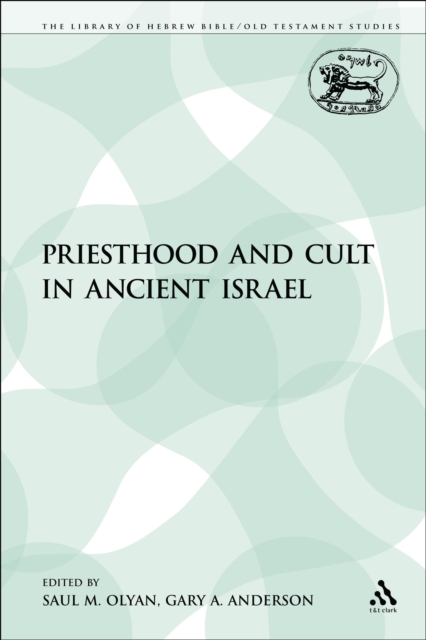
Priesthood and Cult in Ancient Israel
During the last decade or so there has been a renewed interest in the study of cult and priesthood. The various individuals who have contributed essays to this volume are of both junior and senior rank and from both Christian and Jewish backgrounds. Certain essays represent the fruitful interchange that is now developing among historians of religion, anthropologists and biblical scholars. Others focus on parallels between aspects of Israelite religion and their counterparts in Canaanite and early Greek contexts. There are also contributions on the literary shape of the priestly law-code.
eBook

Soviet Venality: A Rent-Seeking Model of the Communist State
While the recent Fall of Communism has focused the interest of economists on the admittedly fascinating problems associated with the ongoing economic reform process, the study of the functioning of actual communist economies still seems mired in the conventional model of central planning. This model is predicated on the assumption that communist rulers are unselfish drones who single-mindedly maximize the public interest. Our article proposes an alternative, public choice model. We suggest that the Soviet-style system represents a modern incarnation of the mercantilist economies of sixteenth-and seventeenth-century Europe, and that venality, not ideology, drives these economies in practice.
Journal Article

Congressional Influence and Patterns of New Deal Spending, 1933-1939
The steady and rapid increase in the size of the federal government has occurred mostly since the period of the Great Depression in the 1930s. Essentially all important federal spending programs involving transfers to individuals originated during the New Deal period. The relative importance of various factors involving political influence on the determination of New Deal spending policy is explored. The results indicate that, while spending allocations were correlated with indicators of the relative geographic severity of the Depression, indicators of relative political influence also seem to be strongly related to spending patterns. The findings suggest that federal transfer programs did not become captured by interest groups and self-interested politicians recently but were affected by such factors from their beginnings.
Journal Article


Read Aloud program spurs parent participation
Northumberland Elementary School parent's are participating in Read Aloud International (RAI), a program that encourages and rewards participants for reading aloud nightly to their children every day. Anderson discusses the importance of RAI.
Journal Article

Mr. Smith and the Preachers: The Economics of Religion in the Wealth of Nations
The extension of economic analysis to problems beyond the domain of formal markets and explicit prices represents a major recent intellectual development. But \"economic imperialism\" is not new and was not invented in Chicago. Adam Smith, in his Wealth of Nations, extended economic reasoning to a variety of nonmarket exchange problems. One example is his analysis of religious behavior. Smith viewed participation in religion as a rational device by which individual enhanced the value of their human capital. He also explained the behavior of the clergy and other suppliers of religious services from an economic perspective.
Journal Article

