
Catalogue Search | MBRL


Are you sure you want to remove the book from the shelf?

{{itemTitle}}
246
result(s) for
"Andrew Mango, Mango"
Sort by:

The Turks today
\"In this sequel to his acclaimed biography, Ataturk, Andrew Mango traces the republic's development since the death of its founder and bringing to life the Turkish people and their vibrant society. The Turks Today interprets the latest academic research for a broader audience, making this book the definitive work on modern Turkey.\"--BOOK JACKET.

From the Sultan to Atatürk
World War I sounded the death knell of empires. The forces of disintegration affected several empires simultaneously. To that extent they were impersonal. But prudent statesmen could delay the death of empires, rulers such as Emperor Franz Josef II of Austria-Hungary and the Ottoman Sultan Abdü'lhamid II. Adventurous rulers - Kaiser Wilhelm of Germany and Enver Pasha in the Ottoman Empire - hastened it. Enver's decision to enter the war on the side of Germany destroyed the Ottoman state. It may have been doomed in any case, but he was the agent of its doom. The last Sultan Mehmet VI Vahdettin thought he could salvage the Ottoman state in something like its old form. But Vahdettin and his ministers could not succeed because the victorious Allies had decided on the final partition of the Ottoman state. The chief proponent of partition was Lloyd George, heir to the Turcophobe tradition of British liberals, who fell under the spell of the Greek irredentist politician Venizelos. With these two in the lead, the Allies sought to impose partition on the Sultan's state. When the Sultan sent his emissaries to the Paris peace conference they could not win a reprieve. The Treaty of Sèvres which the Sultan's government signed put an end to Ottoman independence. The Treaty of Sèvres was not ratified. Turkish nationalists, with military officers in the lead, defied the Allies, who promptly broke ranks, each one trying to win concessions for himself at the expense of the others. Mustafa Kemal emerged as the leader of the military resistance. Diplomacy allowed Mustafa Kemal to isolate his people's enemies: Greek and Armenian irredentists. Having done so, he defeated them by force of arms. In effect, the defeat of the Ottoman empire in the First World War was followed by the Turks' victory in two separate wars: a brief military campaign against the Armenians and a long one against the Greeks. Lausanne-where General Ismet succeeded in securing peace on Turkey's terms-was the founding charter of the modern Turkish nation state. But more than that it showed that empires could no longer rule peoples against their wishes. This need not be disastrous: Mustafa Kemal demonstrated that the interests of developed countries were compatible with those of developing ones. He fought the West in order to become like it. Where his domestic critics wanted to go on defying the West, Mustafa Kemal saw that his country could fare best in cooperation with the West.
eBook
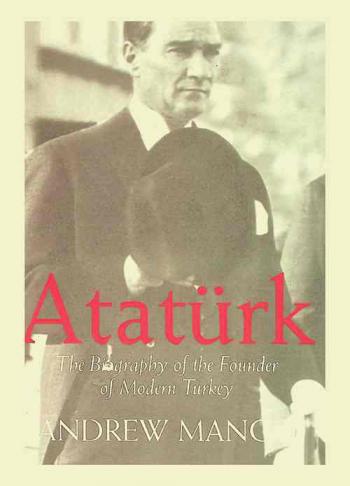
Ataturk
\"In this new biography of Mustafa Kemal Ataturk, the first to appear in English based on Turkish sources, Andrew Mango strips away the myth to show the complexities of one of the most visionary, influential, and enigmatic statesmen of the century - his high ideals and ruthless tactics, his championship of women's rights and his inability to sustain an equal relationship with women, his nationalism and his belief in a single universal civilization, his regular drinking bouts and the strange theories they produced.\"
Book

Turkey and the War on Terror
Since the 1970s, Turkey has suffered 35,000 deaths through terrorism, yet the PKK terror group was only recognized as such by the European Union in 2002.
The realization that terrorism poses a world-wide threat is now forcing a keen reassessment of the struggle which Turkey has had to wage with terror for over thirty years while the world looked on. Terror is clearly now a key part of the international agenda and this authoritative account details and establishes the Turkish experience.
This chronological account of terrorist attacks inside Turkey and against Turkish targets outside the country, places them in the global setting.
This book will be of great interest to all students and scholars of international relations, terrorism and security studies.
1. Terror Declares War on Turkey 2. Keeping the Death Wish Alive 3. Separatist Terror 4. The Abuse of Religion 5. Freedom from Fear Bibliography
eBook
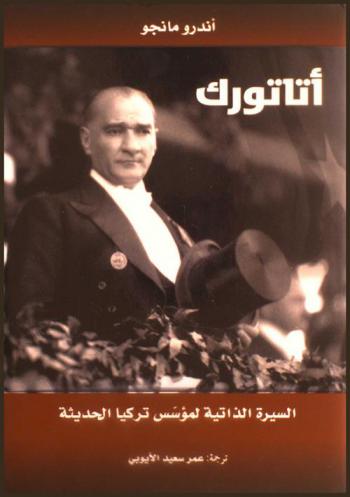
أتاتورك : السيرة الذاتية لمؤسس تركيا الحديثة
مصطفى كمال أتاتورك شخصية مثيرة للجدل، يمتزج في سيرته الذاتية المتعددة الروايات الخيال في الواقع. ويرى كثيرون أنه بطل قومي أنشأ دولة تركيا الحديثة من حطام الإمبراطورية العثمانية، بينما يرى المسلمون التقليديون ويحملونه وزر إلغاء الخلافة، ويعتبره آخرون مجرد دكتاتور يفتقر إلى المبادئ. فيه طاغية علمانيا وفي هذه السيرة الذاتية الكثيفة والممتعة، يعيد أندرو مانجو رواية حياة أتاتورك متجنبا التمجيد والتبجيل والتهجم والنقد ة وشمول مختلف المصادر التركية العنيف على حد سواء، ويزن بحكمة بين الروايات المتناقضة في الغالب، مستعرضا بدق والاجنبية، فيرسم صورة مفصلة ومتوازنة عن باني الجمهورية التركية، وعن مواجهاته مع أوثق مؤيديه وألد أعدائه. \"أفضل الروايات الموجزة التي أطلعت عليها عن إنحطاط الإمبراطورية العثمانية، الرواية تستحوذ على القارئ، ولا تقدم كل الوقائع عن الحياة المهنية لأتاتورك فحسب، وإنما ترسم أيضا صورة مقنعة عن الرجل بأكمله\"
BOOK

The makers of the modern Middle East
This work presents a comprehensive analysis of how the decisions taken at the end of the First World War forged a new Middle East, setting in place a pattern which formed the political shape of the region as we know it today.
eBook


Turkey and the War on Terror: 'For Thirty Years We Fought Alone'
Since the 1970s, Turkey has suffered 35,000 deaths through terrorism, yet the PKK terror group was only recognized as such by the European Union in 2002.The realization that terrorism poses a world-wide threat is now forcing a keen reassessment of the struggle which Turkey has had to wage with terror for over thirty years while the world looked on. Terror is clearly now a key part of the international agenda and this authoritative account details and establishes the Turkish experience.This chronological account of terrorist attacks inside Turkey and against Turkish targets outside the country, places them in the global setting.This book will be of great interest to all students and scholars of international relations, terrorism and security studies.
eBook
Making the Modern Middle East
A century ago, as World War I got underway, the Middle East was dominated, as it had been for centuries, by the Ottoman Empire. But by 1923, its political shape had changed beyond recognition, as the collapse of the Ottoman Empire and the insistent claims of Arab and Turkish nationalism and Zionism led to a redrawing of borders and shuffling of alliances—a transformation whose consequences are still felt today.
This fully revised and updated second edition of The Makers of the Modern Middle East traces those changes and the ensuing history of the region through the rest of the twentieth century and on to the present. Focusing in particular on three leaders—Emir Feisal, Mustafa Kemal, and Chaim Weizmann—the book offers a clear, authoritative account of the region seen from a transnational perspective, one that enables readers to understand its complex history and the way it affects present-day events.
eBook

Turkey Old and New - A Bibliographical Survey: Part 3. The Republic of Turkey Today
A review essay on a book by Andrew Finkel, Turkey: What Everyone Needs to Know.
Journal Article