
Catalogue Search | MBRL


Are you sure you want to remove the book from the shelf?

{{itemTitle}}
54
result(s) for
"Andrew Oberg"
Sort by:

Souls and Selves: Querying an AI Self with a View to Human Selves and Consciousness
The question of self-aware artificial intelligence may turn on the question of the human self. To explore some of the possibilities in play we start from an assumption that the self is often pre-analytically and by default conceptually viewed along lines that have likely been based on or from the kind of Abrahamic faith notion as expressed by a “true essence” (although not necessarily a static one), such as is given in the often vaguely used “soul”. Yet, we contend that the self is separately definable, and in relatively narrow terms; if so, of what could the self be composed? We begin with a brief review of the descriptions of the soul as expressed by some sample scriptural references taken from these religious lineages, and then transition to attempt a self-concept in psychological and cognitive terms that necessarily differentiates and delimits it from the ambiguous word “soul”. From these efforts too will emerge the type of elements that are needed for a self to be present, allowing us to think of the self in an artificial intelligence (AI) context. If AI might have a self, could it be substantively close to a human’s? Would an “en-selved” AI be achievable? I will argue that there are reasons to think so, but that everything hinges on how we understand consciousness, and hence ruminating on that area—and the possibility or lack thereof in extension to non-organic devices—will comprise our summative consideration of the pertinent theoretical aspects. Finally, the practical will need to be briefly addressed, and for this, some of the questions that would have to be asked regarding what it might mean ethically to relate to AI if an “artificial self” could indeed arise will be raised but not answered. To think fairly about artificial intelligence without anthropomorphizing it we need to better understand our own selves and our own minds. This paper will attempt to analyze the self within these bounds.
Journal Article
The Self as Source and Destination for Intuitive Interpretations of Religious or Spiritual Experiences
Religious or spiritual experiences (RSE) are often difficult to fully express even if one might be able to describe particular aspects of them. Yet the influences that such carry in a person’s mode of being can be vast, and they are clearly a fundamental part of the human condition (whether accepted, denied, or dismissed, their occurrence appears universal). How then might these RSE—and the corresponding grounding implications—be better explained? This paper seeks to elucidate the problematic via an applied investigation of a self-theoretical framework which is composed of three interlaced “sets”: (1) Self-defining traits, (2) Self-directing traits, and (3) Self-evaluating traits. We will suggest that these elements (with consciousness and bodily presence) form a core self that is a separable facet from those of personal identity and whole person; and this finding will in turn require a brief look at consciousness and a two-tiered mental model. Taking the self-view into a phenomenological hermeneutical examination will illuminate the position at which RSE might reside within an individual’s cognition, and thence to exploring the pre-thought (the functionally pre-aware) foundations involved. Finally, some considerations will be given for how an understanding of the foregoing structure (if it be found valid) might contribute towards the purposive shifting of that self-basis from out of and towards which RSE are situated in a lifeworld.
Journal Article
Dry, Weary, Smiling Bones: Finding a ‘Yes’ through Hebrew Narrative and a Reduced Spirituality
Life can be a difficult phenomenon to acquiesce to, much less embrace. Tragedy is seemingly around every corner, and very many philosophies and faiths both ancient and modern have championed the exit from existence over its entrance. Existentialism and nihilism proclaim the seizure or suicide of one’s undesired birth, moksha and nirvana the blessed non-return of a wandering soul. Yet against these currents the Jewish ideational approach to being, with its ever-old and newness, has consistently given the world a ‘yes’, and this apparently despite having every reason not to; although perhaps “because” is more appropriate to that prior clause than “despite”. In what follows we therefore consider how we might uncover from within Judaism an abstracted “spirituality” for our times, a numinousness that is not necessarily a “belief”: a “faith” that is more in line with a hope. Our objective is to learn how to think differently rather than to convert, and thus towards this more modest goal we set out to explore some images from Hebrew poetry and narrative, attempting to bring forth core conceptualities which could then be applied to an affirming notional framework befitting anyone who would ponder—who would feel—a way through. How might we state this ‘yes’ for our lives?
Journal Article

The Sacred Disguised: An Instance of the Double Use of Space by Japan’s Hidden Christians
Christianity arrived on the island of Shikoku, Japan, from the neighboring island of Kyushu in the mid-sixteenth century, an event commemorated by a signboard and gravesite where some of the early converts to the faith were buried. The sancti\"ed area exhibits what might be expected of Hidden Christian spatiality: a quasi-Buddhist nature, syncretistic Shinto elements, and o#ertory tools; each of which would be quite out of place in any other “Christian” context. What may the sacrality of this ground have entailed? What signi\"cance did its objects contain for those who created them and visited them? Moreover, how “ecumenical” could worship there have been if one half (the Christian) was for political reasons forcibly kept hidden while the other half (Buddhist/Shinto) was open? These are the questions we pursue, although our conclusions can perhaps do no more than indicate a direction.
Journal Article
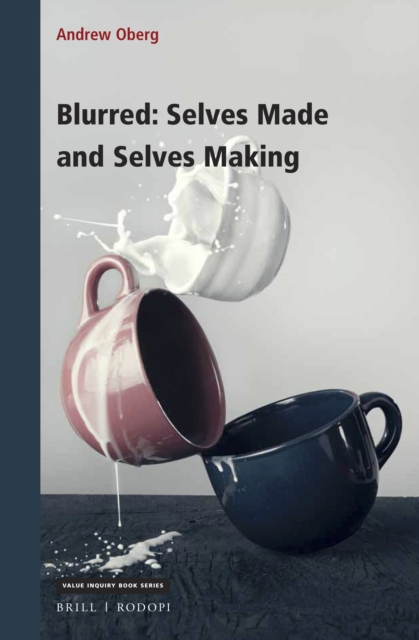
Blurred: Selves Made and Selves Making
The question of the self, of what the self is (or even if there is a self), has been one that has grown alongside humanity - has haunted humanity - throughout our history. Blurred: Selves Made and Selves Making guides the reader down these dark corridors, shining light on the specters of theories past and unveiling a new self-view to hover afresh, beckoning to roadways beyond.In this remarkably interdisciplinary study, philosophy of mind joins with contemporary neuroscience and cutting-edge psychology to lay bare the how of identity formation, judgment, and behavior generation. Drawing on thinkers from both the Continental and Analytic traditions, consciousness is explored and a uniquely realist self-concept presented that, if adopted, offers a life lived otherwise.
eBook

Blurred
Blurred: Selves Made and Selves Making draws on resources from philosophy of mind, consciousness studies, neuroscience, and psychological research to present a uniquely realist self-concept. Continental, Analytic, and applied philosophy all play a part in this groundbreaking undertaking.
eBook

PRESCIENCE AND AN EARLY DEATH
Death's inevitability is not in question, but its mystery is one that is equally unavoidable and the questions we are likely to have about what then unanswerable. Traditionally we have tended to be concerned with what – if anything – might happen to us personally after we pass away, but that is not our question here. Rather we wish to contemplate what a knowledge of what will happen to the others in our lives may do to us while we are yet living. If we could know before we die the events that will befall our loved ones and/or our communities how might we react? Would that knowing be a comfort or a curse? Moreover, what might our contemplation on this query teach us about death more generally? Such is our concern in the discussion below.
Journal Article
ALL TOO HUMAN? SPECIESISM, RACISM, AND SEXISM
The issue of how we ought to treat the nonhuman animals in our lives is one that has been growing in importance over the past forty years. A common charge is that discriminatory behavior based only on differences of species membership is just as wrong morally as are acts of racism or sexism. Is such a charge sustainable? It is argued that such reasoning confuses real differences with false ones, may have negative ethical consequences, and could tempt us to abandon our responsibilities to the natural world. Finally, some benefits to human animal treatment that more humane nonhuman animal treatment may bring are considered.
Journal Article

Comparison of the Effectiveness of a CALL-Based Approach and a Card-Based Approach to Vocabulary Acquisition and Retention
In this study, two study methods for the support of acquisition and retention of 10 vocabulary items were compared; one method used representative picture cards and the other a CALL interface. Seventy-one first-year Japanese university students comprising two classes participated in the study. The students studied a practice set of 10 vocabulary items using both of the two methods and then a treatment set of 10 different items using only one of the methods to which the students were randomly assigned. A t test done on the groups’ vocabulary pretest scores showed no significant difference between the two groups in terms of knowledge of the items at the outset of the experiment. The analysis of the posttreatment data showed no significant difference between the groups. Finally, a posttreatment survey revealed a slight preference for the CALL method among the students.
Journal Article