
Catalogue Search | MBRL


Are you sure you want to remove the book from the shelf?

{{itemTitle}}
20
result(s) for
"Ann Bowers, Maggie"
Sort by:
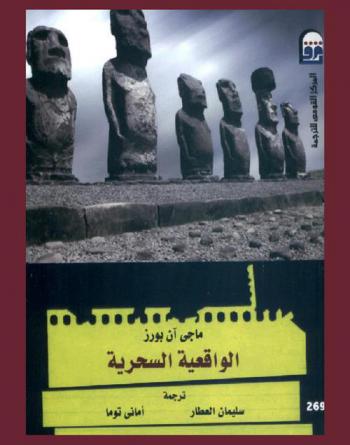
الواقعية السحرية
منذ الثمانينيات، أصبحت مصطلحات مثل \"الواقع السحري\" و \"الواقعية السحرية\"، وكذلك \"الواقع المبدع\" أكثر انتشارا وأكبر مصدر للسخرية والاستهزاء. تبدو هذه المصطلحات وكأنها متناقضة تماما، ولكن حقيقة الأمر، أنها عناصر بها قدر من التناقض صنع إفادة جيدة لبعض المفاهيم التي توصى بها تلك المصطلحات. ففي السنوات الأخيرة، أصبح مصطلح \"الواقعية السحرية\" أكثر شهرة وانتشارا من بين المصطلحات الثلاثة الأخرى، حيث إنه يشير إلى أسلوب سردي محدد. إن ما يعرضه الأسلوب السردي هو طريق لمناقشة المناهج البديلة للواقع فيما يتعلق بالفلسفة الغربية، التي عبر عنها في العديد من الأعمال الغربية التي تحدث عن فترة ما بعد الاستعمار للأدب القصصي المعاصر لكتاب مشهورين مثل \"جابرييل جارثيا ماركيث، وسليمان رشدي\". ذلك هو الجانب الذي جعل من الواقعية السحرية متصلة تماما بأدب القرن العشرين خصوصا في الفترة الأخيرة منه.
BOOK
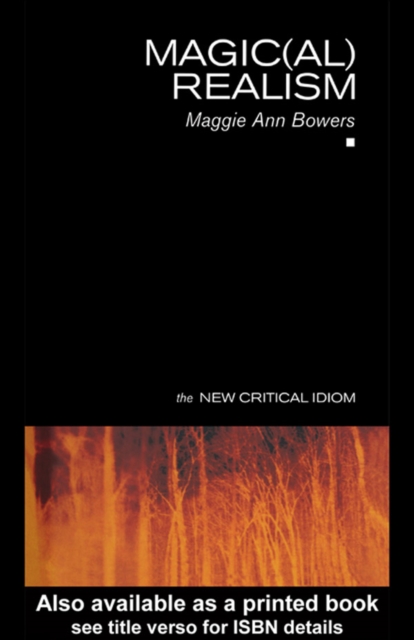
Magic(al) Realism
This invaluable handbook, provides clear definitions and distinctions between the terms and helps to navigate the complexities of magic, magical and marvellous realism within art and literary criticism.
eBook

Entanglements: Envisioning World Literature from the Global South
Entanglements: Envisioning World Literature from the Global South scrutinizes current debates to bring historical and contemporary South-South entanglements to the fore and to develop a new understanding of world literature in a multipolar world of globalized modernity. The volume challenges established ideas of world literature by rethinking the concept along the notion of “entanglements”: as a field of variously criss-crossing relations of literary activity beyond the confines of literary canons, cultural containers, or national borders.
The collection presents individual case studies from a variety of language traditions that focus on particular literary relationships and practices across Africa, the Americas, Asia, and Europe as well as new fictional, poetical, and theoretical conceptions of world literature in order to broaden our understanding of the multilateral entanglements within a widening communicative network that shape our globalized world.
eBook

Locations of Magic(al) Realism
To suggest that magic(al) realist writing can be found only in particular
‘locations’ would be misleading. It is after all a narrative mode, or a
way of thinking in its most expansive form, and those concepts cannot
be ‘kept’ in a geographic location. However, it is true to say that certain
locations and countries have become associated with producing magic
realist, and later magical realist writing. It has been noted that magical
realist fictions are often set in rural areas away from influence over, or
influence from, the political power centres. The Colombian novelist
Gabriel García Márquez sets the majority of his novels in a fictional
town called Macondo on the isolated Caribbean coast of Colombia. The
African American novelist Toni Morrison, whilst sometimes setting her
novels in the city, sets the magical realist events in rural areas and small
townships. However, this is not the case for all magical realist texts, as
some highly politically motivated writers have set their magical realist
fictions in large cities that are the focus of political and social tensions.
The British Indian writer Salman Rushdie, whose fictions are set in some
of the world’s largest urban areas such as London, Bombay or New
York, is the most notable of these writers. However, each of these
novels is portrayed from the marginal perspectives of people lacking
political power, whether they are an impotent writer in a pickle factory
in Bombay, or a group of young British Asian revolutionaries in
London. For these reasons magical realism has become associated with
fictions that tell the tales of those on the margins of political power and
influential society. This has meant that much magical realism has
originated in many of the postcolonial countries that are battling against
the influence of their previous colonial rulers, and consider themselves
to be at the margins of imperial power. It has also become a common
narrative mode for fictions written from the perspective of the
politically or culturally disempowered, for instance indigenous people
living under a covert colonial system such as Native Americans in theUnited States, women writing from a feminist perspective, or those
whose lives incorporate different cultural beliefs and practices from
those dominant in their country of residence, such as Muslims in Britain.
Book Chapter
Magic(al) Realism and Cultural Production
Up to this point the focus of this book has been on magical realism in
adult narrative fiction. However, this chapter, which considers magic
(al) realist cultural production discusses magical realism and magic
realism where they appear in other cultural forms such as television,
film and painting. It opens with a discussion of the appearance of
magical realism in children’s literature in English such as that by Edith
Nesbit and Michael Bond, then children’s television and particularly
narrative drama. The section also considers the role of magical realism
in film as a narrative art form. In order to do this, films such as Wim
Wenders’ Wings of Desire are considered in the light of the way in
which the narrative of the film is told, whether through dialogue or
filming techniques. Film has been considered in magic realist terms by a
few critics such as Fredric Jameson, but for the most part, many
magical realist films have not been analysed from this point of view,
unless adapted from a recognized magical realist novel, such as Como
agua para chocolate (Like Water for Chocolate). Finally, this chapter
will consider magic realism in painting. As the term ‘magic realism’
was coined in relation to a particular form of painting, there is much
critical work exploring these paintings in such terms. The sections
analysing painting will identify the main practitioners of this form, such
as Otto Dix, Georg Schrimpf, Alex Colville and Frida Kahlo, and will
demonstrate how it has remained a current critical form in art.
Book Chapter
Cross-cultural Variants of Magical Realism
The oxymoron that makes up the term magical realism provides a
structure for this mode of writing that includes opposing or
contradictory points of view. The vocabulary used to describe this
polarity at the heart of magical realism often indicates opposing worlds
or at the very least, world views. Geoff Hancock, for instance, describes
magic realism as constituting the ‘conjunction of two worlds’ (1980:7)—
the magical and the realist. Likewise, Amaryll Chanady states that
magical realism is an ‘amalgamation of a rational and an irrational
world view’ (1985:21). Lois Zamora and Wendy Faris observe that the
conjunction or amalgamation of these two worlds creates a mixture of
these opposing cultures, and a third space, which is constituted from
neither one nor the other of the opposing world views, but from the
creation of a third which gives equal credence to the influence of the
other two: ‘The propensity of magical realist texts to admit a plurality
of worlds means that they often situate themselves on liminal territory
between or among these worlds’ (1995:6). It is not surprising then to
find that many writers whose cultural perspectives include varied and
sometimes contradictory cultural influences are drawn to magical
realism as a form of expression.
Book Chapter