
Catalogue Search | MBRL


Are you sure you want to remove the book from the shelf?

{{itemTitle}}
533
result(s) for
"Antoine, Laura"
Sort by:

الأمير الصغير
يعد هذا الكتاب الأمير الصغير وهي قصة مخصصة للأطفال تستهدف الطفولة المبكرة وتعمل على استثمار الطفل في بناء المهارات المختلفة المرتبطة بالخيال والابتكار وقوة الشخصية والبحث عن حلول إبداعية ويستمد الطفل من خلالها الكثير من العلم والمعرفة والمعلومات ويعد من المنهج السلوكي التربوي رائع يعلم الطفل كيف يستخلص من مشكلاته.
Book

RNA Modifications in Pathogenic Bacteria: Impact on Host Adaptation and Virulence
RNA modifications are involved in numerous biological processes and are present in all RNA classes. These modifications can be constitutive or modulated in response to adaptive processes. RNA modifications play multiple functions since they can impact RNA base-pairings, recognition by proteins, decoding, as well as RNA structure and stability. However, their roles in stress, environmental adaptation and during infections caused by pathogenic bacteria have just started to be appreciated. With the development of modern technologies in mass spectrometry and deep sequencing, recent examples of modifications regulating host-pathogen interactions have been demonstrated. They show how RNA modifications can regulate immune responses, antibiotic resistance, expression of virulence genes, and bacterial persistence. Here, we illustrate some of these findings, and highlight the strategies used to characterize RNA modifications, and their potential for new therapeutic applications.
Journal Article
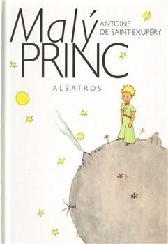
Malý princ
An aviator whose plane is forced down in the Sahara Desert encounters a little man from a small planet who describes his adventures in the universe seeking the secret of what is really important in life.
BOOK

How do student parents and specialised teachers see success and scholarly difficulty
The purpose of this study is to look closely at the way people within the school system-uninitiated (parents) or expert (special education teachers)-see successful students and those having learning difficulties. To do so we have questioned 29 parents and 33 special education teachers. The results show that in those people's minds, difficulties are sorted out into three categories: backgrounds, personal and cultural features whereas success is divided into two categories: backgrounds, and personal features. Other results show that the mental representation that people have of a child with learning difficulties is not the opposite of that of a successful one, and the reasons given to explain these phenomena are not opposed either. Finally the parents' and teachers' mental representations are on the whole rather different, with, for instance, better homogeneity and wider consensus in teachers. // ABSTRACT IN FRENCH: L'objectif de cette étude est d'explorer la manière dont des acteurs du système scolaire profanes (parents d'élèves) ou experts (enseignants spécialisés) se représentent l'élève en réussite scolaire et l'élève en difficulté scolaire. Pour ce faire, nous avons interrogé 29 parents d'élèves et 33 enseignants spécialisés. Les résultats indiquent que la représentation de la difficulté se décompose en trois catégories (environnement, caractéristiques personnelles et culture), alors que celle de la réussite se compose de deux catégories (environnement et caractéristiques personnelles). Les autres résultats montrent que la représentation d'un élève en difficulté scolaire n'est pas l'inverse de celle d'un élève en réussite, et que les causes évoquées pour expliquer ces statuts ne sont pas non plus opposées. Enfin la représentation des parents et des enseignants spécialisés diffèrent globalement, avec notamment une homogénéité et un consensus plus grands dans la représentation de ces derniers. Reproduced by permission of Bibliothèque de Sciences Po
Journal Article
Comment des parents d’élèves et des enseignants spécialisés voient la réussite et la difficulté scolaires
L’objectif de cette étude est d’explorer la manière dont des acteurs du système scolaire profanes (parents d’élèves) ou experts (enseignants spécialisés) se représentent l’élève en réussite scolaire et l’élève en difficulté scolaire. Pour ce faire, nous avons interrogé 29 parents d’élèves et 33 enseignants spécialisés. Les résultats indiquent que la représentation de la difficulté se décompose en trois catégories (environnement, caractéristiques personnelles et culture), alors que celle de la réussite se compose de deux catégories (environnement et caractéristiques personnelles). Les autres résultats montrent que la représentation d’un élève en difficulté scolaire n’est pas l’inverse de celle d’un élève en réussite, et que les causes évoquées pour expliquer ces statuts ne sont pas non plus opposées. Enfin la représentation des parents et des enseignants spécialisés diffèrent globalement, avec notamment une homogénéité et un consensus plus grands dans la représentation de ces derniers.
Journal Article

Genome organization and DNA accessibility control antigenic variation in trypanosomes
Many evolutionarily distant pathogenic organisms have evolved similar survival strategies to evade the immune responses of their hosts. These include antigenic variation, through which an infecting organism prevents clearance by periodically altering the identity of proteins that are visible to the immune system of the host
1
. Antigenic variation requires large reservoirs of immunologically diverse antigen genes, which are often generated through homologous recombination, as well as mechanisms to ensure the expression of one or very few antigens at any given time. Both homologous recombination and gene expression are affected by three-dimensional genome architecture and local DNA accessibility
2
,
3
. Factors that link three-dimensional genome architecture, local chromatin conformation and antigenic variation have, to our knowledge, not yet been identified in any organism. One of the major obstacles to studying the role of genome architecture in antigenic variation has been the highly repetitive nature and heterozygosity of antigen-gene arrays, which has precluded complete genome assembly in many pathogens. Here we report the de novo haplotype-specific assembly and scaffolding of the long antigen-gene arrays of the model protozoan parasite
Trypanosoma brucei
, using long-read sequencing technology and conserved features of chromosome folding
4
. Genome-wide chromosome conformation capture (Hi-C) reveals a distinct partitioning of the genome, with antigen-encoding subtelomeric regions that are folded into distinct, highly compact compartments. In addition, we performed a range of analyses—Hi-C, fluorescence in situ hybridization, assays for transposase-accessible chromatin using sequencing and single-cell RNA sequencing—that showed that deletion of the histone variants H3.V and H4.V increases antigen-gene clustering, DNA accessibility across sites of antigen expression and switching of the expressed antigen isoform, via homologous recombination. Our analyses identify histone variants as a molecular link between global genome architecture, local chromatin conformation and antigenic variation.
Long-read sequencing allows the assembly of antigen-gene arrays in
Trypanosoma brucei
and, coupled with deletion experiments, demonstrates that histone variants act as a molecular link between genome architecture, chromatin conformation and antigen variation.
Journal Article

Temporal pattern separation in hippocampal neurons through multiplexed neural codes
Pattern separation is a central concept in current theories of episodic memory: this computation is thought to support our ability to avoid confusion between similar memories by transforming similar cortical input patterns of neural activity into dissimilar output patterns before their long-term storage in the hippocampus. Because there are many ways one can define patterns of neuronal activity and the similarity between them, pattern separation could in theory be achieved through multiple coding strategies. Using our recently developed assay that evaluates pattern separation in isolated tissue by controlling and recording the input and output spike trains of single hippocampal neurons, we explored neural codes through which pattern separation is performed by systematic testing of different similarity metrics and various time resolutions. We discovered that granule cells, the projection neurons of the dentate gyrus, can exhibit both pattern separation and its opposite computation, pattern convergence, depending on the neural code considered and the statistical structure of the input patterns. Pattern separation is favored when inputs are highly similar, and is achieved through spike time reorganization at short time scales (< 100 ms) as well as through variations in firing rate and burstiness at longer time scales. These multiplexed forms of pattern separation are network phenomena, notably controlled by GABAergic inhibition, that involve many celltypes with input-output transformations that participate in pattern separation to different extents and with complementary neural codes: a rate code for dentate fast-spiking interneurons, a burstiness code for hilar mossy cells and a synchrony code at long time scales for CA3 pyramidal cells. Therefore, the isolated hippocampal circuit itself is capable of performing temporal pattern separation using multiplexed coding strategies that might be essential to optimally disambiguate multimodal mnemonic representations.
Journal Article

Molecular basis of CTCF binding polarity in genome folding
Current models propose that boundaries of mammalian topologically associating domains (TADs) arise from the ability of the CTCF protein to stop extrusion of chromatin loops by cohesin. While the orientation of CTCF motifs determines which pairs of CTCF sites preferentially stabilize loops, the molecular basis of this polarity remains unclear. By combining ChIP-seq and single molecule live imaging we report that CTCF positions cohesin, but does not control its overall binding dynamics on chromatin. Using an inducible complementation system, we find that CTCF mutants lacking the N-terminus cannot insulate TADs properly. Cohesin remains at CTCF sites in this mutant, albeit with reduced enrichment. Given the orientation of CTCF motifs presents the N-terminus towards cohesin as it translocates from the interior of TADs, these observations explain how the orientation of CTCF binding sites translates into genome folding patterns.
The boundaries of topologically associating domains (TADs) arise from the ability of the CTCF protein to stop extrusion of chromatin loops by cohesin. Here the authors find that CTCF positions cohesin through its N-terminus but does not control its overall binding dynamics on chromatin, and show how the orientation of CTCF binding sites translates into genome folding patterns.
Journal Article

Ebola virus disease
Ebola virus disease (EVD) is a severe and frequently lethal disease caused by Ebola virus (EBOV). EVD outbreaks typically start from a single case of probable zoonotic transmission, followed by human-to-human transmission via direct contact or contact with infected bodily fluids or contaminated fomites. EVD has a high case–fatality rate; it is characterized by fever, gastrointestinal signs and multiple organ dysfunction syndrome. Diagnosis requires a combination of case definition and laboratory tests, typically real-time reverse transcription PCR to detect viral RNA or rapid diagnostic tests based on immunoassays to detect EBOV antigens. Recent advances in medical countermeasure research resulted in the recent approval of an EBOV-targeted vaccine by European and US regulatory agencies. The results of a randomized clinical trial of investigational therapeutics for EVD demonstrated survival benefits from two monoclonal antibody products targeting the EBOV membrane glycoprotein. New observations emerging from the unprecedented 2013–2016 Western African EVD outbreak (the largest in history) and the ongoing EVD outbreak in the Democratic Republic of the Congo have substantially improved the understanding of EVD and viral persistence in survivors of EVD, resulting in new strategies toward prevention of infection and optimization of clinical management, acute illness outcomes and attendance to the clinical care needs of patients.
Ebola virus disease (EVD) is caused by the filovirus Ebola virus (EBOV). Although the natural host of EBOV is undefined, a single zoonotic transmission is the probable start of most EVD outbreaks. EVD is characterized by gastrointestinal manifestations and multiple organ dysfunction syndrome and has a high case–fatality rate.
Journal Article