
Catalogue Search | MBRL


Are you sure you want to remove the book from the shelf?

{{itemTitle}}
27
result(s) for
"Arbaci, Sonia"
Sort by:
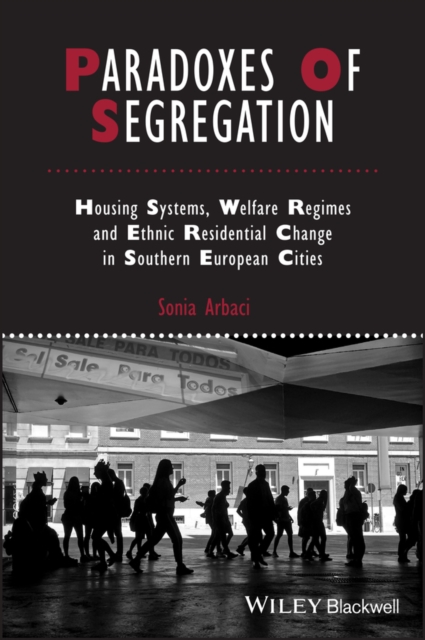
Paradoxes of segregation : housing systems, welfare regimes and ethnic residential change in Southern European cities
Through an international comparative research, this unique book examines ethnic residential segregation patterns in relation to the wider society and mechanisms of social division of space in Western European regions.
* Focuses on eight Southern European cities, develops new metaphors and furthers the theorisation/conceptualisation of segregation in Europe
* Re-centres the segregation debate on the causes of marginalisation and inequality, and the role of the state in these processes
* A pioneering analysis of which and how systemic mechanisms, contextual conditions, processes and changes drive patterns of ethnic segregation and forms of socio-ethnic differentiation
* Develops an innovative inter-disciplinary approach which explores ethnic patterns in relation to European welfare regimes, housing systems, immigration waves, and labour systems
eBook

The value of the city. Rent extraction, right to housing and conflicts for the use of urban space
The extent of residential alienation and urban inequalities made visible in the aftermath of the 2008 financial crisis shed light on processes of politico-economic transformations that altered the role of housing within society since the late 1970s. The focus on (re-)commodification and financialization has become central in the debate and opened up rich interdisciplinary strands of research on the impacts that these processes have on housing. Building on such a fertile academic body of work, it is paramount to contribute to the setting of the public agenda, putting housing issues at the heart of the political debate and policy actions. Introducing this special issue, the paper is firstly asserting the political dimension of housing. Secondly the issue of urban rent extraction is discussed as crucial, especially in the face of the disruptive effects of extensive processes of re-commodification and financialization of housing and land markets in a context of neoliberal urban policies. Thirdly, the Italian case is presented as extremely relevant when it comes to understanding the political dimension of housing, recalling the controversial debates and clashes developed along the 20th century and the current trends of a country confronted with intense processes of financialization of housing, with a significantly accelerated real-estate cycle transforming the residential landscape and resulting in the most intense building cycle of the last half-century. Finally, the dynamics of de-politicisation (and re-politicisation) of housing are recalled with reference to the contributions collected in this special issue.
Journal Article


The Challenges of Understanding Urban Segregation
Despite a century of research into urban segregation, patterns of immigrant settlement are still insufficiently understood. This topical issue requires radical thinking, particularly as it is currently dealt with by a range of disciplines, each of which tends to rely on its own research
paradigms. This paper reviews some of the key challenges of studying the subject, starting with the concept of segregation being more complex than the simplistic label of 'ghetto' might suggest. The paper also shows how approaches to the challenges of understanding urban segregation differ
according to its given geographical context and disciplinary approach. It shows that segregation is a multi-dimensional process, requiring a multi-disciplinary approach. The paper concludes that research into segregation needs to address the fact that it is an inherently complex and fundamentally
spatial phenomenon.
Journal Article

The Urban Diaspora
This chapter focuses on how the socio‐residential conditions and spatial segregation patterns of the diverse ethnic groups have changed since the mid‐1990s. It explores how and to what extent residential marginalisation and socio‐tenurial differentiation have intensified across the ethnic groups and widened the divide between natives and immigrants. Housing hardship grew, residual segments of the rental sector and owner‐occupation markets became more ethnicised and the expansion of homeownership among immigrants disguised new mechanisms of marginalisation. By examining changes in the patterns of ethnic segregation, the chapter shows how the increase in socio‐residential inequality was associated with spatial desegregation, peripheral dispersal and diffuse segregation. It also shows how the geographic distribution of successive waves of immigrants followed centrifugal paths and how these new patterns of segregation stemmed from structural mechanisms of differentiation driven by the housing systems and urban renewal regimes. The chapter describes divisive phenomena, which could be understood within the metaphor of 'urban diaspora'.
Book Chapter
Mechanisms of Differentiation
To identify the housing mechanisms of differentiation underpinning patterns of segregation, this chapter develops a historical analysis of the geographic distribution of the native social groups across owner‐occupied and rented sectors. It shows the distinct ways in which these sectors have been developed across the cities and in municipal and metropolitan areas. The chapter offers insights on how successive waves of internal and international migration have negotiated their residential insertion in the city in a changing housing and urban context. It combines and continues at city level lines of enquiry. The chapter isolates contextual references relevant to understand patterns of ethnic residential segregation after the mid‐1990s, in terms of path‐dependency or change, when international migration to these cities increased significantly. The development of unitary rental systems, in combination with other decommodified welfare pillars such as labour, education and health, was designed to create less socially divided urban societies and reduce class inequalities.
Book Chapter
Changing Urban Societies
This chapter focuses on the changes the urban societies experienced from the 1990s until the international financial crisis in the late 2000s. It examines how changes in housing and local urban political agendas have altered or consolidated some of the structures, processes, patterns and mechanisms of differentiation identified so far, and how these transformations interplay with patterns of ethnic residential segregation. The chapter investigates how the housing and socio‐urban changes generated new structural mechanisms of differentiation and residential marginalisation and how they hindered immigrants in particular, amplified forms of socio‐ethnic divisions and translated into new geographies of diffuse segregation. It begins with a broad panorama on the changing housing systems in order to isolate the genesis of these new structural mechanisms. The chapter explores the effects of the housing changes across the eight cities at municipal and metropolitan level in relation to urban strategies of renewal and metropolitan growth, socio‐urban processes and socio‐urban legacies.
Book Chapter