
Catalogue Search | MBRL


Are you sure you want to remove the book from the shelf?

{{itemTitle}}
80
result(s) for
"Ardren, Traci"
Sort by:

Social Identities in the Classic Maya Northern Lowlands
Social Identities in the Classic Maya Northern Lowlands plumbs the archaeological record for what it can reveal about the creation of personal and communal identities in the Maya world. Using new primary data from her excavations at the sites of Yaxuna, Chunchucmil, and Xuenkal, and new analysis of data from Dzibilchaltun in Yucatan, Mexico, Traci Ardren presents a series of case studies in how social identities were created, shared, and manipulated among the lowland Maya.Ardren argues that the interacting factors of gender, age, familial and community memories, and the experience of living in an urban setting were some of the key aspects of Maya identities. She demonstrates that domestic and civic spaces were shaped by gender-specific behaviors to communicate and reinforce gendered ideals. Ardren discusses how child burials disclose a sustained pattern of reverence for the potential of childhood and the power of certain children to mediate ancestral power. She shows how small shrines built a century after Yaxuna was largely abandoned indicate that its remaining residents used memory to reenvision their city during a time of cultural reinvention. And Ardren explains how Chunchucmil's physical layout of houses, plazas, and surrounding environment denotes that its occupants shared an urban identity centered in the movement of trade goods and economic exchange. Viewing this evidence through the lens of the social imaginary and other recent social theory, Ardren demonstrates that material culture and its circulations are an integral part of the discourse about social identity and group membership.
eBook
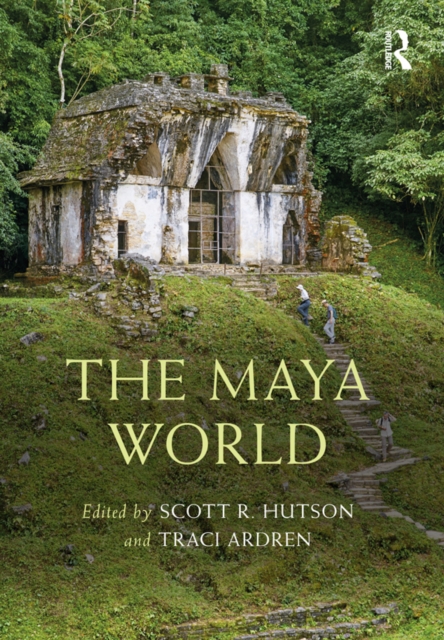
The Maya World
The Maya World brings together over 60 authors, representing the fields of archaeology, art history, epigraphy, geography, and ethnography, who explore cutting-edge research on every major facet of the ancient Maya and all sub-regions within the Maya world.
The Maya world, which covers Guatemala, Belize, and parts of Mexico, Honduras, and El Salvador, contains over a hundred ancient sites that are open to tourism, eight of which are UNESCO World Heritage Sites, and many thousands more that have been dug or await investigation. In addition to captivating the lay public, the ancient Maya have attracted scores of major interdisciplinary research expeditions and hundreds of smaller projects going back to the 19th century, making them one of the best-known ancient cultures. The Maya World explores their renowned writing system, towering stone pyramids, exquisitely painted murals, and elaborate funerary tombs as well as their creative agricultural strategies, complex social, economic, and political relationships, widespread interactions with other societies, and remarkable cultural resilience in the face of historical ruptures.
This is an invaluable reference volume for scholars of the ancient Maya, including archaeologists, historians, and anthropologists.
eBook

Species identification of modern and archaeological shark and ray skeletal tissues using collagen peptide mass fingerprinting
Introduction Elasmobranchs, such as sharks and rays, are among the world’s most endangered vertebrates, with over 70% loss in abundance over the past 50 years due to human impacts. Zooarchaeological baselines of elasmobranch diversity, distribution, and exploitation hold great promise for contributing essential historical contexts in the assessment of contemporary patterns in their taxonomic diversity and vulnerability to human-caused extinction. Yet, the historical ecology of elasmobranchs receives relatively less archaeological attention compared to that of ray-finned fishes or marine mammals, largely due to issues of taxonomic resolution across zooarchaeological identifications. Methods We explore the use of Zooarchaeology by Mass Spectrometry (ZooMS) for species identification in this unstudied group, using an archaeological case study from the marine environments of the Florida Keys, a marine biodiversity hotspot that is home to an array of elasmobranch species and conservation efforts. By comparison with 39 modern reference species, we could distinguish 12 taxa within the zooarchaeological assemblage from the Clupper archaeological site (Upper Matecumbe Key) that included nine sharks, two rays and a sawfish. Results and discussion The results indicate that, through additional complexity of the collagen peptide mass fingerprint, obtained due to the presence of the cartilaginous type II collagen, ZooMS collagen peptide mass fingerprinting provides exceptionally high taxonomic resolution in this group, yielding species-level identifications in all cases where sufficient reference material was used. This case study also highlights the added value of ZooMS for taxa that are more difficult to distinguish in zooarchaeological analyses, such as vertebrae of the Atlantic sharpnose shark ( Rhizoprionodon terraenovae ) and the hammerhead sharks ( Sphyrna spp.) in the Florida Keys. Therefore, the application of collagen peptide mass fingerprinting to elasmobranchs offers great potential to improve our understanding of their archaeological past and historical ecology.
Journal Article

Tourism in the Mundo Maya: Inventions and (Mis)Representations of Maya Identities and Heritage
In this paper we explore how Maya identities have been (mis)represented in the context of heritage tourism across the Mundo Maya and underscore the cultural heterogeneity and historical diversity of Maya speaking people. Our focus is the Yucatán peninsula, where we look at terms used to define social categories and ethnic groups through time. We then examine how tourism can affect notions of self-identify and self-ascription, by presenting our first-hand experience as archaeologists dealing with issues of Maya identity and heritage claims in the context of archaeological tourism development at the sites of Chunchucmil and Yaxuna, Yucatán. We propose the use of a ‘relational approach’ to identify formation processes in contrast to the more common genealogical approach. In addition, we believe that with the help of applied anthropologists archaeologists can be advocates for local communities and mediators among multiple stakeholders in situations where these communities are poised to benefit from tourism.
Journal Article

Conversations about the production of archaeological knowledge and community museums at Chunchucmil and Kochol, Yucatán, México
In the mid-1980s, the noted Mexican anthropologist Guillermo Bonfil Batalla wrote that, while every Mexican schoolchild knew something about pre-colonial periods, and was aware of the great archaeological monuments that serve as modern national symbols, the glorious prehistoric past was experienced as something dead, something apart from themselves, something connected by territory but little else. This chapter chronicles a shift in research priorities as a result of sustained interaction with members of the local communities in which a Maya archaeological site is located. Chunchucmil is a major, Classic Maya urban center near the Gulf of Mexico coast in north-western Yucatan. A real consideration of landscape must include people, and the actors who experienced the site over time, especially those who have cultural or experiential claims to the land.
Book Chapter

Studies of Gender in the Prehispanic Americas
In the past ten years archaeologists have produced a vast literature on the study of gender in the prehispanic New World. This review defines key concepts, identifies three major themes within this tradition—gender in native cosmologies, intersections of gender and the body, and studies of work and specialization—and explores the significant contributions of engendered archaeology to the broader field. Final suggestions for linkages with queer studies and indigenous feminism point the way to where this field might develop productive new avenues of research.
Journal Article

Inequality, urbanism, and governance at Coba and the Northern Maya Lowlands
Gini coefficients for residential groups at Coba for roofed surface area, volume of architecture, and houselot space range from 0.423 to 0.551, fitting well within the range of many ancient and modern state-level cities and societies and other Mesoamerican centers. These values are also similar to other large, Classic period, Northern Lowland cities, such as Dzibilchaltun and Chunchucmil. These data do not support the idea that autocratic regimes exhibit greater wealth inequality. We also failed to find a pattern in which inequality grew over the course of the Classic period. The Lorenz curves for Coba and other sites do not indicate any breaks that would allow households to be sorted into wealth classes. Thus, wealth differences were fluid, continuous, and out in the open, giving these settlements the dynamism and attractiveness that helped them grow into some of the largest and most remarkable ancient Maya cities.
Journal Article

The travels of Maya merchants in the ninth and tenth centuries ad: investigations at Xuenkal and the Greater Cupul Province, Yucatan, Mexico
The region between the Maya capital of Chichen Itza and its port site on the Gulf of Mexico was one of the most heavily traversed landscapes during the Classic period. Vast quantities of trade goods were conveyed inland from the coast on the backs of long-distance traders. This study explores the experiences of these traders as they transported raw materials such as shell and obsidian as well as finished ornaments to the urban center in exchange for salt from the northern salt beds of Yucatan. We utilize archaeological data from sites along this trade route with a focus on Xuenkal, where we have conducted excavations into the nature of regional changes during the expansion of Chichen Itza since 2004. Archaeological data coupled with view-shed and travel-time analyses provide a nuanced perspective on the travel experiences of the traders who maintained one important component of the Classic Maya economy.
Journal Article
The Archaeology of Childhood
Children existed in ancient times as active participants in the
societies in which they lived and the cultures they belonged to.
Despite their various roles, and in spite of the demographic
composition of ancient societies where children comprised a large
percentage of the population, children are almost completely
missing in many current archaeological discourses. To remedy this,
The Archaeology of Childhood aims to instigate
interdisciplinary dialogues between archaeologists and other
disciplines on the notion of childhood and children and to develop
theoretical and methodological approaches to analyze the
archaeological record in order to explore and understand children
and their role in the formation of past cultures. Contributors
consider how the notion of childhood can be expressed in artifacts
and material records and examine how childhood is described in
literary and historical sources of people from different regions
and cultures. While we may never be able to reconstruct every last
aspect of what childhood was like in the past, this volume argues
that we can certainly bring children back into archaeological
thinking and research, and correct many erroneous and gender-biased
interpretations.
eBook

Gender and sexuality
In this chapter, I briefly summarize current research on the inter-related topics of gender and sexuality, within ancient Maya studies. I review the history of interest into gendered representations of difference, and explain the terminology used to explain concept such as gender, sex, and sexuality within this field of study. The body of the chapter reviews recent advancements in gendered activities such as craft production, our understanding of ancient Maya masculinities, and the trend to normalize gender as a component of any social system. I conclude with thoughts on productive avenues for future research directions, including the use of theoretical perspectives from queer studies.
Book Chapter