
Catalogue Search | MBRL


Are you sure you want to remove the book from the shelf?

{{itemTitle}}
532
result(s) for
"Arrow, Kenneth J."
Sort by:


Global health 2035: a world converging within a generation
The international community can best support countries to implement progressive universal health coverage by financing population, policy, and implementation research, such as on the mechanics of designing and implementing evolution of the benefits package as the resource envelope for public finance grows. Antimicrobials based on a new mechanism of action Combined diarrhoea vaccine (rotavirus, enterotoxigenic Escherichia coli, typhoid, and shigella); protein-based universal pneumococcal vaccine; respiratory syncytial virus vaccine; hepatitis C vaccine ..
Journal Article

Sustainability and the measurement of wealth
We develop and apply a consistent and comprehensive theoretical framework for assessing whether economic growth is compatible with sustaining wellbeing over time. Our approach differs from earlier approaches by concentrating on wealth rather than income. Sustainability is demonstrated by showing that a properly defined comprehensive measure of wealth is maintained through time. Our wealth measure is unusually comprehensive, capturing not only reproducible and human capital but also natural capital, health improvements and technological change. We apply the framework to five countries: the United States, China, Brazil, India and Venezuela. We show that the often-neglected contributors to wealth – technological change, natural capital and health capital – fundamentally affect the conclusions one draws about whether given nations are achieving sustainability. Indeed, even countries that display sustainability differ considerably in the kinds of capital that contribute to it.
Journal Article

Does aquaculture add resilience to the global food system?
Aquaculture is the fastest growing food sector and continues to expand alongside terrestrial crop and livestock production. Using portfolio theory as a conceptual framework, we explore how current interconnections between the aquaculture, crop, livestock, and fisheries sectors act as an impediment to, or an opportunity for, enhanced resilience in the global food system given increased resource scarcity and climate change. Aquaculture can potentially enhance resilience through improved resource use efficiencies and increased diversification of farmed species, locales of production, and feeding strategies. However, aquaculture’s reliance on terrestrial crops and wild fish for feeds, its dependence on freshwater and land for culture sites, and its broad array of environmental impacts diminishes its ability to add resilience. Feeds for livestock and farmed fish that are fed rely largely on the same crops, although the fraction destined for aquaculture is presently small (∼4%). As demand for high-value fed aquaculture products grows, competition for these crops will also rise, as will the demand for wild fish as feed inputs. Many of these crops and forage fish are also consumed directly by humans and provide essential nutrition for low-income households. Their rising use in aquafeeds has the potential to increase price levels and volatility, worsening food insecurity among the most vulnerable populations. Although the diversification of global food production systems that includes aquaculture offers promise for enhanced resilience, such promise will not be realized if government policies fail to provide adequate incentives for resource efficiency, equity, and environmental protection.
Journal Article
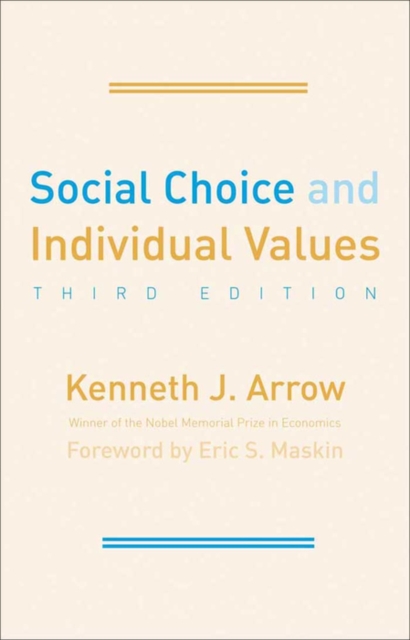
Social Choice and Individual Values: Third Edition
Originally published in 1951, Social Choice and Individual Values introduced \"Arrow's Impossibility Theorem\" and founded the field of social choice theory in economics and political science. This new edition, including a new foreword by Nobel laureate Eric Maskin, reintroduces Arrow's seminal book to a new generation of students and researchers.\"Far beyond a classic, this small book unleashed the ongoing explosion of interest in social choice and voting theory. A half-century later, the book remains full of profound insight: its central message, 'Arrow's Theorem,' has changed the way we think.\"-Donald G. Saari, author of Decisions and Elections: Explaining the Unexpected
eBook
Sustainability and the measurement of wealth: further reflections
The June 2012 issue of Environment and Development Economics published a symposium with considerable focus on our paper, ‘Sustainability and the measurement of wealth’. The Symposium also contained five articles in which other researchers offered valuable comments on our paper. The present note replies to those comments. It clarifies important issues and reveals how important questions relating to sustainability analysis can be fruitfully addressed within our framework. These include questions about the treatment of time, the use of shadow prices and the treatment of transnational externalities. This note also offers new theoretical results that help substantiate our earlier empirical finding that the value of human health is something very different from the value of the consumption permitted by health and survival.
Journal Article
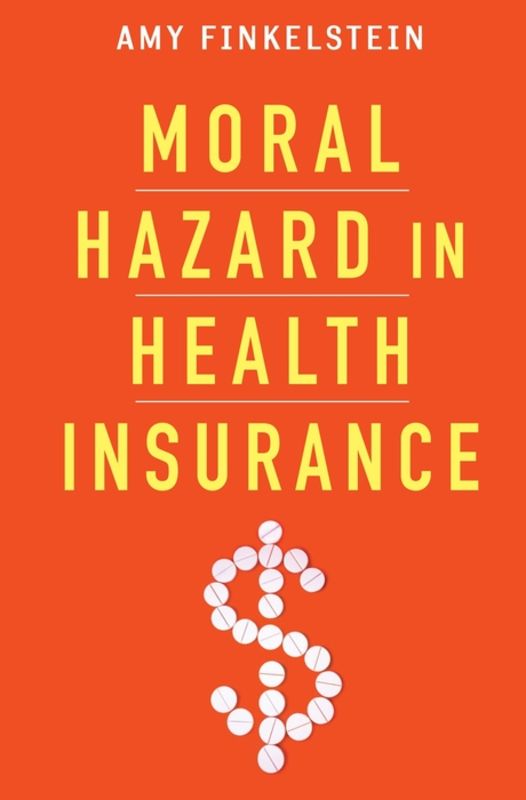
Moral hazard in health insurance
Moral hazard—the tendency to change behavior when the cost of that behavior will be borne by others—is a particularly tricky question when considering health care. Kenneth J. Arrow's seminal 1963 paper on this topic (included in this volume) was one of the first to explore the implication of moral hazard for health care, and Amy Finkelstein—recognized as one of the world's foremost experts on the topic—here examines this issue in the context of contemporary American health care policy. Drawing on research from both the original RAND Health Insurance Experiment and her own research, including a 2008 Health Insurance Experiment in Oregon, Finkelstein presents compelling evidence that health insurance does indeed affect medical spending and encourages policy solutions that acknowledge and account for this. The volume also features commentaries and insights from other renowned economists, including an introduction by Joseph P. Newhouse that provides context for the discussion, a commentary from Jonathan Gruber that considers provider-side moral hazard, and reflections from Joseph E. Stiglitz and Kenneth J. Arrow.
eBook

Social norms as solutions
Policies may influence large-scale behavioral tipping Climate change, biodiversity loss, antibiotic resistance, and other global challenges pose major collective action problems: A group benefits from a certain action, but no individual has sufficient incentive to act alone. Formal institutions, e.g., laws and treaties, have helped address issues like ozone depletion, lead pollution, and acid rain. However, formal institutions are not always able to enforce collectively desirable outcomes. In such cases, informal institutions, such as social norms, can be important. If conditions are right, policy can support social norm changes, helping address even global problems. To judge when this is realistic, and what role policy can play, we discuss three crucial questions: Is a tipping point likely to exist, such that vicious cycles of socially damaging behavior can potentially be turned into virtuous ones? Can policy create tipping points where none exist? Can policy push the system past the tipping point?
Journal Article

Evaluating Projects and Assessing Sustainable Development in Imperfect Economies
We are interested in three related questions:(1) How should accounting prices be estimated?(2) How should we evaluate policy change in animperfect economy? (3) How can we check whetherintergenerational well-being will be sustainedalong a projected economic programme? We do notpresume that the economy is convex, nor do weassume that the government optimizes on behalfof its citizens. We show that the same set ofaccounting prices should be used both forpolicy evaluation and for assessing whether ornot intergenerational welfare along a giveneconomic path will be sustained. We also showthat a comprehensive measure of wealth,computed in terms of the accounting prices, canbe used as an index for problems (2) and (3)above. The remainder of the paper is concernedwith rules for estimating the accounting pricesof several specific environmental naturalresources, transacted in a few well knowneconomic institutions. Copyright Kluwer Academic Publishers 2003
Journal Article

Intergenerational Resource Transfers with Random Offspring Numbers
A problem common to biology and economics is the transfer of resources from parents to children. We consider the issue under the assumption that the number of offspring is unknown and can be represented as a random variable. There are 3 basic assumptions. The first assumption is that a given body of resources can be divided into consumption (yielding satisfaction) and transfer to children. The second assumption is that the parents' welfare includes a concern for the welfare of their children; this is recursive in the sense that the children's welfares include concern for their children and so forth. However, the welfare of a child from a given consumption is counted somewhat differently (generally less) than that of the parent (the welfare of a child is \"discounted\"). The third assumption is that resources transferred may grow (or decline). In economic language, investment including that in education or nutrition, is productive. Under suitable restrictions, precise formulas for the resulting allocation of resources are found, demonstrating that, depending on the shape of the utility curve, uncertainty regarding the number of offspring may or may not favor increased consumption. The results imply that wealth (stock of resources) will ultimately have a log-normal distribution.
Journal Article