
Catalogue Search | MBRL


Are you sure you want to remove the book from the shelf?

{{itemTitle}}
245
result(s) for
"Assmann, Jan"
Sort by:

From Akhenaten to Moses : ancient Egypt and religious change
The shift from polytheism to monotheism changed the world radically. Akhenaten and Moses-a figure of history and a figure of tradition-symbolize this shift in its incipient, revolutionary stages and represent two civilizations that were brought into the closest connection as early as the Book of Exodus, where Egypt stands for the old world to be rejected and abandoned in order to enter the new one. The seven chapters of this seminal study shed light on the great transformation from different angles. Between Egypt in the first chapter and monotheism in the last, five chapters deal in various ways with the transition from one to the other, analyzing the Exodus myth, understanding the shift in terms of evolution and revolution, confronting Akhenaten and Moses in a new way, discussing Karl Jaspers' theory of the Axial Age, and dealing with the eighteenth-century view of the Egyptian mysteries as a cultural model. --publisher's description.
Book

Las religiones mundiales y la teoría de la Era Axial
En este artículo, Assmann hace eco de la crítica a las religiones “de libro” expuesta hace cuando menos 130 años atrás por Max Müller. Pero lo hace de manera por demás notable al incorporar la idea fundamental de la religión como lenguaje que se comunica mediante dispositivos técnicos variados (rituales, sortilegios y por supuesto la escritura alfabética que terminará constituyendo un canon, una semántica religiosa propiamente dicha) con consecuencias definitivas para los modos de religiosidad y para las formas que adquieren las culturas. Assmann define conclaridad a las religiones mundiales como religiones transnacionales sujetas a planteamientos misiológicos y, por tanto, susceptibles de incorporarse con pleno derecho a los estudios poscoloniales. Estamos también frente a un texto donde la semántica religiosa y la semántica científica tienen un feliz encuentro. Una de las principales contribuciones de Assmann a los estudios culturales es el concepto de memoria cultural, desarrollado 30 años atrás (Assmann, 1992) y que puede igualmente encontrarse en idioma inglés (Assmann, 2011).
In this article, Assmann echoes the criticism of “book” religions made at least 130 years ago by Max Muller. But he does so in an extremely remarkable way. He incorporates the fundamental idea of religion as a language that communicates with various technical devices (rituals, spells, and of course alphabetic writing that will end up constituting a canon, a religious semantics proper) with definitive consequences for the modes of religiosity and for the forms which cultures acquire. Assmann clearly defines world religions as transnational religions subject to missiological approaches and, therefore, capable of being fully incorporated into postcolonial studies. We are also facing a text where religious and scientific semantics have a fortunate encounter.
Journal Article

Cultural memory and early civilization : writing, remembrance, and political imagination
\"Now available to an English-speaking audience, this book presents a groundbreaking theoretical analysis of memory, identity, and culture. It investigates how cultures remember, arguing that human memory exists and is communicated in two ways, namely inter-human interaction and in external systems of notation, such as writing, which can span generations. Dr. Assmann defines two theoretical concepts of cultural memory, differentiating between the long-term memory of societies, which can span up to 3,000 years, and communicative memory, which is typically restricted to 80-100 years. He applies this theoretical framework to case studies of four specific cultures, illustrating the function contexts and specific achievements, including the state, international law, religion, and science. Ultimately, his research demonstrates that memory is not simply a means of retaining information, but rather a force that can shape cultural identity and allow cultures to respond creatively to both daily challenges and catastrophic changes\"-- Provided by publisher.
BOOK

Moses the Egyptian: The Memory of Egypt in Western Monotheism
Standing at the very foundation of monotheism, and so of Western culture, Moses is a figure not of history, but of memory. As such, he is the quintessential subject for the innovative historiography Jan Assmann both defines and practices in this work, the study of historical memory--a study, in this case, of the ways in which factual and fictional events and characters are stored in religious beliefs and transformed in their philosophical justification, literary reinterpretation, philological restitution (or falsification), and psychoanalytic demystification. To account for the complexities of the foundational event through which monotheism was established, Moses the Egyptian goes back to the short-lived monotheistic revolution of the Egyptian king Akhenaten (1360-1340 B.C.E.). Assmann traces the monotheism of Moses to this source, then shows how his followers denied the Egyptians any part in the origin of their beliefs and condemned them as polytheistic idolaters. Thus began the cycle in which every \"counter-religion,\" by establishing itself as truth, denounced all others as false. Assmann reconstructs this cycle as a pattern of historical abuse, and tracks its permutations from ancient sources, including the Bible, through Renaissance debates over the basis of religion to Sigmund Freud's Moses and Monotheism. One of the great Egyptologists of our time, and an exceptional scholar of history and literature, Assmann is uniquely equipped for this undertaking--an exemplary case study of the vicissitudes of historical memory that is also a compelling lesson in the fluidity of cultural identity and beliefs.
eBook

Ende wider Willen: Schönbergs Moses und Aron - Die Tragödie des Monotheismus
Abstract
Schoenberg did not intend his opera Moses and Aron to be a tragedy. The two acts he composed, which end tragically with Moses' desperate breakdown, were to be followed by a third act, which would have ended with Moses' resilience, Aron's death, and a positive message. Schoenberg, however, did not manage to compose the finished text, although he had plenty of time to do so. Even though Schoenberg never wanted to admit this, the opera found its ultimate, unsurpassable ending with the tragic end of the second act.
Journal Article
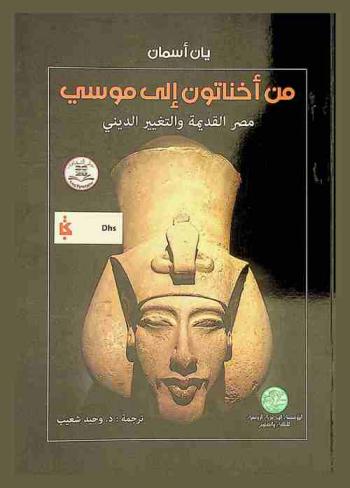
من أخناتون إلى موسى : مصر القديمة والتغيير الديني
يتناول كتاب (من أخناتون إلى موسى : مصر القديمة والتغيير الديني) والذي قام بتأليفه (يان أسمان) في حوالي (220) صفحة من القطع المتوسط موضوع (تاريخ مصر القديم) مستعرضا المحتويات التالية : الفصل الأول البنية والتغيير في الديانة المصرية القديمة، الفصل الثاني أسطورة وتاريخ الخروج، الفصل الثالث من الشرك إلى التوحيد تطور أم ثورة ؟، الفصل الرابع موسى واخناتون، الفصل الخامس مصر القديمة ونظرية العصر المحوري، الفصل السادس الأسرار المصرية والمجتمعات السرية في عصر التنوير، الفصل السابع الدين الشمولي.
BOOK

Moses Tragicus: Freud, Schoenberg, and the Defeated Moses: Freud Birthday Lecture, Sigmund Freud Museum Vienna 6.5.2006 Translated by Pamela Cooper-White
In both works—in Schoenberg's even more than Freud's—the tragic aspect of the Moses figure and, in close connection with this, the ambivalent, even problematic, character of monotheism is expressed.1 It would be appealing to compare these two Moses works, but since this Sigmund Freud lecture is on Freud's birthday today, I want to emphasize and start with Freud's Moses book. In this essay, he interprets Moses' gaze and gesture from the scene of the dance around the golden calf, where according to the biblical account, Moses smashes the tablets of the law in anger. According to Freud, this Moses is an Egyptian, and indeed a follower of Akhenaten, that heretic king who abolished the traditional religion in Egypt and introduced the new cult the one God of Sun and Light, Aton. Akhenaten discovers the sun as the one and only origin of all life; Moses represents the covenant of God and the principle of exclusive faithfulness to this one, in full recognition of the existence of other gods (otherwise the commandment of faith would have no meaning).
Journal Article
ازدواجية الدين : الأسرار المصرية وعصر التنوير الأوروبي
يقدم عالم المصريات البارز \"يان اسمان\" في هذا الكتاب الموسوعي الهام نظرة عامة، ولكنها عميقة على موضوع ازدواجية الدين\"، حيث يبدأ رحلته بالعودة إلى لاهوت قدماء المصريين، الذين اتسم الدين عندهم بالازدواجية بين دين النخبة وبين دين الشعب، وهو التصور الذي أثر على الأديان القديمة بشكل عام، حيث كان لها دائما : وجه خارجي (وجه الدين الرسمي ووجه داخلي الذي يشمل الطبيعة الغامضة للتجربة الدينية الخاصة). ثم يكمل \"اسمان\" رحلته في التاريخ وينقلنا إلى العصر الحديث الذي شهد ولادة فكرة ازدواجية الدين بين دين العقل (دين) الفلاسفة) من جهة، ودين الوحي (دين الآباء) من جهة أخرى. اكتسب هذا المفهوم أهمية جديدة في عصر التنوير عندما تم نقل البنية المزدوجة للدين إلى الفرد ؛ مما يجعل الإنسان مدينا الآن بولائه ليس فقط لدينه الأصلي، ولكن أيضا ل \"دين البشرية\" العالمي.
Book

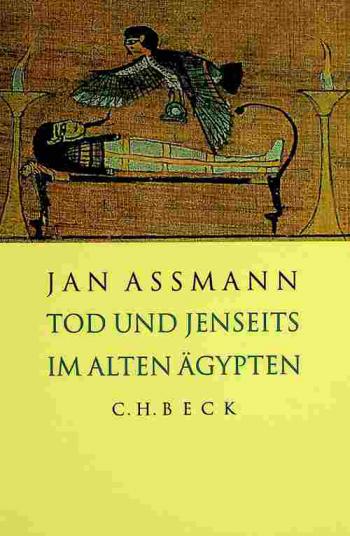
Death and Salvation in Ancient Egypt
\"Human beings,\" the acclaimed Egyptologist Jan Assmann writes, \"are the animals that have to live with the knowledge of their death, and culture is the world they create so they can live with that knowledge.\" In his new book, Assmann explores images of death and of death rites in ancient Egypt to provide startling new insights into the particular character of the civilization as a whole. Drawing on the unfamiliar genre of the death liturgy, he arrives at a remarkably comprehensive view of the religion of death in ancient Egypt. Assmann describes in detail nine different images of death: death as the body being torn apart, as social isolation, the notion of the court of the dead, the dead body, the mummy, the soul and ancestral spirit of the dead, death as separation and transition, as homecoming, and as secret. Death and Salvation in Ancient Egypt also includes a fascinating discussion of rites that reflect beliefs about death through language and ritual.
eBook