
Catalogue Search | MBRL


Are you sure you want to remove the book from the shelf?

{{itemTitle}}
12
result(s) for
"Assubuji, Rui"
Sort by:

Atlas of an Empire: Photographic Narrations and the Visual Struggle for Mozambique
This article engages with the historiography of the Portuguese empire with reference to Mozambique. It explores the impact of visual archives on existing debates and asks what difference photographs make to our interpretation and understanding of this colonial past. Deprived of their 'historical rights' by the requirements of the Berlin treaties that insisted on 'effective occupation', the Portuguese started to employ a complex of knowledge-producing activities in which photography was crucially involved. This article examines different photographic moments before and during the 'Pacification Campaign' that assured Portugal's authority over the Gaza Empire in southern Mozambique in the 1890s, by official, commercial and missionary photographers. It identifies controversies over the small number of portraits of the Gaza king Ngungunyane that took on distinctive and disputed 'other lives' after their initial production. The realisation of how one image might be disassembled to generate others becomes an exercise - in visual terms - of rethinking colonial violence. A critical engagement with the slippages and repositionings around photographs, and the errors or disputes in various captions, allows for a better understanding of the production of both silence and particular narratives in the archives and popular history. The demonstration of these other lives matters because it stimulates awareness of what is seen, what is made visible, and addresses the desire to look beyond the image to find others in a continuous interrogation of photographic excess.
Journal Article

Visualising China in Southern Africa
Engaging with the work of contemporary African and Chinese artists while analysing broader material production, the essays in this volume are wide-ranging in their analysis of ceramics, photography, painting, etching, sculpture, film, performance, postcards, stamps, installations, political posters, cartoons and architecture.
With China’s rise as the new superpower, its presence in Africa has expanded, leading to significant economic, geopolitical and cultural shifts. Chinese and African encounters through the lens of the visual arts and material culture, however, is a neglected field. Visualising China in Southern Africa is a ground-breaking volume that addresses this deficit through engaging with the work of contemporary African and Chinese artists while analysing broader material production that prefigures the current relationship. The essays are wide-ranging in their analysis of ceramics, photography, painting, etching, sculpture, film, performance, postcards, stamps, installations, political posters, cartoons and architecture. Richly illustrated, the collection includes scholarly chapters, photo essays, interviews, and artists’ personal accounts, organised around four themes: material flows, orientations and transgressions, spatial imaginaries, and biographies.
eBook
Atlas of an Empire
This article engages with the historiography of the Portuguese empire with reference to Mozambique. It explores the impact of visual archives on existing debates and asks what difference photographs make to our interpretation and understanding of this colonial past. Deprived of their ‘historical rights’ by the requirements of the Berlin treaties that insisted on ‘effective occupation’, the Portuguese started to employ a complex of knowledge-producing activities in which photography was crucially involved. This article examines different photographic moments before and during the ‘Pacification Campaign’ that assured Portugal’s authority over the Gaza Empire in southern Mozambique in the 1890s, by official, commercial and missionary photographers. It identifies controversies over the small number of portraits of the Gaza king Ngungunyane that took on distinctive and disputed ‘other lives’ after their initial production. The realisation of how one image might be disassembled to generate others becomes an exercise – in visual terms – of rethinking colonial violence. A critical engagement with the slippages and repositionings around photographs, and the errors or disputes in various captions, allows for a better understanding of the production of both silence and particular narratives in the archives and popular history. The demonstration of these other lives matters because it stimulates awareness of what is seen, what is made visible, and addresses the desire to look beyond the image to find others in a continuous interrogation of photographic excess.
Journal Article
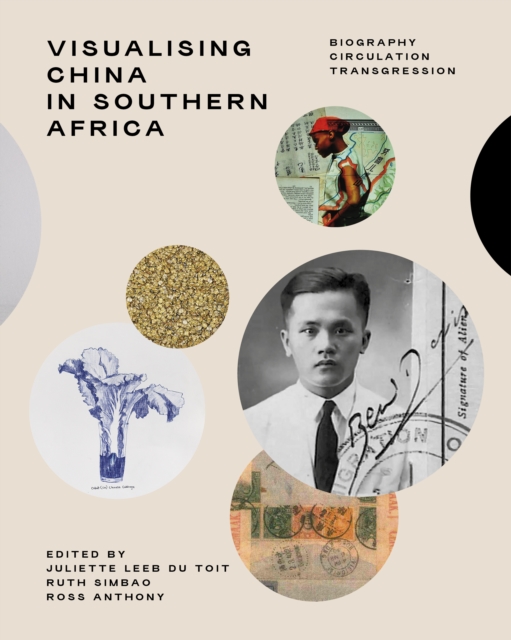
Visualising China in Southern Africa: Circulation, Biography, Transgression
China and Africa have long shared a history of allegiance and contact points through global political forces from the time of colonialism and the Cold War. With China's rise as the new superpower, its presence in Africa has expanded, leading to significant economic, geopolitical and cultural shifts. While issues such as trade, aid and development have received much attention, Chinese and African encounters through the lens of the visual arts and material culture is a neglected field. Visualising China in Southern Africa: Biography, Circulation, Transgression is a ground-breaking volume that addresses this deficit through engaging with the work of contemporary African and Chinese artists while analysing broader material production that prefigures the current relationship. The essays are wide-ranging in their analysis of ceramics, photography, painting, etching, sculpture, film, performance, postcards, stamps, installations, political posters, cartoons and architecture. Visualising China in Southern Africa confines its focus to southern Africa, yet even within this region, the context is complex. Ethnicity and nationalism, the lingering influence of Cold War allegiances and colonial configurations all continue to play a role. The various visual cultures discussed in this volume emphasise the commonality of these categories, but also point towards other shared histories that transcend the nation-state category. The collection includes scholarly chapters, photo essays, interviews, and artists' personal accounts, organised around four themes: material flows, orientations and transgressions, spatial imaginaries, and biographies. The artists, photographers, filmmakers, curators and collectors in this volume include: Stary Mwaba, Hua Jiming, Anawana Haloba, Gerald Machona, Nobukho Nqaba, Marcus Neustetter, Brett Murray, Diane Victor, William Kentridge, Kristin NG-Yang, Kok Nam, Mark Lewis, the Chinese Camera Club of South Africa, Wu Jing, Henion Han and Shengkai Wu.
eBook
The Political Sublime. Reading Kok Nam, Mozambican photographer (1939-2012)
Kok Nam began his photographic career at Studio Focus in Lourenço Marques in the 1950s, graduated to the newspaperNotíciasand joinedTempomagazine in the early 1970s. Most recently he worked at the journalSavanaas a photojournalist and later director. This article opens with an account of the relationship that developed between Kok Nam and the late President Samora Machel, starting with the photographer’s portrait of Machel in Nachingwea in November 1974 before Independence. It traces an arc through the Popular Republic (1976-1990) from political revelation at its inception to the difficult years of civil war and Machel’s death in the plane crash at Mbuzini in 1986. The article then engages in a series of photo-commentaries across a selection of Kok Nam’s photographs, several published in their time but others selected retrospectively by Kok Nam for later exhibition and circulation. The approach taken is that of ‘association’, exploring the connections between the photographs, their histories both then and in the intervening years and other artifacts and mediums of cultural expression that deal with similar issues or signifiers picked up in the images. Among the signifiers picked up in the article are soldiers, pigs, feet, empty villages, washing, doves and bridges. The central argument is that Kok Nam participated with many others in a kind of collective hallucination during the Popular Republic, caught up in the ‘political sublime’. Later Kok Nam shows many signs of a photographic ‘second thinking’ that sought out a more delicate sublime in his own archive.
Journal Article
The Political Sublime: Reading Kok Nam, Mozambican Photographer, 1939–2012
KOK NAM AND THE PRESIDENTThe portrait of Samora Machel at Nachingwea in 1974 (in Figure 14.1) was the first photograph taken of the Frelimo leader by Kok Nam. Machel was a guerrilla commander of Frelimo (Frente de Libertação de Moçambique, Liberation Front of Mozambique) who became first president of the new Popular Republic of Mozambique after independence in 1975. The portrait comes from an early visit by the Mozambican press to the northern liberated zone after the Lusaka Accord between the Portuguese government and Frelimo in September 1974, and before the movement came south to the capital, prior to independence. On this occasion, Kok Nam was apparently filled with many varying emotions. Everything was on a new footing and he was not sure if he was permitted to take pictures of Machel, whom he admired. He ended up secretly stealing this shot. In the image, Machel's face has a remarkable clarity to it. This might be due to the fine tonal range, but perhaps it was also because the future lay completely open. Kok Nam's account describes the natural light conditions at Nachingwea in terms that are photographically almost divine, as if the heavens conspired for the revelation of the leader's face:It was the first time I saw Samora. The light was fantastic, for me the most fantastic light … it is when after a great burst of rain the sun explodes, and a cloud comes and covers the sun but the light becomes bright and translucent; that was the situation with the light on his face. That is the portrait Graça and Mandela have in their house in Maputo … It resulted from one, two shots, no more, I was afraid (Nam 2010, 36).The clarity of the stolen portrait drew the attention of Frelimo, and the party requested the negative for reproduction purposes. However, as Kok Nam (2010, 36) explains, ‘Unfortunately, the negative disappeared because the guys from the party asked for it to make a quantity of copies for display in army facilities and offices of state institutions. The negative disappeared and the person held responsible was in prison for fifteen days.’As Secretary of the Defence Department, Samora Machel organised visits for press, researchers and strategic guests to the camps and the liberated zones from the early stages of the struggle as part of the external policy of the movement.
Book Chapter