
Catalogue Search | MBRL


Are you sure you want to remove the book from the shelf?

{{itemTitle}}
546
result(s) for
"Austin, Robert D"
Sort by:

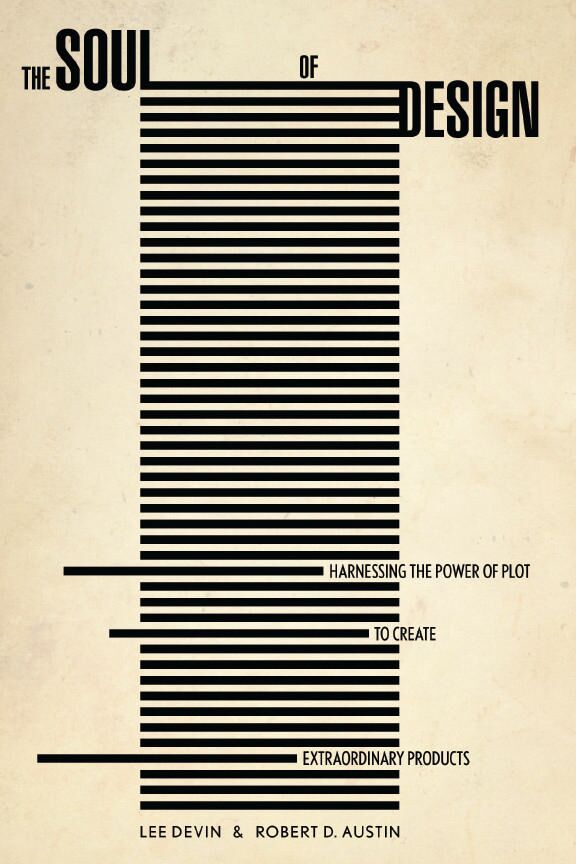
The soul of design : harnessing the power of plot to create extraordinary products
What makes the Apple iPhone cool? Bang & Olufsen and Samsung's televisions beautiful? Any of a wide variety of products and services special? The answer is not simply functionality or technology, for competitors' products are often as good.
The Soul of Design explores the uncanny power of some products to grab and hold attention—to create desire. To understand what sets a product apart in this way, authors Lee Devin and Robert Austin push past personal taste and individual response to adopt a more conceptual approach. They carefully explore the hypothesis that there is something within a \"special\" product that makes it—well, special. They argue that this je ne sais quoi arises from \"plot\"—the shape that emerges as a product or service arouses and then fulfills expectations. Marketing a special product is, then, a matter of helping its audience perceive its plot and comprehend its qualities.
Devin and Austin provide keys to understanding why some products and services stand out in a crowd and how the companies that make them create these hits. Part One of the book introduces the authors' definition of plot in this context; Part Two breaks down the components needed to build a plot; Part Three describes what makes a plot coherent; Part Four takes on the challenges of making coherent products and services attractive to consumers. Part Four also presents detailed casework, which shows how innovators and makers have successfully brought special products to market.
Readers will come away with a sensible and clear approach to conceiving of artful products and services. This book will help managers and designers think about engaging with plot, taking aesthetic factors into account to provide consumers with more special things.
eBook


The advantages and challenges of neurodiversity employment in organizations
The purpose of this special issue, then, is to provide a forum for research that could form a scholarly basis for this practice and to encourage further generation and systematization of knowledge on neurodiversity talent management that might find its way into management curricula. [...]we sought both conceptual and empirical submissions to further inform this newly emerging area of research inquiry. [...]despite good intentions, neurodivergent employees may continue to feel pressure to disguise or hide their condition even when the employer actively promotes neurodiversity. [...]The DXC Technology Work Experience Program: Disability Inclusive Recruitment and Selection in Action’ by Carrero, Krzeminska, and Härtel presents the characteristics of and experiences during a 3-week recruitment and selection process for neurodiverse adults that could demonstrate an aptitude and motivation to perform in IT roles at DXC Technology, one of the largest IT companies in the world and a leader in autism employment. Modern practices in the field of strategic human resource management (see, e.g., Mathis & Jackson, 2010) follow Chandler's (1962) ‘structure follows strategy’ principle when they advise deriving organizational structure from strategy, required capabilities from strategic plans, and job descriptions from analysis of these required capabilities. [...]when modern recruiters seek employees that best fit a checklist for a job that is already defined and assigned a position in an organizational hierarchy – a process that often rules out ‘unusual’ candidates in a manner analogous to how defective parts are rejected in an industrial system – they act in consistency with a set of management principles with a long, deep history.
Journal Article

Make Leader Character Your Competitive Edge
Leadership character is often overlooked in organizations, despite its significant impact on positive organizational development. A study found that organizations with leaders of high character had nearly five times the return on assets compared to those with low character. However, leaders often underestimate and misunderstand the concept of character, marginalizing it as just being about ethics. Character is about more than ethics; it is the foundation of judgment and decision-making. Developing positive character traits can result in better decisions and outcomes. The research into leader character began as an investigation into the failures of leadership during the 2008 global economic crisis. The study identified 10 dimensions of leader character that interact with judgment. These dimensions can function as virtues or vices depending on their deficiency or excess. Organizations can start by fostering a conversation about leader character and integrating it into HR practices and strategic initiatives. By elevating character alongside competence, organizations can create a healthier culture and achieve strategic advantages.
Journal Article

Accidental Innovation: Supporting Valuable Unpredictability in the Creative Process
Historical accounts of human achievement suggest that accidents can play an important role in innovation. In this paper, we seek to contribute to an understanding of how digital systems might support valuable
un
predictability in innovation processes by examining how innovators who obtain value from accidents integrate unpredictability into their work. We describe an inductive, grounded theory project, based on 20 case studies, that looks into the conditions under which people who make things keep their work open to accident, the degree to which they rely on accidents in their work, and how they incorporate accidents into their deliberate processes and arranged surroundings. By comparing makers working in varied conditions, we identify specific factors (e.g., technologies, characteristics of technologies) that appear to support accidental innovation. We show that makers in certain specified conditions not only remain open to accident but also intentionally design their processes and surroundings to invite and exploit valuable accidents. Based on these findings, we offer advice for the design of digital systems to support innovation processes that can access valuable unpredictability.
Journal Article
Why So Many Data Science Projects Fail to Deliver
Joshi et al discuss several reasons for the failure of data science projects to deliver. More companies are embracing data science as a function and a capability. But many of them have not been able to consistently derive business value from their investments in big data, artificial intelligence, and machine learning. Moreover, evidence suggests that the gap is widening between organizations successfully gaining value from data science and those struggling to do so. To better understand the mistakes that companies make when implementing profitable data science projects, and discover how to avoid them, they conducted in-depth studies of the data science activities in three of India's top 10 private-sector banks with well-established analytics departments.
Journal Article
Cashing Out Excellence
Leaders in organizations often trade long-standing capabilities for short-term results, a practice known as performance hacking. This behavior is seen in organizations that struggle to cope with disruptive events, such as the pandemic, and resort to cashing out capabilities and allegiances that were once relied upon for success. Performance hacking involves manipulating financials through investment planning and cost-cutting measures to maintain short-term financial results, but it does not prioritize long-term value creation or investments in facilities, technology, research and development, or a capable workforce. This article highlights the negative consequences of performance hacking and the need for leaders to prioritize long-term strategies and value creation.
Journal Article
If you cut employees some slack, will they innovate?
The idea of using slack resources -- in the form of time, technology, and support -- to bolster employee innovation falls in and out of favor. We found that different types of employees respond in different ways to slack innovation programs; that different kinds of slack resources are better suited to certain types of employees than they are to others; and that different kinds of slack innovation programs produce different kinds of innovation. Our findings suggest six issues for companies to consider in designing and implementing slack innovation programs: 1. Slack innovation programs are not one-size-fits-all undertakings. 2. Encouraging employee innovation requires managerial support at all levels. 3. Combine slack resources with appropriate motivational framing. 4. Provide a \"safe place to play\" for employees who have low expertise and/or low self-assessed innovation. 5. Employ the right kinds of slack for the right employees. 6. Design slack innovation programs for the type of innovation you want.
Journal Article
Unleashing creativity with digital technology
Technology can be deployed to augment the creative abilities of people and organizations and make new and valuable forms of innovation possible. Today's digital technologies have reached a level of maturation that enables, across many domains, a practical capability that may be called cheap and rapid iteration. To iterate is to try something different from what you tried last time. Iteration is the process that enables most forms of artistry. Painters often create numerous versions of a painting. Processes often become more creative when rapid iteration is affordable. Unfortunately, this is not the case in a lot of business domains. In the next five years, managers will awaken to a wide range of new possibilities. They'll act to improve creative capabilities, by figuring out how to deploy technologies to replace expensive physical trying with cheap virtual trying. In effect, they'll be constructing virtual rehearsal spaces, virtual laboratories, and inexpensive prototyping facilities. The aim won't be to design machines to take over peoples jobs, but rather to augment human capabilities.
Journal Article