
Catalogue Search | MBRL


Are you sure you want to remove the book from the shelf?

{{itemTitle}}
74
result(s) for
"Averroes"
Sort by:

Synthesis of Carbon Nanodots from Cellulose Nanocrystals Oil Palm Empty Fruit by Pyrolysis Method
Biomass-such as cellulose is one of the most common abundant organic materials on the Earth. Biomass has carbon chain that could be an excellent choice for the fabrication of carbon materials. Cellulose nanocrystal is nano-sized cellulose and could become the potential source in fabricating carbon nanodots that are affected by pyrolysis temperature. In fact, the size and temperature are essentially important to synthesize the carbon nanodots. This research is contributed to synthesize this material, and to investigate the effect of temperature. The percentage of cellulose nanocrystals and carbon nanodots obtained are less than 50%. Carbon nanodots are synthesized by pyrolysis method and cellulose nanocrystals are fabricated by membrane method. TEM analysis shows that cellulose nanocrystals are nano-sized. Under UV light source, the samples show fluoroscencing colours i.e. blue to green. From this research it can be concluded that the temperature affects the characteristics of carbon nanodots produced by pyrolysis method.
Journal Article
The Study of Liquid Smoke as Substitutions in Coagulating Latex to The Quality of Crumb Rubber
The use of formic acid in processing rubber is considered unaffordable in large-scale plantations. However, the demands of this acid are increasing as the number of rubber plantations increases higher. In addition to solve this challenge, the use of liquid smoke has been considered promising substitutes although its most suitable composition has not been estimated yet. To understand the effect of liquid smoke as coagulant material in rubber industries, a research is conducted by mixing of the coagulant material (combination of liquid smoke synthesized from coconut shell and formic acid) onto latex. Characterizations are performed to analyse the quality of the coagulated rubber, and they are the initial plasticity, the plasticity Retention Index, the dirt content, the ash content, the content of dry rubber. The result showed that the formulation of liquid smoke and formic acid give effect to produce crumb rubber and quality rubber appropriate of Standard Indonesian Rubber (SIR) 20.
Journal Article
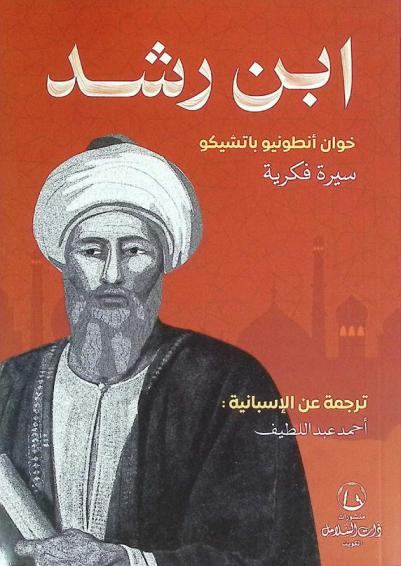
ابن رشد : سيرة فكرية
يقدم هذا الكتاب \"سيرة فكرية\" تتجاوز السرد التاريخي التقليدي لحياة أبي الوليد محمد بن رشد، لتركز على \"تطور العقل الرشدي\" وكيف استطاع التوفيق بين الشريعة والفلسفة في لحظة حضارية فارقة. يقرأ باتشيكو ابن رشد من زاوية كونه الجسر الذي عبرت عليه الحداثة الأوروبية، وفي الوقت ذاته، كونه قمة الهرم المعرفي الأندلسي.
BOOK

Carbon-Nano Fibers Yield Improvement with Iodinated Electrospun PVA/Silver Nanoparticle as Precursor via One-Step Synthesis at Low Temperature
High temperature is required in carbon fiber synthesis in the carbonization step. However, direct high-temperature heating without the presence of additive materials would affect the yield and structure of carbon fibers produced. Thus, this study aims to synthesize carbon fibers from poly-vinyl alcohol (PVA), as the precursor and reducing agent, using silver nanoparticles (SNP) from silver nitrate (AgNO3) as additives. The pre-treatment of PVA was performed in three steps, i.e., mixing PVA/AgNO3, electrospinning, and iodination. The interaction of PVA and AgNO3 was assessed by FTIR, and SEM was used to characterize the electro-spun fibers prior and after iodination; Raman spectrophotometer was carried out to confirm the yield of carbon fibers. There was reduction in oxygen groups (3000–3800 cm−1) and emergence of –C=O (1100 cm−1) and –C=C– (1627 cm−1) functional groups, indicating formation of carbon layers. Based on the DT/GA results, the silver nanoparticles reduce the need of high temperature with optimum carbonization at 350 °C and lead to the formation of more regular graphene layers. Graphene layers with a size distribution of 0.438 nm and well-organized structures were successfully formed, and the Raman shifting showed higher intensities of G and G’ bands in the presence of Ag. Based on DT/GA results, the yield of carbon fibers with iodinated PVA fibers and SNP as additive had higher rates around 800 µg/min, reaching 33% at 500 °C. Thus, it is demonstrated that iodinated PVA/AgNO3 samples can significantly improve carbon fiber yield at low temperatures.
Journal Article

A Comprehensive Review of Experimental Parameters in Bio-oil Upgrading from Pyrolysis of Biomass to Biofuel Through Catalytic Hydrodeoxygenation
Fossil fuel reserve depletion and environmental concerns have spurred substantial research to find alternative energy sources. Bio-oil derived from biomass pyrolysis has great potential to substitute fossil fuels. However, bio-oil physicochemical properties are far below the requirements for biofuels due to several issues such as low heating value, and high-water content, acidity, and viscosity. Bio-oil is unstable and tends to polymerize due to the high content of reactive oxygenates and molecular compounds, even during storage. Therefore, bio-oil without quality upgrading is not suitable for use as a fuel. A promising method to improve bio-oil properties is through catalytic hydrodeoxygenation (HDO) — a hydrogenolysis process for removing oxygen from the oxygen-containing compounds. However, the complex mixture of organic components in bio-oil renders the complexity of HDO, and the significant issues in HDO are coking and decreasing catalyst performance. Therefore, various approaches to overcome these issues have been developed. The final product distribution of HDO can be customized by tuning the experimental parameters such as catalyst acidity, pressure, temperature, types of solvents, and even reaction duration. In this review, the parameters of catalytic HDO are elaborated as functions to provide comprehensive options for constructing the strategy in practicing HDO of bio-oil.
Journal Article

Apixaban in Patients with Atrial Fibrillation
In this trial, the factor Xa inhibitor apixaban was shown to reduce the risk of stroke or systemic embolism, as compared with aspirin, without a significant increase in the risk of major bleeding. Apixaban is an alternative to aspirin for patients who cannot take warfarin..
Atrial fibrillation is a common arrhythmia that increases the risk of stroke.
1
Vitamin K antagonist therapy is more effective than aspirin for the prevention of stroke in patients with atrial fibrillation, but its use is limited by a narrow window for a therapeutic benefit and by the need for lifelong coagulation monitoring owing to a marked variation in its effect both from one patient to another and within the individual patient.
2
Maintaining the international normalized ratio (INR) in the therapeutic range is challenging and for many patients is achieved less than 60% of the time — a finding that counteracts . . .
Journal Article
Analysis of Composition; Topography of Volcanic Materials Erupted from Mount Sinabung, Karo Regency, Indonesia
Volcanic rocks and ashes erupted from mount Sinabung has been analyzed to understand the composition and topography of the materials contained within them. The crystalloid system of the samples were analyzed through X-Ray Diffraction (XRD), while the analysis of chemical elements and the microstructures were tested by performing the Scanning Electron Microscopy, Energy Dispersive X-Ray (SEM-EDX), and the metal analysis was performed by Atomic Absorption Spectroscopy (AAS). The samples collected were black volcanic rocks, red volcanic rocks and volcanic ashes. The analysis obtained from the analysis of the black volcanic rocks depicted four phases of materials which are Anorthite (87.11 wt.%), Quartz (2.26 wt.%), Cristobalite (7.72 wt.%), and Alunite (2.91 wt.%). Respectively, the crystalloid lattices of those phases were Triclinic, Hexagonal, Tetragonal and Hexagonal. Three phases of materials which are Anorthite (89.20 wt.%) with Orthorhombic lattice, Quartz (2.63 wt.%) with Hexagonal lattice, Cristobalite (5.56 wt.%) with Tetragonal lattice, and Alunite (2.52 wt.%) with Hexagonal lattice were obtained from volcanic ashes. Meanwhile, the analysis of composition measured by AAS indicated that the heavy metals were not found within the erupted materials.
Journal Article