
Catalogue Search | MBRL


Are you sure you want to remove the book from the shelf?

{{itemTitle}}
734
result(s) for
"Awad, Ibrahim"
Sort by:


Tuning of Fly Ash Loading into Chitosan-Ethylene Glycol Diglycidyl Ether Composite for Enhanced Removal of Reactive Red 120 Dye: Optimization Using the Box–Behnken Design
Crosslinked chitosan-ethylene glycol diglycidyl ether (CTS-EGDE) was modified by loading fly ash (FA) particles into its polymeric matrix to improve the adsorptive removal of reactive red 120 (RR120) dye. The Box–Behnken design was used to assist in the tuning of optimum synthesis and adsorption conditions, such as the loading ratio of FA particles (A: 0–50%), adsorbent dose (B: 0.02–0.08 g), solution pH (C: 4–10), temperature (D: 30 °C–60 °C), and time (E: 20–60 min). The highest removal rate (98.8%) of 50 mg/L RR120 dye was achieved under the following conditions: FA loading, 25% (CTS-EGDE/FA-25); adsorbent dose, 0.05 g; solution pH, 4; temperature, 60 °C; and time, 40 min. The maximum adsorption capacity of CTS-EGDE/FA-25 for RR120 was 220 mg/g at 60 °C. This work provides insights into the optimization of the synthesis of composite materials, which can potentially be applied in wastewater treatment.
Journal Article

Towards an entrepreneurial university model: evidence from the Palestine Polytechnic University
This study aims to introduce a proposed model for transforming the Palestine Polytechnic University (PPU) into an entrepreneurial university. Towards that end, a quantitative approach using statistical techniques of t test, ANOVA, Kruskal–Wallis test, and Pairwise comparisons supported by explanatory and qualitative discussions were utilized. The main findings show that the applicability of entrepreneurship at PPU was relatively fair for the aspects of the compatibility of curricula with the labor market needs, community relations and partnerships, academic exchange, entrepreneurship culture, entrepreneurial education, and university internationalization. Entrepreneurship as a policy objective was moderately acceptable for university policies and regulations, scientific research and innovation, and university leadership, but the university environment was less than moderate. The findings also show that the university leadership acknowledges the importance of achieving entrepreneurship, while they pay insufficient attention to the academic exchange. Offering other supportive funding resources can accelerate entrepreneurship. Given that, this study is likely to provide a proposed model to transform PPU into an entrepreneurial university and effectively achieve the university’s pioneering vision that contributes to the university’s development and presents this model to the decision makers.
Journal Article


Creating shared value to enhance the competitiveness of the agricultural cluster in Qalqilya governorate
Purpose
The aim of this study is to provide an empirical investigation of the agricultural cluster’s economic, social and environmental values. By doing so, the authors aim to offer policymakers and decision-makers a strategic approach that promotes competitiveness and economic development through shared value.
Design/methodology/approach
The authors used AMOS software and applied structural equation modeling to achieve the study’s objectives. The study used this approach with path analysis through the Analysis of Moment Structures software.
Findings
The empirical results indicate that creating shared value (CSV) can enhance the agricultural sector’s competitiveness through clustering. Rather than enhancing competitiveness directly, CSV plays a crucial role in improving the relationship between clustering and competitiveness. The authors also examined Porter’s diamond of competitiveness and evaluated factors for creating a shared value strategy, such as factor conditions, demand conditions, related and supporting industries, strategy, structure, rivalry and the role of government.
Research limitations/implications
This study focuses solely on the agricultural cluster in Qalqilya governorate and cannot be applied to other regions without additional research.
Practical implications
Ensuring that stakeholders in the agricultural sector are kept informed about the activities of the cluster and the benefits of their participation is crucial. Empirical findings and conclusions have demonstrated that a shared value strategy can enhance the competitiveness of this sector. To achieve this, institutions involved in developing the agricultural cluster must increase their efficiency and capacity. Consulting experts in this field and drawing on experiences from other countries can aid in achieving this goal. Additionally, enhancing farmers’ productivity should be a priority, and the Ministry of Agriculture can provide training and workshops to improve their skills and expertise.
Originality/value
This study suggests that Palestinian policymakers should establish effective partnerships between the government and the agricultural sector’s firms in Qalqilya to reinforce the cluster’s competitiveness. This strategy can stimulate competitiveness and promote economic and social development in Palestine.
Journal Article

English-medium instruction in higher education in the Middle East and North Africa : policy, research and pedagogy
\"English-Medium Instruction (EMI) is a rapidly growing global phenomenon in countries where English is a second or foreign language. This book focuses on empirical research studies conducted on this growing trend in the Middle East and North Africa, an under-researched area with regards to the effects and challenges of the implementation of EMI in higher education. The contributors are researchers with first-hand experience in countries in the region, including Iran, Kuwait, Morocco, Oman, Saudi Arabia, Sudan, and Turkey. Each chapter follows a consistent structure, allowing comparisons to be drawn between policies and practices in different countries. Topics covered include investigating perceptions and attitudes of both students and lecturers, opportunities and challenges afforded by EMI, as well as the evolution of EMI practices. By exploring these issues, through the lens of a decolonial critical approach, this volume informs theory underlying research into the phenomenon of EMI in the region.\"-- Provided by publisher.
Book

Competitiveness in the Era of Circular Economy and Digital Innovations: An Integrative Literature Review
This study explores the intersection of competitiveness in a circular economy and the role of digital innovations through an integrative literature review. Synthesizing quantitative and qualitative research identifies gaps and offers insights on how these trends shape competitive strategies. The review emphasizes three main areas: technological enablers, operational challenges, and the role of policy and collaboration. It highlights the interrelationship among the circular economy, digital innovations, and competitiveness in promoting sustainable practices. The research suggests that policymakers should support small- and medium-sized enterprises (SMEs) with financial assistance for digital tool adoption and establish regional digital innovation hubs for technology access and training. Standardized data-sharing protocols are crucial for effective circular economy practices and cybersecurity. Ultimately, the review identifies key research opportunities at the nexus of digital innovations and the circular economy, aiming to enhance theoretical knowledge and inform sustainable business model development.
Journal Article

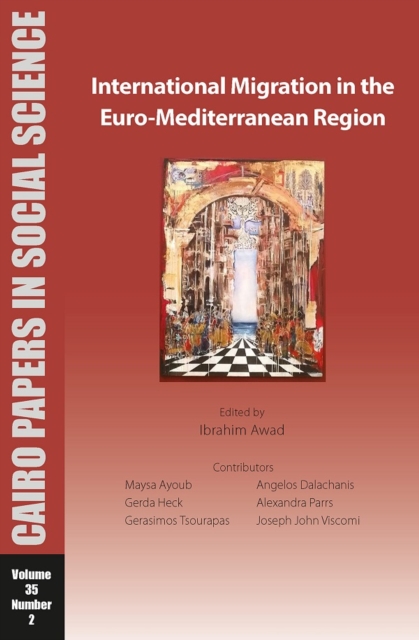
International Migration in the Euro-Mediterranean Region
This issue of Cairo Papers takes up the various dimensions of migration and refugees in the Euro-Mediterranean region over different periods in the last two centuries. It looks at both the migration of waves of Italians and Greeks to Egypt from the mid-nineteenth to the early twentieth century, and at migration from the Arab southern and eastern rims of the Mediterranean to Europe starting in the twenty-first century. The disciplines of history, sociology, anthropology, and political science have been mobilized to undertake the research its chapters embody. They address the history of migration in the region, relations between Mediterranean countries of origin and their diasporas, the impact of interest groups on the formulation of migration policies in countries of destination, and the policies for integration of recent flows arriving in Europe. The chapters are based on papers delivered at Cairo Papers 25th annual symposium in collaboration with the Center for Migration and Refugee Studies.
eBook