
Catalogue Search | MBRL


Are you sure you want to remove the book from the shelf?

{{itemTitle}}
4,042
result(s) for
"B. Hayes"
Sort by:


Sex, Body Mass Index, and Dietary Fiber Intake Influence the Human Gut Microbiome
Increasing evidence suggests that the composition of the human gut microbiome is important in the etiology of human diseases; however, the personal factors that influence the gut microbiome composition are poorly characterized. Animal models point to sex hormone-related differentials in microbiome composition. In this study, we investigated the relationship of sex, body mass index (BMI) and dietary fiber intake with the gut microbiome in 82 humans. We sequenced fecal 16S rRNA genes by 454 FLX technology, then clustered and classified the reads to microbial genomes using the QIIME pipeline. Relationships of sex, BMI, and fiber intake with overall gut microbiome composition and specific taxon abundances were assessed by permutational MANOVA and multivariate logistic regression, respectively. We found that sex was associated with the gut microbiome composition overall (p=0.001). The gut microbiome in women was characterized by a lower abundance of Bacteroidetes (p=0.03). BMI (>25 kg/m2 vs. <25 kg/m2) was associated with the gut microbiome composition overall (p=0.05), and this relationship was strong in women (p=0.03) but not in men (p=0.29). Fiber from beans and from fruits and vegetables were associated, respectively, with greater abundance of Actinobacteria (p=0.006 and false discovery rate adjusted q=0.05) and Clostridia (p=0.009 and false discovery rate adjusted q=0.09). Our findings suggest that sex, BMI, and dietary fiber contribute to shaping the gut microbiome in humans. Better understanding of these relationships may have significant implications for gastrointestinal health and disease prevention.
Journal Article

Learning ACT : an acceptance & commitment therapy skills training manual for therapists
\"Acceptance and commitment therapy (ACT) is among the most remarkable developments in contemporary psychotherapy. This second edition of the pioneering ACT skills-training manual for clinicians provides a comprehensive update--essential for both experienced practitioners and those new to using ACT and its applications. ACT is a proven-effective treatment for numerous mental health issues, including depression, anxiety, stress, addictions, eating disorders, schizophrenia, borderline personality disorder, and more. With important revisions based on new developments in contextual behavioral science, Learning ACT, Second Edition includes up-to-date exercises and references, as well as material on traditional, evidence-based behavioral techniques for use within the ACT framework. In this fully revised and updated edition of Learning ACT, you'll find workbook-format exercises to help you understand and take advantage of ACT's unique six process model--both as a tool for diagnosis and case conceptualization, and as a basis for structuring treatments for clients. You'll also find up-to-the-minute information on process coaching, new experiential exercises, an increased focus on functional analysis, and downloadable extras that include role-played examples of the core ACT processes in action. By practicing the exercises in this workbook, you'll learn how this powerful modality can improve clients' psychological flexibility and help them to live better lives. Whether you're a clinician looking for in-depth training and better treatment outcomes for individual clients, a student seeking a better understanding of this powerful modality, or anyone interested in contextual behavioral science, this second edition provides a comprehensive revision to an important ACT resource\"-- Provided by publisher.
Book

Global patterns and trends in colorectal cancer incidence in young adults
ObjectiveEarly-onset colorectal cancer (CRC) is increasing in the USA despite rapid declines in older ages. Similar patterns are reported in Australia and Canada, but a comprehensive global analysis of contemporary data is lacking.DesignWe extracted long-term data from Cancer Incidence in Five Continents and supplemental sources to report on worldwide CRC incidence rates and trends by age (20–49 years and ≥50 years) through diagnosis year 2012 or beyond (Australia, Finland, New Zealand, Norway, Sweden, USA).ResultsDuring 2008–2012, age-standardised CRC incidence rates in adults <50 ranged from 3.5 per 100 000 (95% CI 3.2 to 3.9) in India (Chennai) to 12.9 (95% CI 12.6 to 13.3) in Korea. During the most recent decade of available data, incidence in adults <50 was stable in 14 of 36 countries; declined in Austria, Italy and Lithuania; and increased in 19 countries, nine of which had stable or declining trends in older adults (Australia, Canada, Denmark, Germany, New Zealand, Slovenia, Sweden, UK and USA). In Cyprus, Netherlands and Norway, inclines in incidence in young adults were twice as rapid as those in older adults (eg, Norway average annual per cent change (AAPC), 1.9 (95% CI 1.4 to 2.5) vs 0.5 (95% CI 0.3 to 0.7)). Among most high-income countries with long-term data, the uptick in early-onset disease began in the mid-1990s. The steepest increases in young adults were in Korea (AAPC, 4.2 (95% CI 3.4 to 5.0)) and New Zealand (AAPC, 4.0 (95% CI 2.1 to 6.0)).ConclusionCRC incidence increased exclusively in young adults in nine high-income countries spanning three continents, potentially signalling changes in early-life exposures that influence large bowel carcinogenesis.
Journal Article
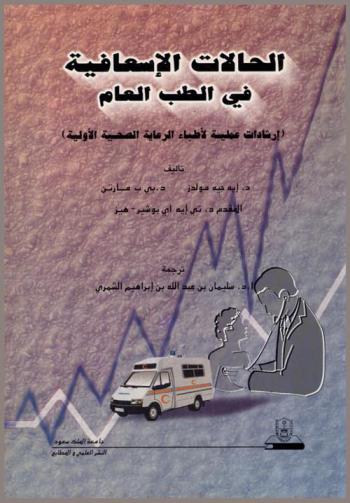
الحالات الإسعافية في الطب العام : (إرشادات عملية لأطباء الرعاية الصحية الأولية)
يعد هذا الكتاب دليلا سهلا ومرجعا مهما للطبيب في علاج الغالبية العظمى لحالات الطوارئ في الطب العام وتحقيقا لهذا الغرض فقد استعرضت الحالات استعراضا منطقيا، حيث بدئ في تقويم الحالة، ثم تقديم النصح للمريض وبعد ذلك يتم التقويم والعلاج المناسب عندما تتم معاينة المريض وقد تم التركيز على الجانب العملي الذي يمكن أن يتوافر في الرعاية الصحية الأولية. ويتكون الكتاب من 17 فصلا.
BOOK

Exploiting biological priors and sequence variants enhances QTL discovery and genomic prediction of complex traits
Background
Dense SNP genotypes are often combined with complex trait phenotypes to map causal variants, study genetic architecture and provide genomic predictions for individuals with genotypes but no phenotype. A single method of analysis that jointly fits all genotypes in a Bayesian mixture model (BayesR) has been shown to competitively address all 3 purposes simultaneously. However, BayesR and other similar methods ignore prior biological knowledge and assume all genotypes are equally likely to affect the trait. While this assumption is reasonable for SNP array genotypes, it is less sensible if genotypes are whole-genome sequence variants which should include causal variants.
Results
We introduce a new method (BayesRC) based on BayesR that incorporates prior biological information in the analysis by defining classes of variants likely to be enriched for causal mutations. The information can be derived from a range of sources, including variant annotation, candidate gene lists and known causal variants. This information is then incorporated objectively in the analysis based on evidence of enrichment in the data. We demonstrate the increased power of BayesRC compared to BayesR using real dairy cattle genotypes with simulated phenotypes. The genotypes were imputed whole-genome sequence variants in coding regions combined with dense SNP markers. BayesRC increased the power to detect causal variants and increased the accuracy of genomic prediction. The relative improvement for genomic prediction was most apparent in validation populations that were not closely related to the reference population. We also applied BayesRC to real milk production phenotypes in dairy cattle using independent biological priors from gene expression analyses. Although current biological knowledge of which genes and variants affect milk production is still very incomplete, our results suggest that the new BayesRC method was equal to or more powerful than BayesR for detecting candidate causal variants and for genomic prediction of milk traits.
Conclusions
BayesRC provides a novel and flexible approach to simultaneously improving the accuracy of QTL discovery and genomic prediction by taking advantage of prior biological knowledge. Approaches such as BayesRC will become increasing useful as biological knowledge accumulates regarding functional regions of the genome for a range of traits and species.
Journal Article
Escaping nature : how to survive global climate change
\"Industrial and agricultural greenhouse gas emissions are rapidly warming Earth's climate, unleashing rising seas, ocean acidification, melting permafrost, powerful storms, wildfires, floods, deadly heat waves, droughts, tsunamis, food shortages, reduced nutritional levels in crops, and armed conflict over shrinking water supplies. Billions of people will become climate refugees. Hotter temperatures will allow tropical diseases to spread into temperate regions. Higher levels of CO2, allergens, dust, and other particulate matter will impair our physical and mental health and even reduce our cognitive abilities. Climate change disproportionately affects the world's poor. It also harms Nature, and could ultimately trigger a sixth mass extinction. In Escaping Nature, Orrin H. Pilkey and his coauthors offer concrete suggestions for how to respond to the threats posed by global climate change. They argue that, while we wait for the world's governments to get serious about mitigating climate change, we can adapt to a hotter world through technological innovations, behavioral changes, nature-based solutions, political changes, and education\"-- Provided by publisher.
BOOK

Invited review: Genomic selection in dairy cattle: Progress and challenges
A new technology called genomic selection is revolutionizing dairy cattle breeding. Genomic selection refers to selection decisions based on genomic breeding values (GEBV). The GEBV are calculated as the sum of the effects of dense genetic markers, or haplotypes of these markers, across the entire genome, thereby potentially capturing all the quantitative trait loci (QTL) that contribute to variation in a trait. The QTL effects, inferred from either haplotypes or individual single nucleotide polymorphism markers, are first estimated in a large reference population with phenotypic information. In subsequent generations, only marker information is required to calculate GEBV. The reliability of GEBV predicted in this way has already been evaluated in experiments in the United States, New Zealand, Australia, and the Netherlands. These experiments used reference populations of between 650 and 4,500 progeny-tested Holstein-Friesian bulls, genotyped for approximately 50,000 genome-wide markers. Reliabilities of GEBV for young bulls without progeny test results in the reference population were between 20 and 67%. The reliability achieved depended on the heritability of the trait evaluated, the number of bulls in the reference population, the statistical method used to estimate the single nucleotide polymorphism effects in the reference population, and the method used to calculate the reliability. A common finding in 3 countries (United States, New Zealand, and Australia) was that a straightforward BLUP method for estimating the marker effects gave reliabilities of GEBV almost as high as more complex methods. The BLUP method is attractive because the only prior information required is the additive genetic variance of the trait. All countries included a polygenic effect (parent average breeding value) in their GEBV calculation. This inclusion is recommended to capture any genetic variance not associated with the markers, and to put some selection pressure on low-frequency QTL that may not be captured by the markers. The reliabilities of GEBV achieved were significantly greater than the reliability of parental average breeding values, the current criteria for selection of bull calves to enter progeny test teams. The increase in reliability is sufficiently high that at least 2 dairy breeding companies are already marketing bull teams for commercial use based on their GEBV only, at 2 yr of age. This strategy should at least double the rate of genetic gain in the dairy industry. Many challenges with genomic selection and its implementation remain, including increasing the accuracy of GEBV, integrating genomic information into national and international genetic evaluations, and managing long-term genetic gain.
Journal Article
Comparison of the oral microbiome in mouthwash and whole saliva samples
Population-based epidemiologic studies can provide important insight regarding the role of the microbiome in human health and disease. Buccal cells samples using commercial mouthwash have been obtained in large prospective cohorts for the purpose of studying human genomic DNA. We aimed to better understand if these mouthwash samples are also a valid resource for the study of the oral microbiome. We collected one saliva sample and one Scope mouthwash sample from 10 healthy subjects. Bacterial 16S rRNA genes from both types of samples were amplified, sequenced, and assigned to bacterial taxa. We comprehensively compared these paired samples for bacterial community composition and individual taxonomic abundance. We found that mouthwash samples yielded similar amount of bacterial DNA as saliva samples (p from Student's t-test for paired samples = 0.92). Additionally, the paired samples had similar within sample diversity (p from = 0.33 for richness, and p = 0.51 for Shannon index), and clustered as pairs for diversity when analyzed by unsupervised hierarchical cluster analysis. No significant difference was found in the paired samples with respect to the taxonomic abundance of major bacterial phyla, Bacteroidetes, Firmicutes, Proteobacteria, Fusobacteria, and Actinobacteria (FDR adjusted q values from Wilcoxin signed-rank test = 0.15, 0.15, 0.87, 1.00 and 0.15, respectively), and all identified genera, including genus Streptococcus (q = 0.21), Prevotella (q = 0.25), Neisseria (q = 0.37), Veillonella (q = 0.73), Fusobacterium (q = 0.19), and Porphyromonas (q = 0.60). These results show that mouthwash samples perform similarly to saliva samples for analysis of the oral microbiome. Mouthwash samples collected originally for analysis of human DNA are also a resource suitable for human microbiome research.
Journal Article
Human oral microbiome and prospective risk for pancreatic cancer: a population-based nested case-control study
ObjectiveA history of periodontal disease and the presence of circulating antibodies to selected oral pathogens have been associated with increased risk of pancreatic cancer; however, direct relationships of oral microbes with pancreatic cancer have not been evaluated in prospective studies. We examine the relationship of oral microbiota with subsequent risk of pancreatic cancer in a large nested case–control study.DesignWe selected 361 incident adenocarcinoma of pancreas and 371 matched controls from two prospective cohort studies, the American Cancer Society Cancer Prevention Study II and the National Cancer Institute Prostate, Lung, Colorectal and Ovarian Cancer Screening Trial. From pre-diagnostic oral wash samples, we characterised the composition of the oral microbiota using bacterial 16S ribosomal RNA (16S rRNA) gene sequencing. The associations between oral microbiota and risk of pancreatic cancer, controlling for the random effect of cohorts and other covariates, were examined using traditional and L1-penalised least absolute shrinkage and selection operator logistic regression.ResultsCarriage of oral pathogens, Porphyromonas gingivalis and Aggregatibacter actinomycetemcomitans, were associated with higher risk of pancreatic cancer (adjusted OR for presence vs absence=1.60 and 95% CI 1.15 to 2.22; OR=2.20 and 95% CI 1.16 to 4.18, respectively). Phylum Fusobacteria and its genus Leptotrichia were associated with decreased pancreatic cancer risk (OR per per cent increase of relative abundance=0.94 and 95% CI 0.89 to 0.99; OR=0.87 and 95% CI 0.79 to 0.95, respectively). Risks related to these phylotypes remained after exclusion of cases that developed within 2 years of sample collection, reducing the likelihood of reverse causation in this prospective study.ConclusionsThis study provides supportive evidence that oral microbiota may play a role in the aetiology of pancreatic cancer.
Journal Article