
Catalogue Search | MBRL


Are you sure you want to remove the book from the shelf?

{{itemTitle}}
126
result(s) for
"BARRY TRACHTENBERG"
Sort by:

The Holocaust & the Exile of Yiddish
In the early 1930s in Berlin, Germany, a group of leading Eastern
European Jewish intellectuals embarked upon a project to transform
the lives of millions of Yiddish-speaking Jews around the world.
Their goal was to publish a popular and comprehensive Yiddish
language encyclopedia of general knowledge that would serve as a
bridge to the modern world and as a guide to help its readers
navigate their way within it. However, soon after the Algemeyne
entsiklopedye (General Encyclopedia) was announced, Hitler's
rise to power forced its editors to flee to Paris. The scope and
mission of the project repeatedly changed before its final volumes
were published in New York City in 1966. The Holocaust &
the Exile of Yiddish untangles the complicated saga of the
Algemeyne entsiklopedye and its editors. The editors
continued to publish volumes and revise the encyclopedia's mission
while their primary audience, Eastern European Jews, faced
persecution and genocide under Nazi rule, and the challenge of
reestablishing themselves in the first decades after World War II.
Historian Barry Trachtenberg reveals how, over the course of the
middle decades of the twentieth century, the project sparked
tremendous controversy in Jewish cultural and political circles,
which debated what the purpose of a Yiddish encyclopedia should be,
as well as what knowledge and perspectives it should contain.
Nevertheless, this is not only a story about destruction and
trauma, but also one of tenacity and continuity, as the
encyclopedia's compilers strove to preserve the heritage of Yiddish
culture, to document its near-total extermination in the Holocaust,
and to chart its path into the future.
eBook

The Holocaust & the Exile of Yiddish
In the early 1930s in Berlin, Germany, a group of leading Eastern
European Jewish intellectuals embarked upon a project to transform
the lives of millions of Yiddish-speaking Jews around the world.
Their goal was to publish a popular and comprehensive Yiddish
language encyclopedia of general knowledge that would serve as a
bridge to the modern world and as a guide to help its readers
navigate their way within it. However, soon after the Algemeyne
entsiklopedye (General Encyclopedia) was announced, Hitler's
rise to power forced its editors to flee to Paris. The scope and
mission of the project repeatedly changed before its final volumes
were published in New York City in 1966. The Holocaust &
the Exile of Yiddish untangles the complicated saga of the
Algemeyne entsiklopedye and its editors. The editors
continued to publish volumes and revise the encyclopedia's mission
while their primary audience, Eastern European Jews, faced
persecution and genocide under Nazi rule, and the challenge of
reestablishing themselves in the first decades after World War II.
Historian Barry Trachtenberg reveals how, over the course of the
middle decades of the twentieth century, the project sparked
tremendous controversy in Jewish cultural and political circles,
which debated what the purpose of a Yiddish encyclopedia should be,
as well as what knowledge and perspectives it should contain.
Nevertheless, this is not only a story about destruction and
trauma, but also one of tenacity and continuity, as the
encyclopedia's compilers strove to preserve the heritage of Yiddish
culture, to document its near-total extermination in the Holocaust,
and to chart its path into the future.
eBook
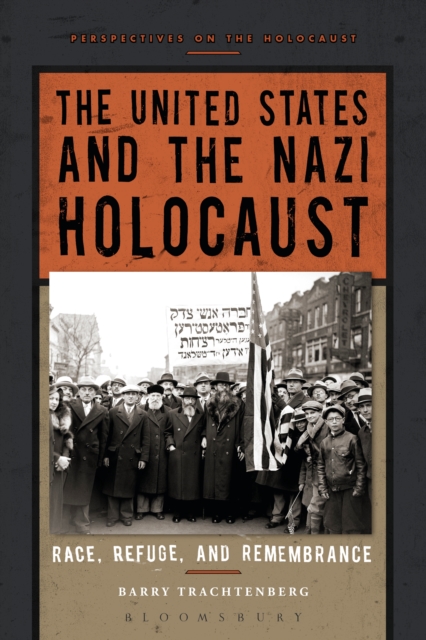
The United States and the Nazi Holocaust
The United States and the Nazi Holocaust is an invaluable synthesis of United States policies and attitudes towards the Nazi persecution of European Jewry from 1933 right up to the modern day. The book, which includes 20 illustrations, weaves together a vast body of scholarly literature to bring students of the Holocaust a balanced, readable overview of this complex and often controversial topic. It demonstrates that the United States’ response to the rise of Nazism, the refugee crisis it provoked, the Holocaust itself, and its aftermath were–and remain to this day–intricately linked to the ever-shifting racial, economic, and social status of American Jewry. Using a broad chronological framework, Barry Trachtenberg navigates us through the major themes and events of this period. He discusses the complicated history of the Roosevelt administration's response to the worsening situation of European Jewry in the context of the ambiguous racial status of Jews in Depression and World War II-era America. He examines the post-war decades in America, and discusses, over a series of chapters, how the Holocaust, like American Jewry itself, came to move from the margins to the very center of American awareness. The United States and the Nazi Holocaust considers the reception of Holocaust survivors, post-war trials, film, memoirs, memorials, and the growing field of Holocaust Studies. The reactions of the United States government, the general public, and the Jewish communities of America are all accounted for in this integrated, detailed survey.
eBook

Musculoskeletal pathology as an early warning sign of systemic amyloidosis: a systematic review of amyloid deposition and orthopedic surgery
Background
Transthyretin and immunoglobulin light-chain amyloidoses cause amyloid deposition throughout various organ systems. Recent evidence suggests that soft tissue amyloid deposits may lead to orthopedic conditions before cardiac manifestations occur. Pharmacologic treatments reduce further amyloid deposits in these patients. Thus, early diagnosis improves long term survival.
Questions/purposes
The primary purpose of this systematic review was to characterize the association between amyloid deposition and musculoskeletal pathology in patients with common orthopedic conditions. A secondary purpose was to determine the relationship between amyloid positive biopsy in musculoskeletal tissue and the eventual diagnosis of systemic amyloidosis.
Methods
We performed a systematic review using PRISMA guidelines. Inclusion criteria were level I-IV evidence articles that analyzed light-chain or transthyretin amyloid deposits in common orthopedic surgeries. Study methodological quality, risk of bias, and recommendation strength were assessed using MINORS, ROBINS-I, and SORT.
Results
This systematic review included 24 studies for final analysis (3606 subjects). Amyloid deposition was reported in five musculoskeletal pathologies, including carpal tunnel syndrome (transverse carpal ligament and flexor tenosynovium), hip and knee osteoarthritis (synovium and articular cartilage), lumbar spinal stenosis (ligamentum flavum), and rotator cuff tears (tendon). A majority of studies reported a mean age greater than 70 for patients with TTR or AL positive amyloid.
Conclusions
This systematic review has shown the presence of amyloid deposition detected at the time of common orthopedic surgeries, especially in patients ≥70 years old. Subtyping of the amyloid has been shown to enable diagnosis of systemic light-chain or transthyretin amyloidosis prior to cardiac manifestations.
Level of evidence
Level IV.
Journal Article

Targeted treatments of AL and ATTR amyloidosis
The therapeutic landscape for cardiac amyloidosis is rapidly evolving. In the last decade, our focus has shifted from dealing with the inevitable complications of continued extracellular infiltration of amyloid fibrils to earlier identification of these patients with prompt initiation of targeted therapy to prevent further deposition. Although much of the focus on novel targeted therapies is within the realm of transthyretin amyloidosis, light chain amyloidosis has benefited due to an overlap particularly in the final common pathway of fibrillogenesis and extraction of amyloid fibrils from the heart. Here, we review the targeted therapeutics for transthyretin and light chain amyloidosis. For transthyretin amyloidosis, the list of current and future therapeutics continues to evolve; and therefore, it is crucial to become familiar with the underlying mechanistic pathways of the disease. Although targeted therapeutic choices in AL amyloidosis are largely driven by the hematology team, the cardiac adverse effect profiles of these therapies, particularly in those with advanced amyloidosis, provide an opportunity for early recognition to prevent decompensation and can help inform recommendations regarding therapy changes when required.
Journal Article

Cardiovascular Risks with Epidermal Growth Factor Receptor (EGFR) Tyrosine Kinase Inhibitors and Monoclonal Antibody Therapy
Abstract Purpose of ReviewTyrosine kinase inhibitors (TKI) and monoclonal antibodies (mAbs) that target the epidermal growth factor receptor (EGFR) have changed the therapeutic landscape across a range of solid malignancies. However, there is little data regarding the cardiovascular (CV) impact of these agents. The purpose of this review is to discuss reported CV effects, pathophysiology, pre-treatment screening, diagnostic workup, and treatment recommendations in this patient population.Recent FindingsIt is apparent that CV events are not class dependent, and while infrequently reported in clinical trials, unique CV toxicity may occur with EGFR inhibitors, including structural, electrical, and vascular events.SummaryThere remains an unmet need to fully elucidate the spectrum of CV events associated with EGFR inhibitors. Early CV screening, close clinical monitoring, coupled with a multidisciplinary approach between medical and cardio-oncology is needed to minimize the potentially detrimental impact of cardiotoxicity in this patient population.
Journal Article

Baseline global longitudinal strain predictive of anthracycline-induced cardiotoxicity
Background
Cancer therapy-related cardiac dysfunction (CTRD) is a major source of morbidity and mortality in long-term cancer survivors. Decreased GLS predicts decreased left ventricular ejection fraction (LVEF) in patients receiving anthracyclines, but knowledge regarding the clinical utility of baseline GLS in patients at low-risk of (CTRD) is limited.
Objectives
The purpose of this study was to investigate whether baseline echocardiographic assessment of global longitudinal strain (GLS) before treatment with anthracyclines is predictive of (CTRD) in a broad cohort of patients with normal baseline LVEF.
Methods
Study participants comprised 188 patients at a single institution who underwent baseline 2-dimensional (2D) speckle-tracking echocardiography before treatment with anthracyclines and at least one follow-up echocardiogram 3 months after chemotherapy initiation. Patients with a baseline LVEF <55% were excluded from the analysis. The primary endpoint, (CTRD), was defined as an absolute decline in LVEF > 10% from baseline and an overall reduced LVEF <50%. Potential and known risk factors were evaluated using univariable and multivariable Cox proportional hazards regression analysis.
Results
Twenty-three patients (12.23%) developed (CTRD). Among patients with (CTRD), the mean GLS was -17.51% ± 2.77%. The optimal cutoff point for (CTRD) was -18.05%. The sensitivity was 0.70 and specificity was 0.70. The area under ROC curve was 0.70. After adjustment for cardiovascular and cancer therapy related risk factors, GLS or decreased baseline GLS ≥-18% was predictive of (CTRD) (adjusted hazards ratio 1.17, 95% confidence interval 1.00, 1.36;
p
= 0.044 for GLS, or hazards ratio 3.54; 95% confidence interval 1.34, 9.35;
p
= 0.011 for decreased GLS), along with history of tobacco use, pre-chemotherapy systolic blood pressure, and cumulative anthracycline dose.
Conclusions
Baseline GLS or decreased baseline GLS was predictive of (CTRD) before anthracycline treatment in a cohort of cancer patients with a normal baseline LVEF. This data supports the implementation of strain-protocol echocardiography in cardio-oncology practice for identifying and monitoring patients who are at elevated risk of (CTRD).
Journal Article

Rationale and design of the Transendocardial Injection of Autologous Human Cells (bone marrow or mesenchymal) in Chronic Ischemic Left Ventricular Dysfunction and Heart Failure Secondary to Myocardial Infarction (TAC-HFT) trial: A randomized, double-blind, placebo-controlled study of safety and efficacy
Although there is tremendous interest in stem cell (SC)–based therapies for cardiomyopathy caused by chronic myocardial infarction, many unanswered questions regarding the best approach remain. The TAC-HFT study is a phase I/II randomized, double-blind, placebo-controlled trial designed to address several of these questions, including the optimal cell type, delivery technique, and population. This trial compares autologous mesenchymal SCs (MSCs) and whole bone marrow mononuclear cells (BMCs). In addition, the study will use a novel helical catheter to deliver cells transendocardially. Although most trials have used intracoronary delivery, the optimal method is unknown and data suggest that the transendocardial approach may have important advantages. Several trials support the benefit of SCs in patients with chronic ischemic cardiomyopathy (ICMP), although the sample sizes have been small and the number of trials sparse. After a pilot phase of 8 patients, 60 patients with ICMP (left ventricular ejection fraction 15%-50%) will be randomized to group A (30 patients further randomized to receive MSC injection or placebo in a 2:1 fashion) or group B (30 patients further randomized to BMCs or placebo in a 2:1 fashion). All patients will undergo bone marrow aspiration and transendocardial injection of SCs or placebo. The primary and secondary objectives are, respectively, to demonstrate the safety and efficacy (determined primarily by cardiac magnetic resonance imaging) of BMCs and MSCs administered transendocardially in patients with ICMP.
Journal Article
Real-world data of cardio-oncologic interventions for cardiovascular adverse events with oral oncolytics
Background
Oral cancer therapy-related cardiovascular (CV) toxicity has a wide variety of presentations including arrhythmia, cardiomyopathy, and myocardial infarction, but clinical evidence related to its management is limited. The purpose of this IRB-approved, single-center, retrospective, cohort study was to characterize cardio-oncologic interventions for CV adverse events related to oral oncolytics.
Methods
The cohort included 67 patients who were admitted to a multi-hospital health system between June 1, 2016 and July 31, 2021, had at least one medical record order of oral oncolytics considered to have cardiotoxic potential, and had an ICD10 code for a cardiotoxic event added to their electronic medical records after initiation of oral oncolytics.
Results
The majority (97%) had pre-existing cardiovascular disease (CVD) or a CV risk factor. The three most common classes of oral oncolytics were aromatase inhibitors (36%), BCR-ABL inhibitors (16%), and VEGFR inhibitors (13%). New-onset or worsening heart failure (HF) (
n
= 31), which occurred after a median of 148 days (Interquartile range (IQR) 43–476 days) was the most common cardiotoxic event. The most frequent interventions were pharmacological treatment of the CV adverse event (
n
= 44) and treatment interruption (
n
= 18), but guideline-directed medication therapy for HF could be further optimized.
Conclusion
Pre-existing CVD or CV risk factors predispose oncology patients to CV adverse events. Real-world practice reveals that CV adverse events require temporary interruption of treatment and initiation of pharmacologic treatment. A multidisciplinary, patient-centered approach that includes discussion of risks/benefits of treatment continuation, and initiation of guideline-directed treatment is recommended until high-quality, drug-specific data for monitoring and treatment become available.
Journal Article

Cardiotoxicity Associated with Anti-CD19 Chimeric Antigen Receptor T-Cell (CAR-T) Therapy: Recognition, Risk Factors, and Management
Chimeric antigen receptor T-cells (CAR-T) are improving outcomes in pediatric and adult patients with relapsed or refractory B-cell acute lymphoblastic leukemias and subtypes of non-Hodgkin Lymphoma. As this treatment is being increasingly utilized, a better understanding of the unique toxicities associated with this therapy is warranted. While there is growing knowledge on the diagnosis and treatment of cytokine release syndrome (CRS), relatively little is known about the associated cardiac events that occur with CRS that may result in prolonged length of hospital stay, admission to the intensive care unit for pressor support, or cardiac death. This review focuses on the various manifestations of cardiotoxicity, potential risk factors, real world and clinical trial data on prevalence of reported cardiotoxicity events, and treatment recommendations.
Journal Article