
Catalogue Search | MBRL


Are you sure you want to remove the book from the shelf?

{{itemTitle}}
2,333
result(s) for
"Back, J."
Sort by:


Influence of biogenic emissions from boreal forests on aerosol–cloud interactions
Boreal forest acts as a carbon sink and contributes to the formation of secondary organic aerosols via emission of aerosol precursor compounds. However, these influences on the climate system are poorly quantified. Here we show direct observational evidence that aerosol emissions from the boreal forest biosphere influence warm cloud microphysics and cloud–aerosol interactions in a scale-dependent and highly dynamic manner. Analyses of in situ and ground-based remote-sensing observations from the SMEAR II station in Finland, conducted over eight months in 2014, reveal substantial increases in aerosol load over the forest one to three days after aerosol-poor marine air enters the forest environment. We find that these changes are consistent with secondary organic aerosol formation and, together with water-vapour emissions from evapotranspiration, are associated with changes in the radiative properties of warm, low-level clouds. The feedbacks between boreal forest emissions and aerosol–cloud interactions and the highly dynamic nature of these interactions in air transported over the forest over timescales of several days suggest boreal forests have the potential to mitigate climate change on a continental scale. Our findings suggest that even small changes in aerosol precursor emissions, whether due to changing climatic or anthropogenic factors, may substantially modify the radiative properties of clouds in moderately polluted environments.
Emissions from the boreal forest biosphere can substantially increase aerosol load above the forest and influence the radiative properties of clouds, according to analysis of observations from a monitoring station in Finland.
Journal Article
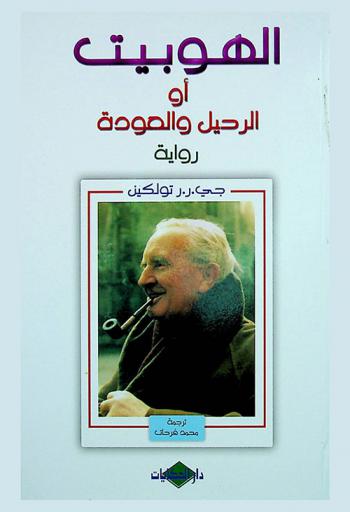
الهوبيت، أو، الرحيل والعودة : رواية
\"الهوبيت أو الرحيل والعودة\" هذه القصة هي واحدة من روائع القصص التي تدور حول هذه المخلوقات المبهجة قصة متكاملة بحد ذاتها وهي مع ذلك مليئة بالمعجزات والغرائب وهي تتناول سيرة بيلبو باغينز ذاك الهوبيت الكثير التجوال في الأماكن النائية خلف الجبال والغابات، الذي اكتشف أو كما يقول البعض سرق خاتم القوة الفريد وحمله معه إلى المقاطعة.
BOOK

UV/UV step-curing of optically clear acrylate adhesives for mobile devices
In order to overcome the issues of rework and height difference in the manufacturing of smart devices, UV/UV stepwise curing was conducted on acrylate-based optically clear adhesives. Photo differential scanning calorimetry was used to confirm the results of curing of samples that were processed both with and without acrylic acid, over a range of UV light exposure times for a primary curing process. The samples processed at 0.6 J/cm2 of UV energy with and without acrylic acid showed the highest amount of residual monomers after primary curing. The amount of residual monomers observed in primary-cured samples decreased as the amount of UV light energy increased, from 0.9 to 1.5 J/cm2. After secondary curing, only the samples cured at 0.6 J/cm2 showed small amounts of residual monomers, while the samples exposed to other UV energies showed very few residual monomers, implying that these samples were completely cured during the secondary curing step. Adhesion properties were evaluated using peel and tack tests, while the viscoelastic properties of the samples were confirmed by dynamic mechanical analysis. Our results indicate that uniform physical properties were achieved after secondary curing. The effects of stepwise curing are demonstrated by the difference in gel fractions determined after primary and secondary curing.
Journal Article

Implementing resilience engineering for healthcare quality improvement using the CARE model: a feasibility study protocol
Background
Resilience engineering (RE) is an emerging perspective on safety in complex adaptive systems that emphasises how outcomes emerge from the complexity of the clinical environment. Complexity creates the need for flexible adaptation to achieve outcomes. RE focuses on understanding the nature of adaptations, learning from success and increasing adaptive capacity. Although the philosophy is clear, progress in applying the ideas to quality improvement has been slow. The aim of this study is to test the feasibility of translating RE concepts into practical methods to improve quality by designing, implementing and evaluating interventions based on RE theory. The CARE model operationalises the key concepts and their relationships to guide the empirical investigation.
Methods
The settings are the Emergency Department and the Older Person’s Unit in a large London teaching hospital. Phases 1 and 2 of our work, leading to the development of interventions to improve the quality of care, are described in this paper. Ethical approval has been granted for these phases. Phase 1 will use ethnographic methods, including observation of work practices and interviews with staff, to understand adaptations and outcomes. The findings will be used to collaboratively design, with clinical staff in interactive design workshops, interventions to improve the quality of care. The evaluation phase will be designed and submitted for ethical approval when the outcomes of phases 1 and 2 are known.
Discussion
Study outcomes will be knowledge about the feasibility of applying RE to improve quality, the development of RE theory and a validated model of resilience in clinical work which can be used to guide other applications. Tools, methods and practical guidance for practitioners will also be produced, as well as specific knowledge of the potential effectiveness of the implemented interventions in emergency and older people’s care. Further studies to test the application of RE at a larger scale will be required, including studies of other healthcare settings, organisational contexts and different interventions.
Journal Article

Beyond ‘find and fix’: improving quality and safety through resilient healthcare systems
The aim was to develop a method based on resilient healthcare principles to proactively identify system vulnerabilities and quality improvement interventions.
Ethnographic methods to understand work as it is done in practice using concepts from resilient healthcare, the Concepts for Applying Resilience Engineering model and the four key activities that are proposed to underpin resilient performance-anticipating, monitoring, responding and learning.
Accident and Emergency Department (ED) and the Older People's Unit (OPU) of a large teaching hospital in central London.
ED-observations 104 h, and 14 staff interviews. OPU-observations 60 h, and 15 staff interviews.
Data were analysed to identify targets for quality improvement. In the OPU, discharge was a complex and variable process that was difficult to monitor. A system to integrate information and clearly show progress towards discharge was needed. In the ED, patient flow was identified as a complex high-intensity activity that was not supported by the existing data systems. The need for a system to integrate and display information about both patient and organizational factors was identified. In both settings, adaptive capacity was limited by the absence of systems to monitor the work environment.
The study showed that using resilient healthcare principles to inform quality improvement was feasible and focused attention on challenges that had not been addressed by traditional quality improvement practices. Monitoring patient and workflow in both the ED and the OPU was identified as a priority for supporting staff to manage the complexity of the work.
Journal Article

Applications of contrast-enhanced ultrasound in the pediatric abdomen
Contrast-enhanced ultrasound (CEUS) is a radiation-free, safe, and in specific clinical settings, highly sensitive imaging modality. Over the recent decades, there is cumulating experience and a large volume of published safety and efficacy data on pediatric CEUS applications. Many of these applications have been directly translated from adults, while others are unique to the pediatric population. The most frequently reported intravenous abdominal applications of CEUS in children are the characterization of focal liver lesions, monitoring of solid abdominal tumor response to treatment, and the evaluation of intra-abdominal parenchymal injuries in selected cases of blunt abdominal trauma. The intravesical CEUS application, namely contrast-enhanced voiding urosonography (ceVUS), is a well-established, pediatric-specific imaging technique entailing the intravesical administration of ultrasound contrast agents for detection and grading of vesicoureteral reflux. In Europe, all pediatric CEUS applications remain off-label. In 2016, the United States Food and Drug Administration (FDA) approved the most commonly used worldwide second-generation ultrasound contrast SonoVue®/Lumason® for pediatric liver and intravesical applications, giving new impetus to pediatric CEUS worldwide.
Journal Article

A comparison of HONO budgets for two measurement heights at a field station within the boreal forest in Finland
Atmospheric concentrations of nitrous acid (HONO), one of the major precursors of the hydroxyl radical (OH) in the troposphere, significantly exceed the values predicted by the assumption of a photostationary state (PSS) during daytime. Therefore, additional sources of HONO were intensively investigated in the last decades. This study presents budget calculations of HONO based on simultaneous measurements of all relevant species, including HONO and OH at two different measurement heights, i.e. 1 m above the ground and about 2 to 3 m above the canopy (24 m above the ground), conducted in a boreal forest environment. We observed mean HONO concentrations of about 6.5 × 10⁸ molecules cm−3 (26 ppt) during daytime, more than 20 times higher than expected from the PSS of 0.2 × 10⁸ molecules cm−3 (1 ppt). To close the budgets at both heights, a strong additional source term during daytime is required. This unidentified source is at its maximum at noon (up to 1.1 × 10⁶ molecules cm−3 s−1, 160 ppt h−1) and in general up to 2.3 times stronger above the canopy than close to the ground. The insignificance of known gas phase reactions and other processes like dry deposition or advection compared to the photolytic decomposition of HONO at this measurement site was an ideal prerequisite to study possible correlations of this unknown term to proposed HONO sources. But neither the proposed emissions from soils nor the proposed photolysis of adsorbed HNO3 contributed substantially to the unknown source. However, the unknown source was found to be perfectly correlated to the unbalanced photolytic loss of HONO.
Journal Article
Measurement of forward W and Z boson production in pp collisions at ... TeV
(ProQuest: ... denotes formulae and/or non-USASCII text omitted; see image).Measurements are presented of electroweak boson production using data from pp collisions at a centre-of-mass energy of ... TeV. The analysis is based on an integrated luminosity of 2.0 fb super(-1) recorded with the LHCb detector. The bosons are identified in the W arrow right mu nu and Z arrow right mu super(+) mu super(-) decay channels. The cross-sections are measured for muons in the pseudorapidity range 2.0 < eta < 4.5, with transverse momenta p sub(T) > 20 GeV/c and, in the case of the Z boson, a dimuon mass within ... GeV/c super(2). The results are ... ... ... ... ... ... ... ... where the first uncertainties are statistical, the second are systematic, the third are due to the knowledge of the LHC beam energy and the fourth are due to the luminosity determination. The evolution of the W and Z boson cross-sections with centre-of-mass energy is studied using previously reported measurements with 1.0 fb super(-1) of data at 7 TeV. Differential distributions are also presented. Results are in good agreement with theoretical predictions at next-to-next-to-leading order in perturbative quantum chromodynamics. [Figure not available: see fulltext.]
Journal Article
Introduction: The Pan-Eurasian Experiment (PEEX) – multidisciplinary, multiscale and multicomponent research and capacity-building initiative
The Pan-Eurasian Experiment (PEEX) is a multidisciplinary, multiscale and multicomponent research, research infrastructure and capacity-building program. PEEX has originated from a bottom-up approach by the science communities and is aiming at resolving the major uncertainties in Earth system science and global sustainability issues concerning the Arctic and boreal pan-Eurasian regions, as well as China. The vision of PEEX is to solve interlinked, global grand challenges influencing human well-being and societies in northern Eurasia and China. Such challenges include climate change; air quality; biodiversity loss; urbanization; chemicalization; food and freshwater availability; energy production; and use of natural resources by mining, industry, energy production and transport sectors. Our approach is integrative and supra-disciplinary, recognizing the important role of the Arctic and boreal ecosystems in the Earth system. The PEEX vision includes establishing and maintaining long-term, coherent and coordinated research activities as well as continuous, comprehensive research and educational infrastructure and related capacity-building across the PEEX domain. In this paper we present the PEEX structure and summarize its motivation, objectives and future outlook.
Journal Article