
Catalogue Search | MBRL


Are you sure you want to remove the book from the shelf?

{{itemTitle}}
3
result(s) for
"Backe, Chris, author"
Sort by:

Making out in Korean
Making Out in Korean is a fun, accessible and thorough Korean phrasebook and guide to the Korean language as it's really spoken. Nan neoga joa michigesseo! Uri tto mannalkka? --(I'm crazy about you! Shall we meet again?) Answer this correctly in Korean and you may be going on a hot date. Incorrectly, and you could be hurting someone's feelings or getting a slap! Korean classes and textbooks tend to spend a lot of time rehearsing for the same fictitious scenarios but chances are while in Korea you will spend a lot more time trying to make new friends or start new romances--something you may not be prepared for. If you are a student, businessman or tourist traveling to South Korea or North Korea and would like to have an authentic and meaningful experience, the key is being able to speak like a local. This friendly and easy-to-use Korean phrase book makes this possible. Making out in Korean has been carefully designed to act as a guide to modern colloquial Korean for use in everyday informal interactions--giving access to the sort of catchy Korean expressions that aren't covered in traditional language materials. As well as the Romanized forms (romanji), each expression is given in authentic Korean script (hangul), so that in the case of difficulties the book can be shown to the person the user is trying to communicate with. In addition, easy-to-use phonetic spellings of all Korean words and phrases are given. For example How are you? -- annyeonghaseyo? is also written as anh-nyawng-hah-seyo? This Korean phrasebook includes: A guide to pronouncing Korean words correctly. Explanations of basic Korean grammar, such as, word order, questions, and formal vs. informal tenses. Complete Korean translations including Korean Script (hangul). Useful and interesting notes on Korean language and culture. Lots of colorful, fun and useful expressions not covered in other phrasebooks.
Book
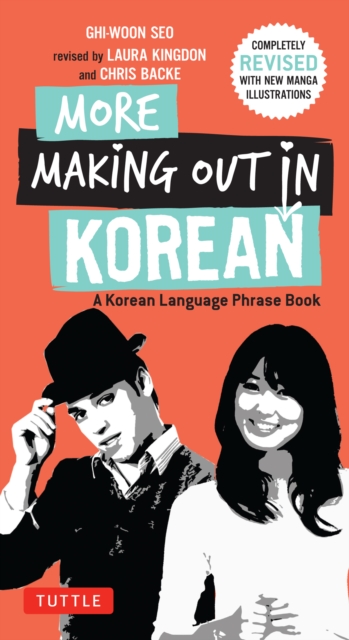
More making out in Korean
More Making Out in Korea is a fun, accessible and thorough Korean phrase book and guide to the Korean language as it's really spoken.This prasebook follows the bestselling Making Out in Korean providing additional (and classic) phrases for travelers, including ones to help you make acquaintances, discuss likes and dislikes, share a meal, go out on the town or develop a romantic relationship.If you are a student, businessman or tourist traveling to South Korea or North Korea and would like to have an authentic and meaningful experience, the key is being able to speak like a local. This friendly and easy-to-use Korean phrasebook makes this possible. More Making out in Korean has been carefully designed to act as a guide to modern colloquial Korean for use in everyday informal interactionsgiving access to the sort of catchy Korean expressions that aren't covered in traditional language materials. As well as the Romanized forms (romanji), each expression is given in authentic Korean script (hangul), so that in the case of difficulties the book can be shown to the person the user is trying to communicate with. In addition, easytouse phonetic spellings of all Korean words and phrases are given. For example \"How are you?\"annyeonghaseyo? is also written as anh-nyawng-hah-seyo?This Korean phrasebook includes: A guide to pronouncing Korean words correctly. Explanations of basic Korean grammar, such as, word order, questions, and formal vs. informal tenses. Complete Korean translations including Korean Script (hangul). Useful and interesting notes on Korean language and culture. Lots of colorful, fun and useful expressions not covered in other phrasebooks.The language style in this phrasebook is based on normal speech style, which means that it is appropriate for use with anyone from a total stranger to an intimate friend, without causing any embarrassment to the listener. It also includes current slang used by Korean young people, especially on the Net.
eBook
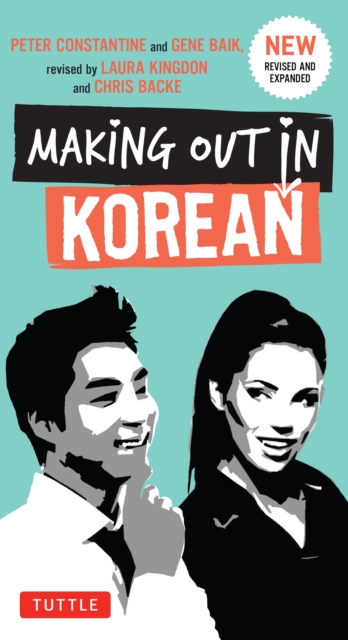
Making out in Korean
Making Out in Korean is a fun, accessible and thorough Korean phrasebook and guide to the Korean language as it's really spoken. Nan neoga joa michigesseo! Uri tto mannalkka? (I'm crazy about you! Shall we meet again?) Answer this correctly in Korean and you may be going on a hot date. Incorrectly, and you could be hurting someone's feelings or getting a slap! Korean classes and textbooks tend to spend a lot of time rehearsing for the same fictitious scenarios but chances are while in Korea you will spend a lot more time trying to make new friends or start new romances; something you may not be prepared for. If you are a student, businessman or tourist traveling to South Korea or North Korea and would like to have an authentic and meaningful experience, the key is being able to speak like a local. This friendly and easy-to-use Korean phrase book makes this possible. Making out in Korean has been carefully designed to act as a guide to modern colloquial Korean for use in everyday informal interactions; giving access to the sort of catchy Korean expressions that aren't covered in traditional language materials. As well as the Romanised forms (romanji), each expression is given in authentic Korean script (hangul), so that in the case of difficulties the book can be shown to the person the user is trying to communicate with. In addition, easy-to-use phonetic spellings of all Korean words and phrases are given. For example
eBook