
Catalogue Search | MBRL


Are you sure you want to remove the book from the shelf?

{{itemTitle}}
50
result(s) for
"Bailey, Beth L."
Sort by:

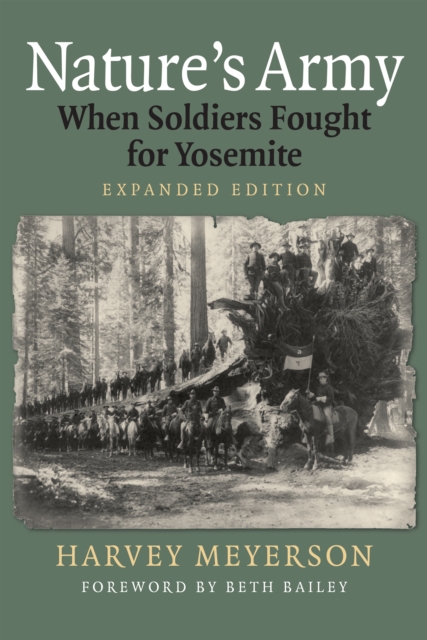
Nature's Army
Blessings on Uncle Sam's soldiers! They have done their job
well, and every pine tree is waving its arms for joy .-John
Muir
Muir's words and this book both celebrate a crucial but largely
forgotten episode in our nation's history-how a generation prior to
the creation of a National Park Service, the US Army ran Yosemite
National Park in an unusual alliance with the fabled
preservationist John Muir and his Sierra Club. Harvey Meyerson
brings that largely forgotten episode in our nation's history to
life and uses it as a touchstone for a reconsideration of a century
of civilian-military cooperation in environmental protection and
infrastructure construction whose impact and relevance still
resonate.
Despite the worldwide renown and popularity of Yosemite National
Park, few people know that its first stewards were drawn from the
so-called Old Army. From 1890 until the establishment of the
National Park Service in 1916, these soldiers proved to be
extremely competent and farsighted wilderness managers. Meyerson
recaptures the forgotten history of these early environmentalists
and how they set significant standards for the future oversight of
our national parks.
The army, Meyerson suggests, had actually been well prepared to
assume this stewardship. During its first hundred years-and despite
the interruptions of warfare-its soldiers had crisscrossed the
American landscape, preparing maps and writing detailed reports
describing climate, weather, physical terrain, ecosystems, and the
diverse flora and fauna populating the lands they explored and
often protected during an era of wide-open exploitation of natural
resources. Such experience made the army better suited than any
other federal agency to oversee the early national parks
system.
Combining environmental, military, political, and cultural
history, Meyerson's study is especially timely in light of
Yosemite's enormous popularity (four million visitors annually) and
recent controversies pitting conservation forces against dam
builders and proponents of expanded public access.
eBook

Managing Sex in the U.S. Military
The U.S. military is a massive institution, and its policies on
sex, gender, and sexuality have shaped the experiences of tens of
millions of Americans, sometimes in life-altering fashion. The
essays in Managing Sex in the U.S. Military examine
historical and contemporary military policies and offer different
perspectives on the broad question: \"How does the U.S. military
attempt to manage sex?\" This collection focuses on the U.S.
military's historical and contemporary attempts to manage sex-a
term that is, in practice, slippery and indefinite, encompassing
gender and gender identity, sexuality and sexual orientation, and
sexual behaviors and practices, along with their outcomes. In each
chapter, the authors analyze the military's evolving definitions of
sex, sexuality, and gender, and the significance of those
definitions to both the military and American society.
eBook
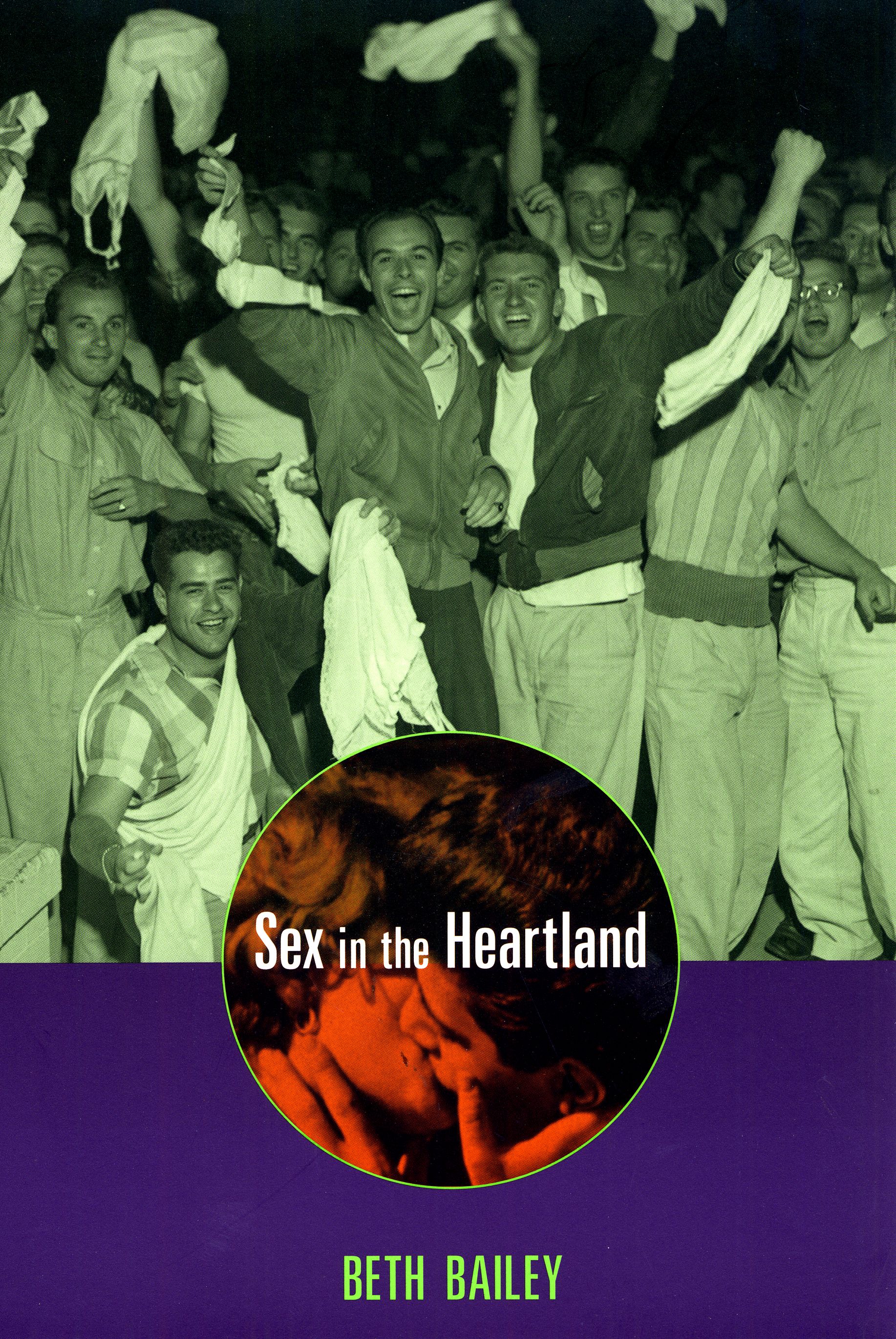
Sex in the Heartland
Sex in the Heartland is the story of the sexual revolution in a small university town in the quintessential heartland state of Kansas. Bypassing the oft-told tales of radicals and revolutionaries on either coast, Beth Bailey argues that the revolution was forged in towns and cities alike, as \"ordinary\" people struggled over the boundaries of public and private sexual behavior in postwar America.
Bailey fundamentally challenges contemporary perceptions of the revolution as simply a triumph of free love and gay lib. Rather, she explores the long-term and mainstream changes in American society, beginning in the economic and social dislocations of World War II and the explosion of mass media and communication, which aided and abetted the sexual upheaval of the 1960s. Focusing on Lawrence, Kansas, we discover the intricacies and depth of a transformation that was nurtured at the grass roots.
Americans used the concept of revolution to make sense of social and sexual changes as they lived through them. Everything from the birth control pill and counterculture to Civil Rights, was conflated into \"the revolution,\" an accessible but deceptive simplification, too easy to both glorify and vilify. Bailey untangles the radically different origins, intentions, and outcomes of these events to help us understand their roles and meanings for sex in contemporary America. She argues that the sexual revolution challenged and partially overturned a system of sexual controls based on oppression, inequality, and exploitation, and created new models of sex and gender relations that have shaped our society in powerful and positive ways. Table of Contents: Introduction
Before the Revolution Sex and the Therapeutic Culture Responsible Sex Prescribing the Pill Revolutionary Intent Sex as a Weapon Sex and Liberation Remaking Sex
Epilogue
Abbreviations Notes Acknowledgments Index Reviews of this book: [A] vivid reminder of just how national and chaotic the events we call 'the sixties' really were...Bailey's exploration of the sexual revolution offers a subtler sense of the underlying forces of that era, which unified even while dividing a nation and, ultimately, the world. --Tom Engelhardt, The Nation Reviews of this book: [Beth Bailey's] applied research here is interesting, imaginative and compassionate, and the final treat is that Bailey is a very good writer. Sex in the Heartland is simply a fascinating read. I'm sorry I can't call her up and congratulate her on this book in person...[This book is] beautifully shaped, carefully thought out, a treasury of useful information. --Carolyn See, Washington Post Reviews of this book: One of the great strengths of this book is Bailey's ability to make local characters, institutions and fights vital and compelling, all the while keeping an eye on the broader issues at stake. She gives us a vivid portrait of one university town in transition and a case study for U.S. social history. A cast of local characters comes alive...Virtually every chapter has surprising, subtle turns in which Bailey's thesis of historical paradox and unintended consequences is amply demonstrated. --Maureen McLane, Chicago Tribune Reviews of this book: Published by the prestigious Harvard University Press, the book suggests that out-of-the-mainstream states such as Kansas actually were on the cutting edge of the nation's sexual revolution during the early 1960s. --Matt Moline, Capital-Journal Reviews of this book: \"[Bailey] points out that those who claim the radical nature of the [sexual] revolution may be surprised by just how deep-seated and mainstream the origins of many of those revolutionary changes were.\" --Philip Godwin, M.D., Journal-World Reviews of this book: \"Bailey examines the 20th-century 'sexual revolution' as it played out in the midwestern college town of Lawrence, Kansas...Bailey is especially perceptive on the ambivalent and conflicted relationship of both the feminist and gay rights movements to the sexual revolution. She also has strong sections on the birth control pill and other moremundane but long-lasting changes in American sexual culture...[A] fascinating and impressive book.\" --K. Blaser, Choice
eBook
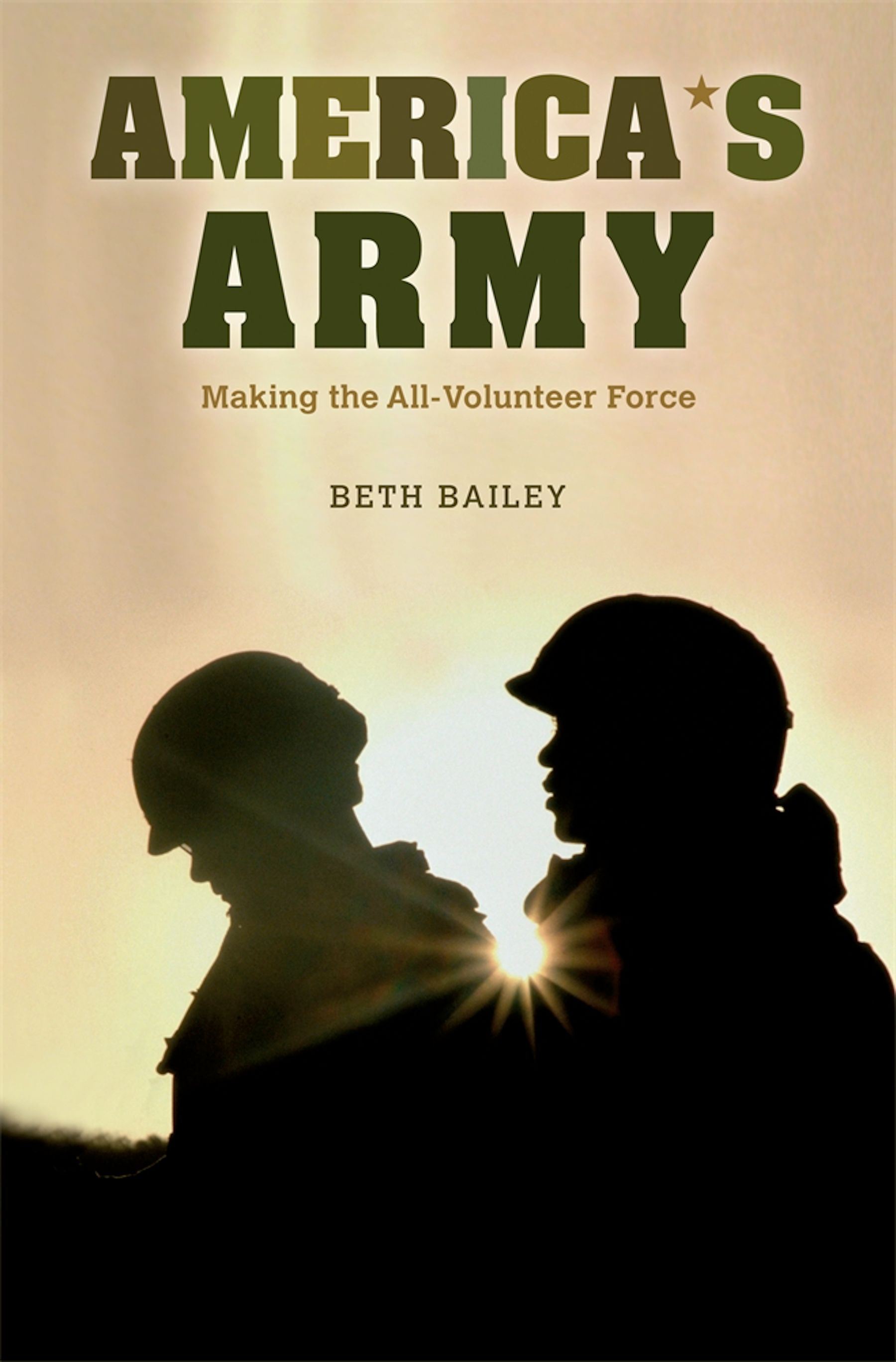
AMERICA'S ARMY
America's Army is the story of the all-volunteer force, from the draft protests and policy proposals of the 1960s through the Iraq War. Based on exhaustive archival research, as well as interviews with Army officers and recruiters, advertising executives, and policy makers, America's Army confronts the political, moral, and social issues a volunteer force raises for a democratic society as well as for the defense of our nation.
eBook
Sex in the heartland
This is the story of the sexual revolution in a small university town in the quintessential heartland state of Kansas. Bypassing oft-told tales of radicals and revolutionaries on the coasts, Bailey argues that the revolution was forged in towns and cities alike, as \"ordinary\" people struggled over boundaries of sexual behavior in postwar America.
eBook


Scientific Truth…And Love: The Marriage Education Movement in the United States
An examination of the marriage education movement in the US, based on a review of scholarship dealing with US courtship & marriage. The origins, history, & impact of marriage education are discussed. It is argued that the marriage education movement in the US has never established priorities due to the internal demands of a developing discipline & the external demands of society. As the tensions & contradictions in the movement played out, they shed light on one aspect of US courtship, ie, the struggle for the power to define propriety. F. Rasmussen
Journal Article
