
Catalogue Search | MBRL


Are you sure you want to remove the book from the shelf?

{{itemTitle}}
19
result(s) for
"Baires, Sarah E."
Sort by:

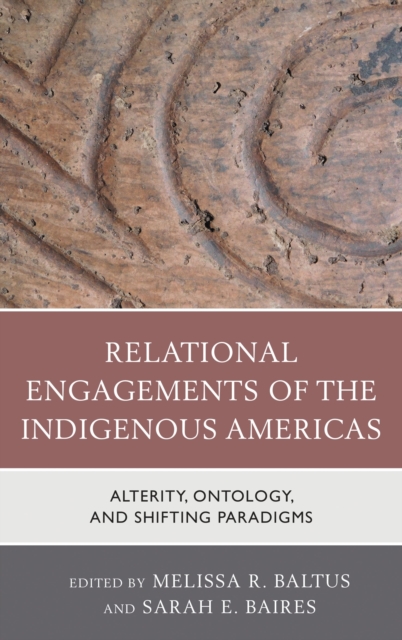
Relational engagements of the indigenous Americas
In Relational Engagements of the Indigenous Americas, Melissa R.Baltus and Sarah E.Baires critically examine the current understanding of relationality in the Americas, covering a diverse range of topics from Indigenous cosmologies to the life-world of the Inuit dog.
eBook

A Microhistory of Human and Gastropod Bodies and Souls During Cahokia's Emergence
This article examines the role of mortuary practice in the emergence (c. ad 1050–1100) of Cahokia, the largest pre-Columbian Native American city north of Mexico. The parallel partitioning of human and gastropod bodies in ridge-top mortuary mounds is examined and I argue that the presence of gastropods buried alongside human bodies served to connect the living world of humans with the watery underworld of the dead. From a microhistorical perspective, this paper focuses on the processing and deposition of bodies and their subsequent interment in ridge-top burials to parse the potential relationships between such mortuary practice and Cahokia's emergence as a complex polity. The paper presents data on the association of shell materials with human bodies from six previously excavated ridge-tops for comparison with new data on shell materials and human burials from Wilson Mound, a small ridge-top located on the western edge of Cahokia. Together, these data suggest the emergence of Cahokia was embedded in newly articulated relationships with persons enacted through the process of disarticulating the dead for burial mediated with mollusc shell.
Journal Article

The Role of Plants and Animals in the Termination of Three Buildings at the Spring Lake Tract Neighborhood, Cahokia
Plants and animals play a vital role in the human experience, from providing basic sustenance to creating unique social practices that may govern familial, political, or religious experiences; reconstitute identities; or forge social relationships. In this article, we present analyses on the ethnobotanical and zoological remains recently recovered from the Spring Lake Tract, Cahokia, a neighborhood populated from approximately AD 900 to 1275. The assemblage represents a variety of plants and animals that demonstrate the diverse utility of the biota from the region. We conclude that this assemblage indicates that this neighborhood community participated in an array of practices not easily dichotomized into “ritual” or “domestic.” From the perspectives of “Place-Thought” and locality, we emphasize the agency of these entities (plant/animal/human) in the process of creating and sustaining this Cahokian neighborhood.
Journal Article

Shaman, Priest, Practice, Belief
Archaeological case studies consider material evidence of religion and ritual in the pre-Columbian Eastern Woodlands
Archaeologists today are interpreting Native American religion and ritual in the distant past in more sophisticated ways, considering new understandings of the ways that Native Americans themselves experienced them. Shaman, Priest, Practice, Belief: Materials of Ritual and Religion in Eastern North America broadly considers Native American religion and ritual in eastern North America and focuses on practices that altered and used a vast array of material items as well as how physical spaces were shaped by religious practices.
Unbound to a single theoretical perspective of religion, contributors approach ritual and religion in diverse ways. Importantly, they focus on how people in the past practiced religion by altering and using a vast array of material items, from smoking pipes, ceremonial vessels, carved figurines, and iconographic images, to sacred bundles, hallucinogenic plants, revered animals, and ritual architecture. Contributors also show how physical spaces were shaped by religious practice, and how rock art, monuments, soils and special substances, and even land- and cityscapes were part of the active material worlds of religious agents.
Case studies, arranged chronologically, cover time periods ranging from the Paleoindian period (13,000–7900 BC) to the late Mississippian and into the protohistoric/contact periods. The geographical scope is much of the greater southeastern and southern Midwestern culture areas of the Eastern Woodlands, from the Central and Lower Mississippi River Valleys to the Ohio Hopewell region, and from the greater Ohio River Valley down through the Deep South and across to the Carolinas.
Contributors
Sarah E. Baires / Melissa R. Baltus / Casey R. Barrier / James F. Bates / Sierra M. Bow / James A. Brown / Stephen B. Carmody / Meagan E. Dennison / Aaron Deter-Wolf / David H. Dye / Bretton T. Giles / Cameron Gokee / Kandace D. Hollenbach / Thomas A. Jennings / Megan C. Kassabaum / John E. Kelly / Ashley A. Peles / Tanya M. Peres / Charlotte D. Pevny / Connie M. Randall / Jan F. Simek / Ashley M. Smallwood / Renee B. Walker / Alice P. Wright
eBook

Creating and Abandoning “Homeland”: Cahokia as Place of Origin
“Diaspora” is typically used in reference to large-scale population dispersals across borders of modern nation-states. This concept has particular connotations with regard to political dynamics and the creation of social identities of difference; however, similar movements of people who retain an identity of a collective “homeland” may be useful for understanding some aspects of cultural influence and complexity in the Mississippian Southeast. Here, we consider the debate over concepts of “diaspora” and “homeland,” identifying aspects of diaspora theory that provide a useful lens through which to understand Cahokia’s impact in the greater Southeast, specifically in the construction of a physical, ancestral, and/or metaphorical Place of Origin as referential “homeland.” We then consider the implications of this Central Place in the context of abandonment and small-scale out-migrations within the Greater Cahokia region. While certain non-human bodies and material practices are “carried away,” others are abandoned altogether. We consider what these choices can tell us about the process of dissolution of this once-created Place of Origin, Cahokia.
Journal Article
Matter, Places, and Persons in Cahokian Depositional Acts
Artifact caching, soil layering, and other intentional depositional practices— archaeologically defined \"ritual deposits\" of the past—are especially prevalent during the Mississippian period. Employing a perspective of relational ontology, however, we interrogate the validity of a past partitioned into religious, political, and daily spheres. Rather, this perspective emphasizes the multi-experiential and multi-dimensional aspects of social life. Meaning, intentional depositional acts can no longer be usefully described as simply \"sacred\" or \"ritual\" practices. Rather, these deposits should be explored as experiences tied to multiple layers of social life, investigating the relationships constructed through such deposits between humans, nonhuman agents, and the landscape.
Journal Article
EXPLORING NEW CAHOKIAN NEIGHBORHOODS: STRUCTURE DENSITY ESTIMATES FROM THE SPRING LAKE TRACT, CAHOKIA
We present the recent results of a magnetometry survey of the Spring Lake Tract conducted during the summer of 2015 at Cahokia Mounds State Historic Site located along the Mississippi River Floodplain in southern Illinois. This tract, located southeast of Woodhenge and west of the Grand Plaza, is situated north of two known borrow pits and includes an additional, previously unidentified borrow pit. Through comparing our gradiometer results with our subsequent test excavations, we argue that this area of Cahokia potentially demonstrates an increase in building density at the Spring Lake Tract during the transition between the Terminal Late Woodland and Lohmann phases. In addition, our survey and exaction results demonstrate that this area was densely occupied between the Lohmann and Stirling phases. During the Moorehead phase, we identify a possible increase in habitation based on hypothesized structure density using statistical analyses of length and width ratios (m) and structure area (m2). Our preliminary results suggest that the Spring Lake Tract saw an increase in habitation during the Moorehead phase, a new perspective on the density and use of domestic space during Cahokia's late occupational history. Presentamos los resultados de una reciente prospección magnetométrica del sector Spring Lake, realizada durante el verano de 2015 en el sitio de Cahokia, localizado en la llanura aluvial del río Mississippi en el sur de Illinois. Ubicado al sureste de Woodhenge y al oeste de la Gran Plaza, este sector se encuentra al norte de dos conocidas canteras para extracción de tierra e incluye otra cantera no identificada previamente. Con base en la comparación de los resultados del gradiómetro con las posteriores excavaciones de prueba, argumentamos que esta zona de Cahokia potencialmente muestra un aumento en la densidad de construcción durante la transición entre la fase Silvícola tardía terminal y la fase Lohmann. Además, los resultados de la prospección y de las excavaciones demuestran que esta zona fue densamente ocupada entre las fases Lohmann y Stirling. Durante la fase Moorehead identificamos un posible incremento habitacional basado en la densidad estructural especulada con base en análisis estadísticos de las proporciones entre longitud y anchura y del área de las estructuras. Nuestros resultados preliminares sugieren que el sector Spring Lake vio un aumento residencial durante la fase Moorehead, lo cual es una nueva perspectiva sobre la densidad y el uso del espacio doméstico durante las fases finales de la ocupación de Cahokia.
Journal Article