
Catalogue Search | MBRL


Are you sure you want to remove the book from the shelf?

{{itemTitle}}
1,228
result(s) for
"Baker, Deborah"
Sort by:

The last Englishmen : love, war, and the end of empire
\"John Auden was a pioneering geologist of the Himalaya. Michael Spender was the first to draw a detailed map of the North Face of Mount Everest. While their younger brothers--W. H. Auden and Stephen Spender--achieved literary fame, they vied to be included on an expedition that would deliver Everest's summit to an Englishman, a quest that had become a metaphor for Britain's struggle to maintain power over India. To this rivalry was added another: in the summer of 1938 both men fell in love with a painter named Nancy Sharp. Her choice would determine where each man's wartime loyalties would lie. Set in Calcutta, London, the glacier-locked wilds of the Karakoram, and on Everest itself, The Last Englishmen is also the story of a generation. The cast of this exhilarating drama includes Indian and English writers and artists, explorers and communist spies, Die Hards and Indian nationalists, political rogues and police informers. Key among them is a highborn Bengali poet named Sudhin Datta, a melancholy soul torn, like many of his generation, between hatred of the British Empire and a deep love of European literature, whose life would be upended by the arrival of war on his Calcutta doorstep\"-- Publisher's description.
Book

Multimodal Interprofessional Adult Cancer Pain Management: An Integrative Review
Poorly controlled cancer pain leads to increased morbidity and decreased quality of life. This integrative review aims to strengthen cancer pain management practices by identifying the effectiveness of multimodal interprofessional pain management (MIPM) in treating cancer pain, current MIPM practices, and barriers and facilitators to implementation.
The following three databases were searched for literature exploring MIPM in the oncologic setting: PubMed®, CINAHL®, and Embase®.
This integrative review included 16 articles published from 2013 to 2023 that explored the use of MIPM in adult patients with cancer.
Adult patients with cancer receiving MIPM reported reduced pain intensity or interference. With MIPM, the number of patients reporting moderate to severe pain or undertreated pain decreased, and the number of patients reporting adequate pain management increased. In addition, patients receiving MIPM reported improvements in physical and psychosocial cancer-related symptoms.
The components of MIPM are recommended to be used in conjunction with each other for optimal patient outcomes. To optimize the use of MIPM, improving provider knowledge and interprofessional care coordination and communication is warranted.
Journal Article

Space academy : how to fly spacecraft step by step
An astronaut training course that shows children how to pilot different kinds of space craft. Second in the series, it is divided into three types of spread that encourage the child to imagine their journey into space. It also looks at the science and technology of space and space travel -- Source other than Library of Congress.
Book

PulseNet and the Changing Paradigm of Laboratory-Based Surveillance for Foodborne Diseases
PulseNet, the National Molecular Subtyping Network for Foodborne Disease Surveillance, was established in 1996 through a collaboration with the Centers for Disease Control and Prevention; the US Department of Agriculture, Food Safety and Inspection Service; the US Food and Drug Administration; 4 state public health laboratories; and the Association of Public Health Laboratories. The network has since expanded to include 83 state, local, and food regulatory public health laboratories. In 2016, PulseNet was estimated to be helping prevent an estimated 270 000 foodborne illnesses annually. PulseNet is undergoing a transformation toward whole-genome sequencing (WGS), which provides better discriminatory power and precision than pulsed-field gel electrophoresis (PFGE). WGS improves the detection of outbreak clusters and could replace many traditional reference identification and characterization methods. This article highlights the contributions made by public health laboratories in transforming PulseNet’s surveillance and describes how the transformation is changing local and national surveillance practices. Our data show that WGS is better at identifying clusters than PFGE, especially for clonal organisms such as Salmonella Enteritidis. The need to develop prioritization schemes for cluster follow-up and additional resources for both public health laboratory and epidemiology departments will be critical as PulseNet implements WGS for foodborne disease surveillance in the United States.
Journal Article
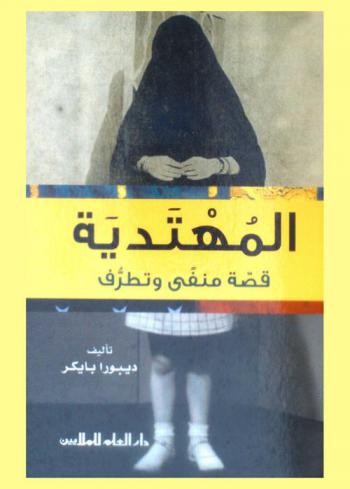
المهتدية : قصة منفي وتطرف
\"المهتدية\" إحدى أروع القصص التي تناولت موضوع الإسلام والغرب بعد أحداث 9 سبتمبر، وأكثرها إثارة. ي عن بلدها ودينها ما الذي دفع شابة يهودية من إحدى ضواحي نيويورك إلى إعتناق الإسلام، والتخل اليهودي؟. كيف تحولت مارغريت ماركوس من لارتشمونت إلى مريم جميلة من باكستان ؟ كيف أصبحت أحد في الدفاع عن الإسلام في مواجهة الغرب؟. أكثر الأصوات قوة وتأثيرا موجودة في هذا الكتاب الذي يحكي لنا قصة حياة مريم جميلة غموض؟ تحولات؟ دراما؟... كل وهجرتها الصعبة إلى باكستان... قصة ممتعة ومشوقة تشبه القصص البوليسية في أسلوبها المتنقل بين حياة مارغريت ماريكوس وحياة مريم جميلة.
BOOK

A Solar cycle correlation of coronal element abundances in Sun-as-a-star observations
The elemental composition in the coronae of low-activity solar-like stars appears to be related to fundamental stellar properties such as rotation, surface gravity, and spectral type. Here we use full-Sun observations from the Solar Dynamics Observatory, to show that when the Sun is observed as a star, the variation of coronal composition is highly correlated with a proxy for solar activity, the F10.7 cm radio flux, and therefore with the solar cycle phase. Similar cyclic variations should therefore be detectable spectroscopically in X-ray observations of solar analogs. The plasma composition in full-disk observations of the Sun is related to the evolution of coronal magnetic field activity. Our observations therefore introduce an uncertainty into the nature of any relationship between coronal composition and fixed stellar properties. The results highlight the importance of systematic full-cycle observations for understanding the elemental composition of solar-like stellar coronae.
The Sun’s elemental composition is a vital part of understanding the processes that transport energy from the interior to the outer atmosphere. Here, the authors show that if the Sun is observed as a star, then the variation of coronal composition is highly correlated with the F10.7cm radio flux.
Journal Article

Cancer survival disparities worsening by socio-economic disadvantage over the last 3 decades in new South Wales, Australia
Background
Public concerns are commonly expressed about widening health gaps. This cohort study examines variations and trends in cancer survival by socio-economic disadvantage, geographical remoteness and country of birth in an Australian population over a 30-year period.
Methods
Data for cases diagnosed in New South Wales (NSW) in 1980–2008 (
n
= 651,245) were extracted from the population-based NSW Cancer Registry. Competing risk regression models, using the Fine & Gray method, were used for comparative analyses to estimate sub-hazard ratios (SHR) with 95% confidence intervals (CI) among people diagnosed with cancer.
Results
Increased risk of cancer death was associated with living in the most socio-economically disadvantaged areas compared with the least disadvantaged areas (SHR 1.15, 95% CI 1.13–1.17), and in outer regional/remote areas compared with major cities (SHR 1.05, 95% CI 1.03–1.06). People born outside Australia had a similar or lower risk of cancer death than Australian-born (SHR 0.99, 95% CI 0.98–1.01 and SHR 0.91, 95% CI 0.90–0.92 for people born in other English and non-English speaking countries, respectively). An increasing comparative risk of cancer death was observed over time when comparing the most with the least socio-economically disadvantaged areas (SHR 1.07, 95% CI 1.04–1.10 for 1980–1989; SHR 1.14, 95% CI 1.12–1.17 for 1990–1999; and SHR 1.24, 95% CI 1.21–1.27 for 2000–2008;
p
< 0.001 for interaction between disadvantage quintile and year of diagnosis).
Conclusions
There is a widening gap in comparative risk of cancer death by level of socio-economic disadvantage that warrants a policy response and further examination of reasons behind these disparities.
Journal Article

Self-selection in a population-based cohort study: impact on health service use and survival for bowel and lung cancer assessed using data linkage
Background
In contrast to aetiological associations, there is little empirical evidence for generalising health service use associations from cohort studies. We compared the health service use of cohort study participants diagnosed with bowel or lung cancer to the source population of people diagnosed with these cancers in New South Wales (NSW), Australia to assess the representativeness of health service use of the cohort study participants.
Methods
Population-based cancer registry data for NSW residents aged ≥45 years at diagnosis of bowel or lung cancer were linked to the 45 and Up Study, a NSW population-based cohort study (N~ 267,000). We measured hospitalisation, emergency department (ED) attendance and all-cause survival, and risk factor associations with these outcomes using administrative data for cohort study participants and the source population. We assessed bias in prevalence and risk factor associations using ratios of relative frequency (RRF) and relative odds ratios (ROR), respectively.
Results
People from major cities, non-English speaking countries and with comorbidites were under-represented among cohort study participants diagnosed with bowel (
n
= 1837) or lung (
n
= 969) cancer by 20–50%. Cohort study participants had similar hospitalisation and ED attendance compared with the source population. One-year survival after major surgical resection was similar, but cohort study participants had up to 25% higher post-diagnosis survival (lung cancer 3-year survival: RRF = 1.24, 95% confidence interval 1.12,1.37). Except for area-based socioeconomic position, risk factors associations with health service use measures and survival appeared relatively unbiased.
Conclusions
Absolute measures of health service use and risk factor associations in a non-representative sample showed little evidence of bias. Non-comparability of risk factor measures of cohort study participants and non-participants, such as area-based socioeconomic position, may bias estimates of risk factor associations. Primary and outpatient care outcomes may be more vulnerable to bias.
Journal Article

Estimates of cancer incidence, mortality and survival in aboriginal people from NSW, Australia
Background
Aboriginal status has been unreliably and incompletely recorded in health and vital registration data collections for the most populous areas of Australia, including NSW where 29% of Australian Aboriginal people reside. This paper reports an assessment of Aboriginal status recording in NSW cancer registrations and estimates incidence, mortality and survival from cancer in NSW Aboriginal people using multiple imputation of missing Aboriginal status in NSW Central Cancer Registry (CCR) records.
Methods
Logistic regression modelling and multiple imputation were used to assign Aboriginal status to those records of cancer diagnosed from 1999 to 2008 with missing Aboriginality (affecting 12-18% of NSW cancers registered in this period). Estimates of incidence, mortality and survival from cancer in NSW Aboriginal people were compared with the NSW total population, as standardised incidence and mortality ratios, and with the non-Aboriginal population.
Results
Following imputation, 146 (12.2%) extra cancers in Aboriginal males and 140 (12.5%) in Aboriginal females were found for 1999-2007. Mean annual cancer incidence in NSW Aboriginal people was estimated to be 660 per 100,000 and 462 per 100,000, 9% and 6% higher than all NSW males and females respectively. Mean annual cancer mortality in NSW Aboriginal people was estimated to be 373 per 100,000 in males and 240 per 100,000 in females, 68% and 73% higher than for all NSW males and females respectively. Despite similar incidence of localised cancer, mortality from localised cancer in Aboriginal people is significantly higher than in non-Aboriginal people, as is mortality from cancers with regional, distant and unknown degree of spread at diagnosis. Cancer survival in Aboriginal people is significantly lower: 51% of males and 43% of females had died of the cancer by 5 years following diagnosis, compared to 36% and 33% of non-Aboriginal males and females respectively.
Conclusion
The present study is the first to produce valid and reliable estimates of cancer incidence, survival and mortality in Australian Aboriginal people from NSW. Despite somewhat higher cancer incidence in Aboriginal than in non-Aboriginal people, substantially higher mortality and lower survival in Aboriginal people is only partly explained by more advanced cancer at diagnosis.
Journal Article
After accounting for competing causes of death and more advanced stage, do Aboriginal and Torres Strait Islander peoples with cancer still have worse survival? A population-based cohort study in New South Wales
Background
Aboriginal and Torres Strait Islander peoples in Australia have been found to have poorer cancer survival than non-Aboriginal people. However, use of conventional relative survival analyses is limited due to a lack of life tables. This cohort study examined whether poorer survival persist after accounting for competing risks of death from other causes and disparities in cancer stage at diagnosis, for all cancers collectively and by cancer site.
Methods
People diagnosed in 2000–2008 were extracted from the population-based New South Wales Cancer Registry. Aboriginal status was multiply imputed for people with missing information (12.9%). Logistic regression models were used to compute odds ratios (ORs) with 95% confidence intervals (CIs) for ‘advanced stage’ at diagnosis (separately for distant and distant/regional stage). Survival was examined using competing risk regression to compute subhazard ratios (SHRs) with 95%CIs.
Results
Of the 301,356 cases, 2517 (0.84%) identified as Aboriginal (0.94% after imputation). After adjusting for age, sex, year of diagnosis, socio-economic status, remoteness, and cancer site Aboriginal peoples were more likely to be diagnosed with distant (OR 1.30, 95%CI 1.17–1.44) or distant/regional stage (OR 1.29, 95%CI 1.18–1.40) for all cancers collectively. This applied to cancers of the female breast, uterus, prostate, kidney, others (those not included in other categories) and cervix (when analyses were restricted to cases with known stages/known Aboriginal status). Aboriginal peoples had a higher hazard of death than non-Aboriginal people after accounting for competing risks from other causes of death, socio-demographic factors, stage and cancer site (SHR 1.40, 95%CI 1.31–1.50 for all cancers collectively). Consistent results applied to colorectal, lung, breast, prostate and other cancers.
Conclusions
Aboriginal peoples with cancer have an elevated hazard of cancer death compared with non-Aboriginal people, after accounting for more advanced stage and competing causes of death. Further research is needed to determine reasons, including any contribution of co-morbidity, lifestyle factors and differentials in service access to help explain disparities.
Journal Article