
Catalogue Search | MBRL


Are you sure you want to remove the book from the shelf?

{{itemTitle}}
4,619
result(s) for
"Baker, William"
Sort by:


Are High-Severity Fires Burning at Much Higher Rates Recently than Historically in Dry-Forest Landscapes of the Western USA?
Dry forests at low elevations in temperate-zone mountains are commonly hypothesized to be at risk of exceptional rates of severe fire from climatic change and land-use effects. Their setting is fire-prone, they have been altered by land-uses, and fire severity may be increasing. However, where fires were excluded, increased fire could also be hypothesized as restorative of historical fire. These competing hypotheses are not well tested, as reference data prior to widespread land-use expansion were insufficient. Moreover, fire-climate projections were lacking for these forests. Here, I used new reference data and records of high-severity fire from 1984-2012 across all dry forests (25.5 million ha) of the western USA to test these hypotheses. I also approximated projected effects of climatic change on high-severity fire in dry forests by applying existing projections. This analysis showed the rate of recent high-severity fire in dry forests is within the range of historical rates, or is too low, overall across dry forests and individually in 42 of 43 analysis regions. Significant upward trends were lacking overall from 1984-2012 for area burned and fraction burned at high severity. Upward trends in area burned at high severity were found in only 4 of 43 analysis regions. Projections for A.D. 2046-2065 showed high-severity fire would generally be still operating at, or have been restored to historical rates, although high projections suggest high-severity fire rotations that are too short could ensue in 6 of 43 regions. Programs to generally reduce fire severity in dry forests are not supported and have significant adverse ecological impacts, including reducing habitat for native species dependent on early-successional burned patches and decreasing landscape heterogeneity that confers resilience to climatic change. Some adverse ecological effects of high-severity fires are concerns. Managers and communities can improve our ability to live with high-severity fire in dry forests.
Journal Article


A recently quenched galaxy 700 million years after the Big Bang
Local and low-redshift (
z
< 3) galaxies are known to broadly follow a bimodal distribution: actively star-forming galaxies with relatively stable star-formation rates and passive systems. These two populations are connected by galaxies in relatively slow transition. By contrast, theory predicts that star formation was stochastic at early cosmic times and in low-mass systems
1
–
4
. These galaxies transitioned rapidly between starburst episodes and phases of suppressed star formation, potentially even causing temporary quiescence—so-called mini-quenching events
5
,
6
. However, the regime of star-formation burstiness is observationally highly unconstrained. Directly observing mini-quenched galaxies in the primordial Universe is therefore of utmost importance to constrain models of galaxy formation and transformation
7
,
8
. Early quenched galaxies have been identified out to redshift
z
< 5 (refs.
9
–
12
) and these are all found to be massive (
M
⋆
> 10
10
M
⊙
) and relatively old. Here we report a (mini-)quenched galaxy at
z
= 7.3, when the Universe was only 700 Myr old. The JWST/NIRSpec spectrum is very blue (
U
–
V
= 0.16 ± 0.03 mag) but exhibits a Balmer break and no nebular emission lines. The galaxy experienced a short starburst followed by rapid quenching; its stellar mass (4–6 × 10
8
M
⊙
) falls in a range that is sensitive to various feedback mechanisms, which can result in perhaps only temporary quenching.
Analysis of the JWST/NIRSpec spectrum of the recently observed Lyman-break galaxy JADES-GS+53.15508-27.80178 revealed a redshift of
z
= 7.3, a Balmer break and a complete absence of nebular emission lines, indicating that quenching occurred only 700 million years after the Big Bang.
Journal Article

Kylie fashion
\"Besides being a award-winning musical hit-maker, Kylie Minogue is a true fashion icon whose daring and love of self-reinvention have kept her current twenty-five years into her career. In Kylie Fashion, the star herself presents the first ever showcase of her phenomenal fashion history with the most iconic designers in the world. This feast of fashion includes an Introduction by the legendary Jean-Paul Gaultier and commentary from the likes of Dolce & Gabbana and Karl Lagerfeld. Packed with awe-inspiring images including the very best rare and unseen archival photography, video outtakes, fashion sketches, red carpet shots, and ephemera from Kylie's archives, this book captures the cultural icon, trendsetter, and Vogue cover girl in all her guises\"--Publisher's web site.
Book

Defensible-space treatment of < 114,000 ha 40 m from high-risk buildings near wildland vegetation could reduce loss in WUI wildfire disasters across Colorado’s 27 million ha
ContextWUI wildfire disasters are increasing, as fires are pushed by strong winds and drier fuels across landscapes and into communities. Possible disasters make maintaining and restoring landscape-scale fire in fire-adapted ecosystems difficult. Rapid action is needed to reduce building loss in WUI wildfire disasters.ObjectivesIn a Colorado study, I used distance-based empirical modeling to refine potential risk of building loss in WUI wildfire disasters to focus risk-reduction efforts.MethodsNew empirical modeling showed 95% of USA building loss in WUI wildfire disasters was within 100 m of wildland vegetation. I used modeling to estimate and map potential relative risk of a WUI wildfire disaster for each of 2,185,953 buildings in Colorado.ResultsHigh-risk buildings were 241,375 or 11% of total buildings. However, the 20–40 m essential defensible space around these buildings covered only 46,767–114,084 ha. Area within 100 m of wildland vegetation, containing these buildings, covered 475,840 ha or 1.8% of Colorado’s 27 million ha. About 95% of at-risk land within 100 m of wildland vegetation is not federally owned, and WUI wildfire disasters are mostly from fires started on private land.ConclusionsTreating ≤ 114,084 ha of defensible space could leave the 27 million ha of Colorado with lower WUI wildfire disaster-risk to buildings. High risk of building loss is rarely a federal land-management problem. If the goal is rapid reduction of building loss in WUI wildfire disasters, focus resources on defensible space 20–40 m from WUI buildings within 100 m of wildland vegetation.
Journal Article
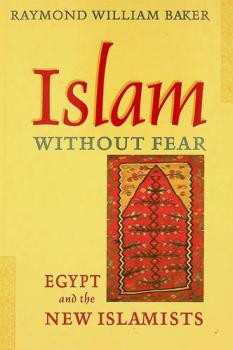
Islam without fear : Egypt and the new Islamists
\"For the last several decades an influential group of Egyptian scholars and public intellectuals has been having a profound effect in the Islamic world. Raymond Baker offers a portrait of these New Islamists - Islamic scholars, lawyers, judges, and journalists who provide the moral and intellectual foundations for a more fully realized Islamic community, open to the world and with full rights of active citizenship for women and non-Muslims.\" \"The New Islamists have a record of constructive engagement in Egyptian public life, balanced by an unequivocal critique of the excesses of Islamist extremists. Baker shows how the New Islamists are translating their thinking into action in education and the arts, economics and social life, and politics and foreign relations despite an authoritarian political environment.\" \"For the first time, Baker allows us to hear in context the most important New Islamist voices, including Muhammad al Ghazzaly, Kamal Abul Magd, Muhammad Selim al Awa, Fahmy Huwaidy, Tareq al Bishry, and Yusuf al Qaradawy - regarded by some as the most influential Islamic scholar in the world today.\"--Jacket.
Book

Plant phylogeny as a window on the evolution of hyperdiversity in the tropical rainforest biome
Tropical rainforest (TRF) is the most species-rich terrestrial biome on Earth, harbouring just under half of the world’s plant species in c. 7% of the land surface. Phylogenetic trees provide important insights into mechanisms underpinning TRF hyperdiversity that are complementary to those obtained from the fossil record. Phylogenetic studies of TRF plant diversity have mainly focused on whether this biome is an evolutionary ‘cradle’ or ‘museum’, emphasizing speciation and extinction rates. However, other explanations, such as biome age, immigration and ecological limits, must also be considered. We present a conceptual framework for addressing the drivers of TRF diversity, and review plant studies that have tested them with phylogenetic data. Although surprisingly few in number, these studies point to old age of TRF, low extinction and high speciation rates as credible drivers of TRF hyperdiversity. There is less evidence for immigration and ecological limits, but these cannot be dismissed owing to the limited number of studies. Rapid methodological developments in DNA sequencing, macroevolutionary analysis and the integration of phylogenetics with other disciplines may improve our grasp of TRF hyperdiversity in the future. However, such advances are critically dependent on fundamental systematic research, yielding numerous, additional, well-sampled phylogenies of TRF lineages.
Journal Article

إسلام بلا خوف : مصر والإسلاميون الجدد
يتناول كتاب (إسلام بلا خوف : مصر والإسلاميون الجدد) والذي قام بتأليفه (أ. د. ريموند ويليام بيكر) في حوالي (352) صفحة من القطع المتوسط موضوع (الإسلام والسياسة) مستعرضا المحتويات التالية : الباب الأول الثقافة : إصلاح التعليم : الاحتفاء بالفنون، الباب الثاني المجتمع : بناء الجماعة الوطنية : إقامة نظام اقتصادي، الباب الثالث السياسة : الكفاح من أجل التجديد الإسلامي.
Book
Restoring and managing low-severity fire in dry-forest landscapes of the western USA
Low-severity fires that killed few canopy trees played a significant historical role in dry forests of the western USA and warrant restoration and management, but historical rates of burning remain uncertain. Past reconstructions focused on on dating fire years, not measuring historical rates of burning. Past statistics, including mean composite fire interval (mean CFI) and individual-tree fire interval (mean ITFI) have biases and inaccuracies if used as estimators of rates. In this study, I used regression, with a calibration dataset of 96 cases, to test whether these statistics could accurately predict two equivalent historical rates, population mean fire interval (PMFI) and fire rotation (FR). The best model, using Weibull mean ITFI, had low prediction error and R2adj = 0.972. I used this model to predict historical PMFI/FR at 252 sites spanning dry forests. Historical PMFI/FR for a pool of 342 calibration and predicted sites had a mean of 39 years and median of 30 years. Short (< 25 years) mean PMFI/FRs were in Arizona and New Mexico and scattered in other states. Long (> 55 years) mean PMFI/FRs were mainly from northern New Mexico to South Dakota. Mountain sites often had a large range in PMFI/FR. Nearly all 342 estimates are for old forests with a history of primarily low-severity fire, found across only about 34% of historical dry-forest area. Frequent fire (PMFI/FR < 25 years) was found across only about 14% of historical dry-forest area, with 86% having multidecadal rates of low-severity fire. Historical fuels (e.g., understory shrubs and small trees) could fully recover between multidecadal fires, allowing some denser forests and some ecosystem processes and wildlife habitat to be less limited by fire. Lower historical rates mean less restoration treatment is needed before beginning managed fire for resource benefits, where feasible. Mimicking patterns of variability in historical low-severity fire regimes would likely benefit biological diversity and ecosystem functioning.
Journal Article