
Catalogue Search | MBRL


Are you sure you want to remove the book from the shelf?

{{itemTitle}}
9
result(s) for
"Bankard, Joseph"
Sort by:
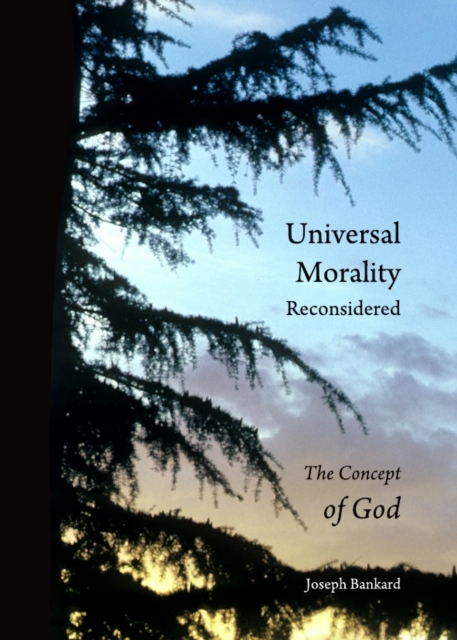
Universal Morality Reconsidered
Like many contemporary issues, moral discourse finds itself in the middle of a great divide. On one side of the chasm sits much of contemporary Western philosophy, moral psychology and the social sciences, which often view morality as a purely natural phenomenon. This view argues that human morality can be fully explained by appealing to naturalistic processes such as kin selection, reciprocal altruism, cultural evolution, and various models of social contract theory. In this context, Gods e.
eBook

Training Emotion Cultivates Morality: How Loving-Kindness Meditation Hones Compassion and Increases Prosocial Behavior
Traditional moral philosophy has long focused on rationality, principled thinking, and good old-fashioned willpower, but recent evidence strongly suggests that moral judgments and prosocial behavior are more heavily influenced by emotion and intuition. As the evidence mounts, rational traditions emphasizing deliberative analysis and conscious decision making are called into question. The first section highlights some compelling evidence supporting the primacy of affective states in motivating moral judgments and behavior. The real challenge is finding a way to align intuition with desired behavior. In cool reflective states, one may desire to be a kind and loving person. But when it is time to act, the moment is often accompanied by strong affect-laden intuitions. I argue that if affective states are the primary motivators of behavior, then moral sentiments must be trained through habituation in order to increase prosocial behavior. The second section provides empirical evidence linking emotional training with increased prosociality. To highlight this connection, focus is placed on the relationship between habitual meditation training, compassion, and prosocial behavior. Recent studies by Antoine Lutz, Richard Davidson, Susanne Leiberg, and others show that various meditation practices can dramatically affect the human person at various levels, i.e., increased physical health, neural restructuring, regulation and development of emotions, and increased helping behavior, to name a few. The current article focuses on the impact the habit of loving-kindness meditation (LKM) has on compassion and prosocial behavior. Recent studies strongly support the conclusion that LKM training hones compassion and ultimately leads to an increase in compassionate behavior.
Journal Article

Relationships between Positive Character Traits, Virtues, and Health
Virtues and character traits are increasingly recognized as impacting health outcomes, although distinctions between these constructs remain unclear. In order for Christian social workers to most effectively incorporate virtues-based interventions into their clinical practices, there is a need to identify the distinct nature of the different virtues and their relationships to health outcomes. In Part I, a principal components factor analysis of six character traits (i.e., altruism, empathy, forgiveness, gratitude, hope, and humility) based on 402 students primarily from Christian universities determined the empirical validity of these constructs (i.e., whether they are best conceptualized as distinct constructs, dimensions of higher order constructs, or one overall “goodness” virtue). Results identified 12 distinct character traits, suggesting a need to focus on specific character traits rather than general virtues. In Part II, hierarchical regressions indicated that personality variables predicted 37% of variance in mental health, with only gratitude and lack of resentment toward others (i.e., two of the 12 identified character traits) predicting an additional 8% of the variance (no variables predicted physical health). The results suggest the need to conceptualize character traits as distinct constructs, and that interventions to increase gratitude and reduce resentment may be most effective in improving mental health outcomes in Christian college students.
Journal Article
The Relationships between Positive Character Traits, Virtues, and Health
Virtues and character traits are increasingly recognized as impacting health outcomes, although distinctions between these constructs remain unclear. In order for Christian social workers to most effectively incorporate virtues-based interventions into their clinical practices, there is a need to identify the distinct nature of the different virtues and their relationships to health outcomes. In Part I, a principal components factor analysis of six character traits (i.e., altruism, empathy, forgiveness, gratitude, hope, and humility) based on 402 students primarily from Christian universities determined the empirical validity of these constructs (i.e., whether they are best conceptualized as distinct constructs, dimensions of higher order constructs, or one overall \"goodness\" virtue). Results identified 12 distinct character traits, suggesting a need to focus on specific character traits rather than general virtues. In Part II, hierarchical regressions indicated that personality variables predicted 37% of variance in mental health, with only gratitude and lack of resentment toward others (i.e., two of the 12 identified character traits) predicting an additional 8% of the variance (no variables predicted physical health). The results suggest the need to conceptualize character traits as distinct constructs, and that interventions to increase gratitude and reduce resentment may be most effective in improving mental health outcomes in Christian college students.
Journal Article


A new defense of universal morality: Synthesizing the natural and social sciences with theism
The driving question behind this dissertation focuses on metaphysical naturalism and theism as they relate to universal morality. More specifically, can a naturalistic metaphysic be used to provide an adequate justification for universal morality? To answer this question, I turn to three distinct naturalistic responses found in the work of Jürgen Habermas, Ronald Dworkin and Marc Hauser. I chose these three figures because, collectively, they provide clear, plausible, yet varied, examples of universal naturalism. Traditionally, various forms of universal naturalism have been justified in three ways: rational consensus, intrinsic human value, or humanity's shared biological nature. Each of the figures highlighted represents one of these major justification strategies. However, if all three of these secular strategies fall short for various reasons, then it will hurt the overall viability of universal naturalism. I argue that most of the problems associated with naturalistic moral theories arise as a result of their limited metaphysic. Therefore, the purpose of this dissertation is threefold. First, I will analyze the three distinct responses mentioned above in an attempt to discern the viability of universal naturalism. Can a form of universal morality be adequately defended using a form of metaphysical naturalism? Second, I will introduce a set of coherence-based criteria to help determine the relative strength of each moral theory. The four criteria used are empirical fruitfulness, internal consistency, comprehensiveness, and rationality. Based on this analysis, some general conclusions will be made regarding the various strengths and weaknesses of universal naturalism. Third, I will introduce theism as a viable alternative to metaphysical naturalism. The overall goal is to show the compatibility that exists among metaphysical theism and the three moral research programs highlighted by Habermas, Dworkin, and Hauser. It is my contention that adding a theistic metaphysic to these naturalistic research programs will help provide a more adequate justification for universal morality, making it a necessary dialogue partner in the current moralal landscape. Therefore, it is the thesis of this project that the strongest justification for universal morality comes when all four of these moral theories are synthesized to provide a more comprehensive moral research program overall.
Dissertation
