
Catalogue Search | MBRL


Are you sure you want to remove the book from the shelf?

{{itemTitle}}
21
result(s) for
"Banks, Cyndi"
Sort by:


Reconstructing Justice in Iraq: Promoting the Rule of Law in a Post-conflict State
Part of the US project for Iraq following its invasion was the reconstruction of the Iraqi justice system. Many projects, both military and civil were launched in support of this goal with the intention of enhancing the rule of law. Based on seven month's experience on one such project in Iraq, the author discusses the various tensions, constraints and confusions in these reconstruction projects in the justice sector. Overall there was an absence of harmonization and coordination and these operated to the detriment of the Iraqi system. In the field of rule of law programs, aid providers generally seek to establish a western style rule oriented system similar to those prevailing in their own countries but seem unaware of how to best bring about this change. In the author's experience, this process was exemplified in Iraq. An alternative approach to justice reconstruction is suggested that would be holistic and strategic, based on local knowledge and practice, and one that incorporates both top down and bottom up knowledge.
Journal Article
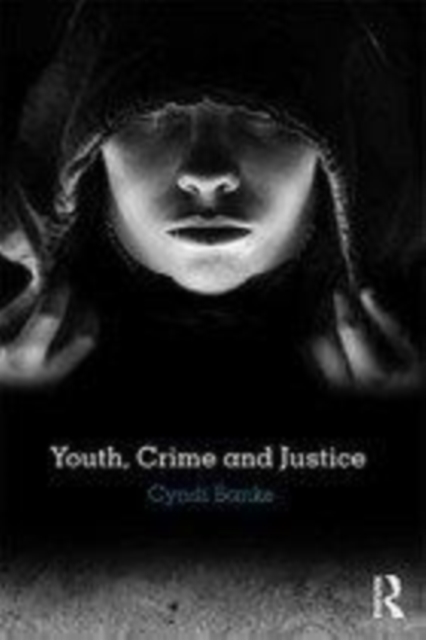
Youth, Crime and Justice
Youth, Crime and Justice takes a critical issues approach to analyzing the current debates and issues in juvenile delinquency. It encourages readers to adopt an analytical understanding encompassing not only juvenile crime, but also the broader context within which the conditions of juvenile criminality occur. Students are invited to explore the connections between social, political, economic and cultural conditions and juvenile crime.
This book engages with the key topics in the debate about juvenile justice and delinquency:
■ juvenile institutions
■ delinquency theories
■ gender and race
■ youth and moral panic
■ restorative justice
■ youth culture and delinquency.
It clearly examines all the important comparative and transnational research studies for each topic. Throughout, appropriate qualitative studies are used to provide context and explain the theories in practice, conveying a powerful sense of the experience of juvenile justice. This accessible and innovative textbook will be an indispensable resource for senior undergraduates and postgraduates in criminology, criminal justice and sociology.
eBook

CUSTOM IN THE COURTS
In an attempt to integrate aspects of custom into the western-based criminal justice system, the Criminal Law (Compensation) Act was enacted in Papua New Guinea in 1991. The content and effect of this legislation, which empowers the National and District Courts to order the payment of compensation in addition to any other punishment imposed for a criminal offence, are discussed. The prevalence, nature and rationale for the payment of compensation under custom are considered, providing the context within which the legislation was enacted. The effect and application of the Act are explained through an examination of decisions of the National Court where orders for compensation have been made under the Act or where the Act has been considered generally. In conclusion, some comments are made on the scope of the legislation, and the policy it reflects, and some proposals put forward for amendment to the Act.
Journal Article


Race and Juvenile Justice
\"Race\" is a social construct used in the U.S. to establish categories of persons for specific purposes. It is used primarily to refer to differences in skin color but it is considered a crude measure of difference in terms of distinguishing categories such as black and white (Lauritsen 2005: 84, 85). Since 1790, a census of the population has been conducted every ten years and this has necessitated the creation of racial categories to which persons of various ethnic backgrounds may be assigned. The U.S. Department of Commerce Economics and Statistics Administration employs five race categories as follows:
White: people having origins in any of the original peoples of Europe, the Middle East or North Africa, including those who indicated their race as white or as Irish, German, Italian, Lebanese, Arab, Moroccan or Caucasian representing 72 percent of the population;
Black or African-American: people having origins in any of the Black racial groups of Africa (including people who identify themselves as Black, Negro or African-American or reported as African-American Kenyan, Nigerian or Haitian) and representing 13 percent of the population;
American Indian and Alaskan Native: people having origins in any of the original peoples of North, Central and South America who maintain tribal affiliation or community attachment (or reported their enrollment) or principal tribe such as Navajo, Blackfeet, Inupiat, Yup'ik or Central 104American Indian groups or South American Indian groups and representing 0.9 percent of the population;
Asian: people having origins in any of the original peoples of the Far East, Southeast Asia or the Indian subcontinent including Cambodia, China, India, Japan, Korea, Malaysia, Pakistan, the Philippine Islands, Thailand, and Vietnam and representing 5 percent of the population;
Native Hawaiian and Other Pacific Islanders: people having origins in any of the original peoples of Hawaii, Guam, Samoa or other Pacific Islands and representing 0.2 percent of the population;
Some Other Race: for those persons not able to identify with any of the above categories - most people responding with this category identified themselves as \"Hispanic\" or \"Latino,\" multiracial, mixed, interracial, who represent 3 percent of the population. \"Hispanic or Latino\" refers to a person of Cuban, Mexican, Puerto Rican, South or Central American, or other Spanish culture or origin regardless of race (U.S. Census Bureau 2010). Federal agencies are required to use a minimum of two ethnicities: Hispanic or Latino and Not Hispanic or Latino. According to the U.S. Census Bureau, \"Hispanic origin can be viewed as the heritage, nationality group, lineage, or country of birth of the person or the person's parents or ancestors before their arrival in the United States. People who identify their origin as Hispanic, Latino, or Spanish may be any race.\"
(Humes et al. 2011: 1, 3-4)
Book Chapter
Youth and Moral Panic
The focus of this chapter is moral panic theory and specific moral panics associated with youth and youth culture. The moral panics discussed comprise a specific incident or a series of incidents that satisfy the conditions for the presence of a moral panic (Cohen 2002) and comprise school shootings, the James Bulger case, mods and rockers in the U.K., mugging in the U.K., the so-called \"juvenile superpredators,\" girl violence and gang violence. In each of these instances a set of circumstances generated a moral panic, in some cases orchestrated by the media,1 which led to official action, usually in the form of punitive legislation or a heightened level of social control through government regulation. The actual responses to these moral panics were predicated on the need to confront and control violent youth and prevent further acts of violence. Because of the \"threat\" they presented, the youth were cast as \"folk devils,\" and therefore, according to officials, justified a punitive response. In explaining the basis for moral panics, Stanley Cohen has noted that in Britain recurrent forms of moral panic have been linked to youth culture and that these cultures have been associated with violence (Cohen 2002: 1). As Thompson explains, \"no age group is more associated with risk in the public imagination than that of 'youth'\" (1998: 44). It is, first, necessary to explore the theoretical underpinnings of moral panic and to examine how adolescence is conceptualized.
Book Chapter
Youth Culture and Delinquency
This chapter is concerned with youth culture or subculture, deviance and delinquency. Its focus is on aspects of youth culture that link to deviance and delinquency. Youth culture has been explained as:
Youth culture is historical and contemporary, it creates the opportunity for young people to forge roles and make identities. It enables degrees of differing participation at different ages and at different periods in young people's lives. Youth culture is foreground and background for all young people's lives. It is both established by young people and made by others for young people.
(Blackman and France 2001: 181)
Book Chapter