
Catalogue Search | MBRL


Are you sure you want to remove the book from the shelf?

{{itemTitle}}
13
result(s) for
"Banner, Stuart, 1963-"
Sort by:

The death penalty : an American history
Here, for the first time, we have a comprehensive account of the death penalty in the United States. Stuart Banner tells the story of dramatic changes, over four centuries, in the ways capital punishment has been administered and experienced. Banner moves beyond the debates to give us an unprecedented understanding of America's ultimate punishment.
eBook


Speculation : a history of the fine line between gambling and investing
Stuart Banner's Speculation is a history of the practice and of Americans' fraught efforts to draw the line between \"good\" investment and \"bad\" gambling.
eBook
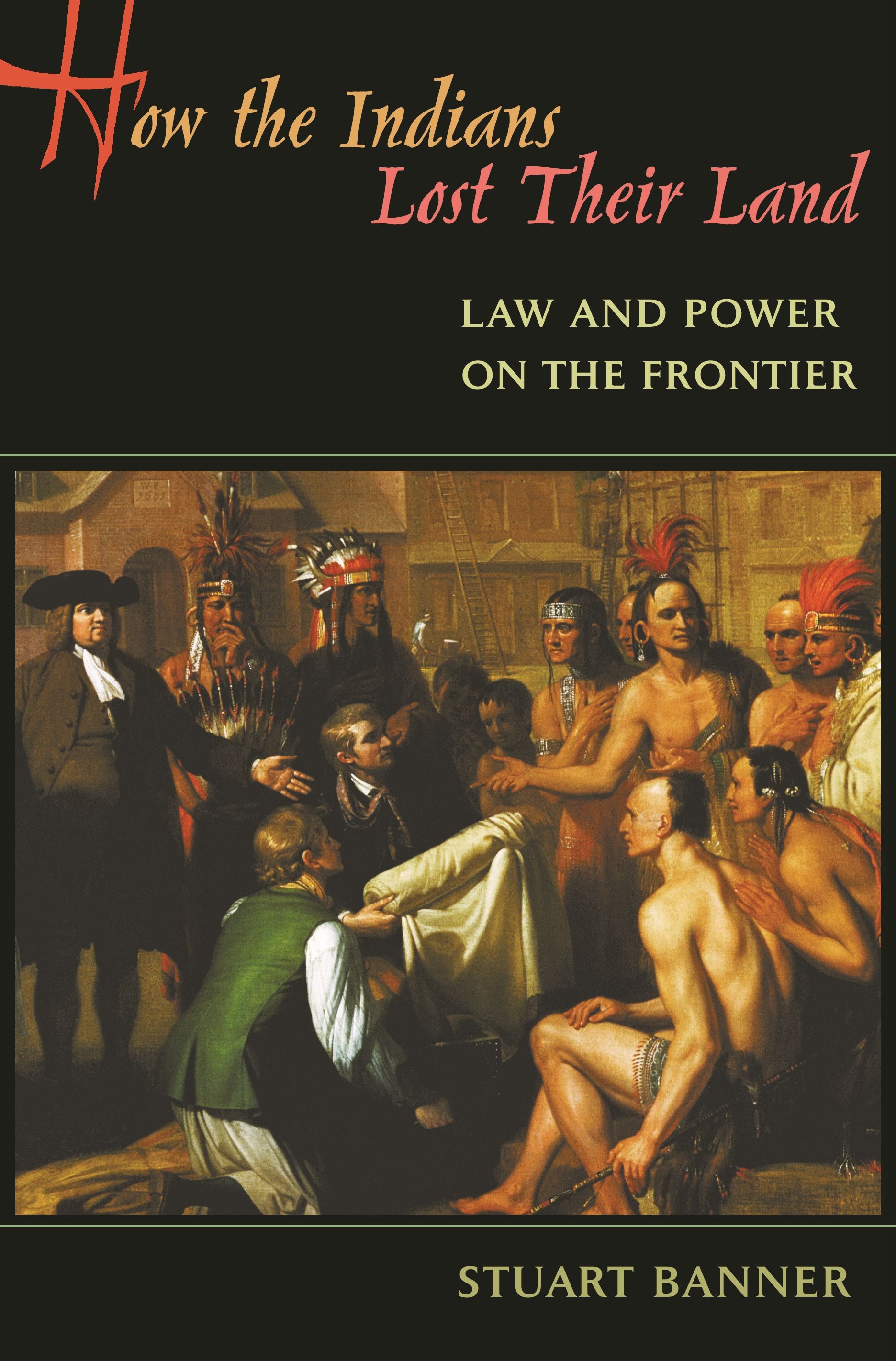
How the Indians Lost Their Land
Between the early seventeenth century and the early twentieth, nearly all the land in the United States was transferred from American Indians to whites. How did Indians actually lose their land? Stuart Banner argues that neither simple coercion nor simple consent reflects the complicated legal history of land transfers. Instead, time, place, and the balance of power between Indians and settlers decided the outcome of land struggles.
eBook
The Baseball Trust
The impact of antitrust law on sports is in the news all the time, especially when there is labor conflict between players and owners, or when a team wants to move to a new city. And if the majority of Americans have only the vaguest sense of what antitrust law is, most know one thing about it—that baseball is exempt. This book illuminates the series of court rulings that resulted in one of the most curious features of our legal system: baseball's exemption from antitrust law. The book provides a history of the game as seen through the prism of an extraordinary series of courtroom battles, ranging from 1890 to the present. The book looks at such pivotal cases as the 1922 Supreme Court case which held that federal antitrust laws did not apply to baseball; the 1972 Flood v. Kuhn decision that declared that baseball is exempt even from state antitrust laws; and several cases from the 1950s, one involving boxing and the other football, that made clear that the exemption is only for baseball, not for sports in general. The book reveals that for all the well-documented foibles of major league owners, baseball has consistently received and followed antitrust advice from leading lawyers, shrewd legal advice that eventually won for baseball a protected legal status enjoyed by no other industry in America.
eBook

Possessing the Pacific : land, settlers, and indigenous people from Australia to Alaska
During the nineteenth century, British and American settlers acquired a vast amount of land from indigenous people throughout the Pacific, but in no two places did they acquire it the same way. Stuart Banner tells the story of colonial settlement in Australia, New Zealand, Fiji, Tonga, Hawaii, California, Oregon, Washington, British Columbia, and Alaska. Today, indigenous people own much more land in some of these places than in others. And certain indigenous peoples benefit from treaty rights, while others do not. These variations are traceable to choices made more than a century ago—choices about whether indigenous people were the owners of their land and how that land was to be transferred to whites.
Banner argues that these differences were not due to any deliberate land policy created in London or Washington. Rather, the decisions were made locally by settlers and colonial officials and were based on factors peculiar to each colony, such as whether the local indigenous people were agriculturalists and what level of political organization they had attained. These differences loom very large now, perhaps even larger than they did in the nineteenth century, because they continue to influence the course of litigation and political struggle between indigenous people and whites over claims to land and other resources.
Possessing the Pacific is an original and broadly conceived study of how colonial struggles over land still shape the relations between whites and indigenous people throughout much of the world.
eBook

Who Owns the Sky?
A collection of curious tales questioning the ownership of airspace and a reconstruction of a truly novel moment in the history of American law, Banner's book reminds us of the powerful and reciprocal relationship between technological innovation and the law.
eBook
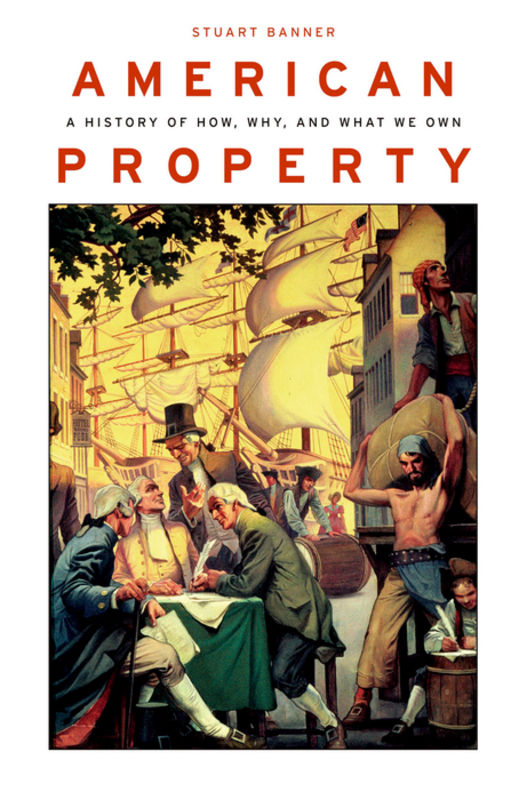
American property : a history of how, why, and what we own
In America, we are eager to claim ownership: our homes, our ideas, our organs, even our own celebrity. But beneath our nation's proprietary longing looms a troublesome question: what does it mean to own something? More simply: what is property?
The question is at the heart of many contemporary controversies, including disputes over who owns everything from genetic material to indigenous culture to music and film on the Internet. To decide if and when genes or culture or digits are a kind of property that can be possessed, we must grapple with the nature of property itself. How does it originate? What purposes does it serve? Is it a natural right or one created by law?
Accessible and mercifully free of legal jargon, American Property reveals the perpetual challenge of answering these questions, as new forms of property have emerged in response to technological and cultural change, and as ideas about the appropriate scope of government regulation have shifted. This first comprehensive history of property in the United States is a masterly guided tour through a contested human institution that touches all aspects of our lives and desires.
Stuart Banner shows that property exists to serve a broad set of purposes, constantly in flux, that render the idea of property itself inconstant. Despite our ideals of ownership, property has always been a means toward other ends. What property signifies and what property is, we come to see, has consistently changed to match the world we want to acquire.
eBook

American property
In this tightly written book, Banner, a professor of law at UCLA, tackles an admittedly expansive topic, illustrating that our ideas about what property is, how it is regulated, and what it is meant to do are in constant flux and have been historically contested. Partly an examination of law, partly of culture, politics, economics, and even religion, Banner successfully shows how our notions of property and so-called \"natural property\" in essence sketch the shifting borders of what Americans deem appropriate government regulation. \"Our conceptions of property have always been molded to serve our particular purposes,\" Banner writes, using examples ranging from zoning laws (which were often used to enforce racial and economic boundaries); eminent domain and personal property disputes; as well as new, thorny notions of intellectual property in the digital age (digital copying makes some property rights harder to enforce, he notes, but creates new opportunities as well). Banner even addresses biological breakthroughs (can a company own a genetically engineered hybrid or a cell line?). It's a huge amount of history and analysis that ably proves a simple thesis: \"the debates have never been about property in the abstract,\" Banner writes. \"Property has always been a means, rather than an end.\"--Publishers Weekly
Book