
Catalogue Search | MBRL


Are you sure you want to remove the book from the shelf?

{{itemTitle}}
9,073
result(s) for
"Barak, On"
Sort by:


OUTSOURCING: ENERGY AND EMPIRE IN THE AGE OF COAL, 1820–1911
During the long 19th century, British coal proliferated throughout the Ottoman Empire in increasing quantity, rapidity, and regularity via junctions and political arrangements that became evermore stable and dominant. The British used coal export to project their power elsewhere, offshoring the Industrial Revolution by building an infrastructure that could support it overseas and connect it to existing facets of the imperial project. Examining this “outsourcing” and the importance of foreign coal markets to industrialization helps provincialize the steam engine and anchor it in a global context. It also allows us to explore the impact of fossil energy on the Middle East and the ways coal both set the stage for the arrival of oil and informed the possibilities for translating carbon power into politics. Coal, the article suggests, animated political participation in England while reinforcing authoritarian tendencies in the Middle East.
Journal Article

Heat : a history
\"With an unrelenting barrage of record-breaking temperatures dominating the headlines, an enigma arises--despite the flames licking at our feet, most people fail to fully grasp the gravity of environmental overheating. What acquired habits and mechanisms grant us the capacity to turn a blind eye with an air of detachment? Heat: A History shows how scientific methods of accounting for heat and modern forms of acclimatization have desensitized us to climate change. Ubiquitous air conditioning, shifts in urban planning, and changes in mobility all served as temporary remedies for escaping the heat in hotspots such as the twentieth-century Middle East. However, all these measures have ultimately fuelled not only greenhouse gas emissions but also a collective myopia regarding the impact of rising temperatures. Identifying the scientific abstractions and economic and cultural forces that have numbed our responses this book charts a way forward out of short-term thinking and towards meaningful action\"-- Provided by publisher.
BOOK

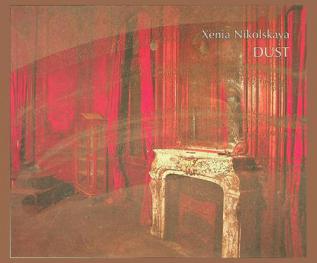
Dust : Egypt's forgotten architecture
This is a photographic exploration of the palaces and lavish buildings of Egypt. The buildings of Egypt incorporate various architectural styles such as Beaux arts and Moorish revival with local design heritage influences and materials. Xenia Nikolskaya has gained exceptional access and photographed buildings all over Egypt.
Book

Outdating: The Time of \Culture\ in Colonial Egypt
Discusses changes to the calendar in Egypt. The author notes that the 'Hijri' calendar based on Islamic history began to be supplanted by the Gregorian calendar in the late 19th century, refers to the cultural implications of the change with reference to the increasing influence of Europe and European media at the time, and considers issues relating to the simultaneous existence of worldviews and practices with reference to Arabic media and telegraphy. He traces the increasing use of Gregorian dating systems in Egypt noting that their use was often combined with that of Islamic and Coptic calendars, highlights the influence of commerce on the growing use of the Gregorian calendar, and explains that the gradual supplanting of the Hijri calenadar and its relegation to religious uses were mediated by a number of Islamic reformers. He focuses on the influence of the international and national telegraph systems, international news and the Egyptian railway system on Egyptian culture, and assesses the overall impact of the new approach to time-keeping on Egyptian life.
Journal Article

Women and the city, women in the city
An attempt to reveal, recover and reconsider the roles, positions, and actions of Ottoman women, this volume reconsiders the negotiations, alliances, and agency of women in asserting themselves in the public domain in late- and post-Ottoman cities. Drawing on diverse theoretical backgrounds and a variety of source materials, from court records to memoirs to interviews, the contributors to the volume reconstruct the lives of these women within the urban sphere. With a fairly wide geographical span, from Aleppo to Sofia, from Jeddah to Istanbul, the chapters offer a wide panorama of the Ottoman urban geography, with a specific concern for gender roles.
eBook
Times of Tamaddun
Tamaddun, a key concept standing in turn-of-the-century Egypt for “civilization” or “urbanity,” is usually associated with space, and particularly with the space of the city (madina), which was undergoing dramatic transformations, involving significant social change. For example, with the introduction of the tramway into Cairo in 1896, the city tripled its size within roughly two decades, witnessing new rural-to-urban migration, suburbanization, and various other transformations that drew much criticism as well as ample praise. Technologies such as the tramway, as well as the telephone (introduced into Egyptian cities in 1881) or the automobile (appearing in 1903) allowed urban centers simultaneously
Book Chapter

Egyptian times: Temporality, personhood, and the technopolitical making of modern Egypt, 1830-1930
This dissertation examines how the introduction of new technologies such as the railway, tramway, and telegraph generated in Egypt unique practices of timekeeping, personhood, and conviviality between the 1830s and 1930s. However, this project cannot be seen as an attempt to \"provincialize Europe\" with an alternative history of technology in the non-West. Paradoxically, rather than simply destabilize, problematize, or decenter the familiar narrative of technological modernization and reform, historical evidence to the contrary also seems to make it more durable. This paradox and its temporal manifestations form the central axis of this study. How does the empty and homogeneous mechanical time of modernity concur with the multiple heterogeneous temporalities that impregnate it? The study shows that technologies of transportation and communication did not play in Egypt the generic role of driving forces of social synchronization and standardized timekeeping conventionally assigned to them in the social sciences. Instead, the dissertation recounts, for example, how the racial presuppositions of British engineers about \"indolent and time-mindless Orientals\" percolated into railway scheduling and management schemes. Translated into what I call \"technologics\" fusing together the technical and social, racial conjectures turned trains and telegraphs into agents of tardiness and time-lag. Thus, in Egypt key technologies of \"time-space compression\" simultaneously produced also time-space expansion: carrying along the comparative frameworks that revealed them to both Europeans and Egyptians as slow and belated when contrasted with metropolitan technologies, these networks were at once punctual and overdue, swift and sluggish. The dissertation explores Egyptian modernity as this paradoxical experience of comparability and difference, temporal homogeneity and heterogeneity, moving swiftly ahead while remaining always one step behind. It examines how such a differential simultaneity informed Egyptian anti-colonial nationalism, class, and gender relations, among various other such aspects of everyday life understood in the most literal sense of quotidian schedules and routines.
Dissertation
