
Catalogue Search | MBRL


Are you sure you want to remove the book from the shelf?

{{itemTitle}}
93
result(s) for
"Baraldi, Claudio"
Sort by:

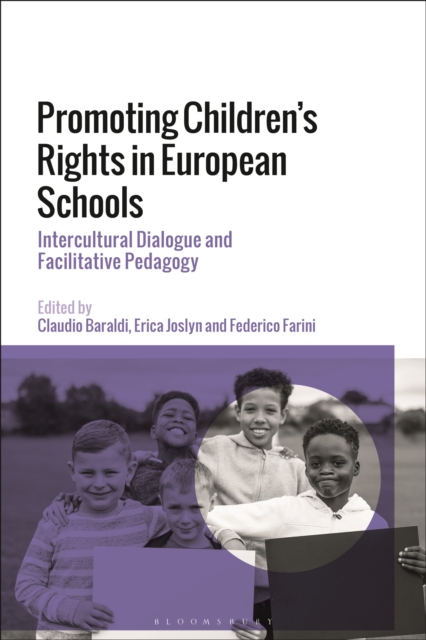
Promoting Children’s Rights in European Schools
Promoting Children’s Rights in European Schools explores how facilitators, teachers and educators can adopt and use a dialogic methodology to solicit children’s active participation in classroom communication. The book draws on a research project, funded by the European Commission (Erasmus +, Key-action 3, innovative education), coordinated by the University of Modena and Reggio Emilia, Italy, with the partnership of the University of Suffolk, UK, and the University of Jena, Germany. The author team bring together the analysis of activities in 48 classes involving at least 1000 children across England, Germany and Italy. These activities have been analysed in relation to the sociocultural context of the involved schools and children, a facilitative methodology and the use of visual materials in the classroom, and engaging children in active participation and the production of their own narratives. Each chapter looks at reflection on practice, outcomes, and reaction to facilitation of both teachers and children, drawing out the complex comparative lessons within and between classrooms across the three countries.
eBook

Participation, Facilitation, and Mediation
Traditionally, children have been considered from a primarily developmental perspective, in need of education in order to achieve autonomy, growth, and eventually adulthood. Childhood studies have recently underlined an alternate way to look at children, starting from the consideration that children are competent social actors and can actively participate in social life. However, there has been relatively little attention paid to the ways in which adults can actively empower children's agency and participation. This book aims to highlight this important aspect, explaining the position of adults as facilitators and mediators in the process of constructing childhood.
eBook

Problems of children’s involvement in interpreter-mediated meetings between their teachers and their parents
This paper focuses on six interpreter-mediated interactions between teachers, migrant parents, and their children in Italian primary schools, a topic that has not yet been widely examined in the literature on public service interpreting. The analysis draws on audio-recorded interpreter-mediated interactions collected in Italy during a European Horizon 2020 project. The paper shows the barriers that exist in engaging children in these interactions. The difficulties observed are varied and more challenging to overcome than those hindering parental involvement. While Childhood Studies shows that the important enhancement of children’s agency in social contexts needs particular non-hierarchical structures of interaction, in the analysed interpreter-mediated interactions the mutual positioning of teachers, parents and mediators does not allow this enhancement. Thus, the involved children stay silent, they provide minimal responses when addressed, they show feelings of distress, and their few initiatives are not supported by the other participants. The paper shows the reasons for the failure of both teachers’ actions and mediators’ coordination to involve children and support their exercise of agency.
Journal Article

Promotion of Migrant Children’s Epistemic Status and Authority in Early School Life
Migrant children may display problems of participation in school interactions with adults and peers, depending on their difficulties in speaking the host country’s language and understanding its culture. This condition amplifies the general view of children as incompetent in producing and acting knowledge. This paper analyses video-recorded interactions in kindergartens in Reggio Emilia (Italy), involving migrant children, teachers and Italian children. These schools are famous worldwide for their methodology, based on treating children as competent agents. I focus on the participants’ actions constructing conversational sequences and the systems that these interactional sequences construct. The analysis highlights that migrant children are given recognition as competent agents, and that their status and authority is promoted in producing and acting knowledge. Recognition and promotion of migrant children’s agency, status and authority are based on forms of facilitation, coordination and negotiation, enhanced by initiatives taken by teachers and Italian children. These initiatives give particular relevance to: a. migrant children’s personal expressions and display of competent agency, and b. their linguistic and cultural difficulties. Initiatives combining these two aspects promote the social construction of a form of hybrid identity, both personal and cultural, which is constructed and appraised in the interaction.
Journal Article
On professional and non-professional interpreting in healthcare services: the case of intercultural mediators
A debate that has revolved around the organisation of Italian healthcare interpreting services concerns the choice adopted by most institutions to employ intercultural mediators rather than professional interpreters. Intercultural mediators do not necessarily have a professional training in interpreting, they are, however, preferred to professional interpreters in that they are considered more competent in mediating the possibly different perspectives of healthcare providers and migrant patients. This preference provides food for thought for reflections on professionalism in interpreter-mediated interaction in healthcare. Drawing form a 10-year research on mediator-interpreted interactions in healthcare and a set of data comprising around 250 consultations, our contribution sets out as an attempt to clarify what is involved in this mediating work. Our analysis shows that mediators’ agency is relevant both in providing renditions of participants’ utterances and in promoting their active participation in the interaction. We describe the different ways in which mediators’ agency is displayed in interactions and the interactional constraints on mediators’ choices of action. Suggestions derived from our analysis may have an impact on the improvement of both mediators’ and interpreters’ professionalism with particular reference to facilitating communication with migrant patients, an aspect that has been recognized as highly problematic in the literature.
Journal Article
Coordinating Participation in Dialogue Interpreting
Interpreters' reflexive coordination may promote different forms of mediation. Dialogic mediation, in particular, achieves promotion of active participation, displays sensitivity for the interlocutors' interests and/or needs, and treats alternative perspectives as reciprocal enrichment. Drawing on a set of healthcare interactions involving Arabic-speaking patients in Italian services, this chapter discusses interpreting actions of mediators included in sequences of dialogic mediation, in particular: (1) promotional questions, which encourage the production of personal narratives and narratives of illness on the part of patients; (2) multi-part expansions, where patients' stories are co-authored with mediators; (3) renditions as formulations, which focus on patients' problems, emotions and cultural background and involve healthcare providers in the interactional narrative. Dialogic mediation can be considered a form of negentropic interpretation, in that it provides the opportunity to exercise and recognise personal agency and hybridise different cultural voices.
eBook

La facilitazione della partecipazione in classi scolastiche: le azioni di formulazione
Drawing on sociology of childhood and social systems theory, this paper explores the function of facilitation in classrooms, as a dialogic system of communications promoting students' agency. The analysis of videotaped and transcribed interventions in classrooms shows that the facilitation system enhances students' agency through formulations, i.e. facilitator's actions that re-elaborate and promote students' production of knowledge. Formulations are generally produced in facilitator-student dialogic communication. They contribute to organizing the facilitation system and are included in sequences of facilitators' actions that invite students to produce knowledge. Formulations can also enhance dialogue among students, if they (1) stress the diversity of the students' contributions, (2) are easily abandoned when students do not react by providing knowledge and (3) are short and combined with facilitators' minimal actions.
Journal Article
LA FACILITAZIONE DELLA PARTECIPAZIONE IN CLASSI SCOLASTICHE: LE AZIONI DI FORMULAZIONE
Drawing on sociology of childhood and social systems theory, this paper explores the function of facilitation in classrooms, as a dialogic system of communications promoting students' agency. The analysis of videotaped and transcribed interventions in classrooms shows that the facilitation system enhances students' agency through formulations, i.e. facilitator's actions that re-elaborate and promote students' production of knowledge. Formulations are generally produced in facilitator-student dialogic communication. They contribute to organizing the facilitation system and are included in sequences of facilitators' actions that invite students to produce knowledge. Formulations can also enhance dialogue among students, if they (1) stress the diversity of the students' contributions, (2) are easily abandoned when students do not react by providing knowledge and (3) are short and combined with facilitators' minimal actions.
Journal Article