
Catalogue Search | MBRL


Are you sure you want to remove the book from the shelf?

{{itemTitle}}
422
result(s) for
"Barash, David P"
Sort by:


Strength through peace : how demilitarization led to peace and happiness in Costa Rica, and what the rest of the world can learn from a tiny, tropical nation
Costa Rica is the only fully demilitarized, completely independent country in the world. Through good luck, good leadership, and good decisions, Costa Rica has become arguably the sanest and most progressive country on earth. This book examines how and why Costa Rica is safe and independent without any military at all, and what the rest of us can learn from its success.
eBook


Revolutionary Biology
There is a revolution underway in biology. It is based on a new perception of bodies and genes, in which the former are the end product of the latter within the continuum of evolution. Twenty fi ve years after Richard Dawkins helped revolutionize our thinking about \"selfi sh genes,\" it is time to reevaluate. Revolutionary Biology explains in simple, vivid terms what this exciting approach has to off er, and then applies its stunning insights to human beings. Th is novel perspective, galvanizes our understanding of how evolution works, what living things are all about and, not least, what it means to be human. Th e controversial disciplines of sociobiology and evolutionary psychology have generated startling insights into longstanding questions concerning the nature and purpose of families, altruism vs. selfi shness, and free will vs. biological determinism. Written by one of its foremost fi gures, Revolutionary Biology is a manifesto and educated layman's guide to this ongoing revolution.
eBook

Through a glass brightly : using science to see our species as we really are
\"Human beings are important, especially to themselves! But as science advances, it has become increasingly clear that we are less special and more natural than many people have long believed. This book shows how, as we finally look at ourselves honestly and accurately, we can identify ourselves as wonderfully natural, inseparable from the universe and other living things\"-- Provided by publisher.
Book
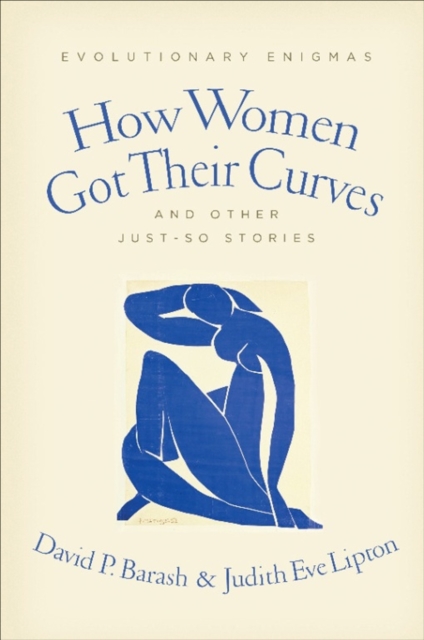
How Women Got Their Curves and Other Just-So Stories
So how did women get their curves? Why do they have breasts, while other mammals only develop breast tissue while lactating, and why do women menstruate, when virtually no other beings do so? What are the reasons for female orgasm? Why are human females kept in the dark about their own time of ovulation and maximum fertility, and why are they the only animals to experience menopause?David P. Barash and Judith Eve Lipton, coauthors of acclaimed books on human sexuality and gender, discuss the theories scientists have advanced to explain these evolutionary enigmas (sometimes called \"Just-So stories\" by their detractors) and present hypotheses of their own. Some scientific theories are based on legitimate empirical data, while others are pure speculation. Barash and Lipton distinguish between what is solid and what remains uncertain, skillfully incorporating their expert knowledge of biology, psychology, animal behavior, anthropology, and human sexuality into their entertaining critiques. Inviting readers to examine the evidence and draw their own conclusions, Barash and Lipton tell an evolutionary suspense story that captures the excitement and thrill of true scientific detection.
eBook


Payback : why we retaliate, redirect aggression, and take revenge
From the child taunted by her playmates to the office worker who feels stifled in his daily routine, people frequently take out their pain and anger on others, even those who had nothing to do with the original stress. Payback can be directed anywhere, sometimes at inanimate things, animals, or other people. This book looks at this phenomenon, showing how it has evolved, why it occurs, and what we can do about it. Retaliation and revenge are well known to most people. What is new in this book is an extended discussion of redirected aggression, which occurs not only in people but other species as well. The book reveals that it is not just a matter of yelling at your spouse “because” your boss yells at you. Indeed, the phenomenon of redirected aggression haunts our criminal courts, streets, battlefields, homes, and hearts. It lurks behind some of the nastiest and seemingly inexplicable things that otherwise decent people do. And it exists across boundaries of every kind—culture, time, geography, and even species. It is not just a human phenomenon. Passing pain to others can be seen in virtually all vertebrates. There is robust neurobiological hardware and software promoting redirected aggression, as well as evolutionary underpinnings. Payback may be natural, the book concludes, but we are capable of rising above it, without sacrificing self-esteem and social status. The book shows how the various human responses to pain and suffering can be managed—mindfully, carefully, and humanely.
eBook


Natural Selections
What happens when evolutionary and cultural imperatives clash, and what we can do about it.
eBook