
Catalogue Search | MBRL


Are you sure you want to remove the book from the shelf?

{{itemTitle}}
756
result(s) for
"Barber, Peter"
Sort by:
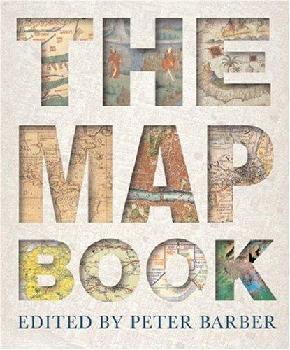
The map book
A lavishly illustrated introduction to the history of maps, which have been at the forefront of altering our perceptions of the world and our place within it.
Book

Atrial fibrillation and anticoagulation in patients hospitalised for stroke in the REGIONS Care Study
Describes atrial fibrillation (AF), anticoagulation prescribing, intracerebral haemorrhage (ICH), and differences by Māori ethnicity and hospital location of adult stroke patients admitted to hospital between 1 May and 31 October 2018 who were part of the Reducing Ethnic and Geographic Inequities to Optimise New Zealand Stroke (REGIONS) Care study. Source: National Library of New Zealand Te Puna Matauranga o Aotearoa, licensed by the Department of Internal Affairs for re-use under the Creative Commons Attribution 3.0 New Zealand Licence.
Journal Article

The island : London mapped
A masterpiece of imaginative cartography, artist Stephen Walter's detailed maps of London reveal much more about the city than its winding streets and historic buildings. London's streets, built up over more than two thousand years, are a maze of history, cultures, and stories. In his fantastically detailed maps of the city, Stephen Walter translates these elements into a tangle of insightful yet humorous words and symbols that make up a complex of hidden meanings and wider contradictions. Testament to Walter's skill and importance as a cartographer, his groundbreaking, oversized map The Island was one of only two contemporary works to feature in the seminal Magnificent Maps exhibition held at the British Library in 2010, the other by Grayson Perry, alongside hugely important historical maps, such as Pierre Desceliers's 1550 world map. The work, which reimagines London as an insular body of land surrounded by water, has been reconfigured and turned into Walter's own version of a London street atlas, with readers able to explore his unique vision of the city by flicking through the pages. A grid at the front of the book lets readers navigate their way through the map and the large-scale reproductions allow for close examination of his witty depictions. Walter's maps have a cult following and now a wider audience will be able to immerse themselves in his personal vision that both celebrates the art of cartography and pokes intelligent fun at the city he calls home.
Book

Endovascular thrombectomy for acute ischaemic stroke improves and maintains function in the very elderly: A multicentre propensity score matched analysis
Introduction:
The very elderly (⩾80 years) are under-represented in randomised endovascular thrombectomy (EVT) clinical trials for acute ischaemic stroke. Rates of independent outcome in this group are generally lower than the less-old patients but the comparisons may be biased by an imbalance of non-age related baseline characteristics, treatment related metrics and medical risk factors.
Patients and methods:
We compared outcomes between very elderly (⩾80) and the less-old (<80 years) using retrospective data from consecutive patients receiving EVT from four comprehensive stroke centres in New Zealand and Australia. We used propensity score matching or multivariable logistic regression to account for confounders.
Results:
We included 600 patients (300 in each age cohort) after propensity score matching from an initial group of 1270 patients. The median baseline National Institutes of Health Stroke Scale was 16 (11–21), with 455 (75.8%) having symptom free pre-stroke independent function, and 268 (44.7%) receiving intravenous thrombolysis. Good functional outcome (90-day modified Rankin Scale 0–2) was achieved in 282 (46.8%), with very elderly patients having less proportion of good outcome compared to the less-old (118 (39.3%) vs 163 (54.3%), p < 0.01). There was no difference between the very elderly and the less-old in the proportion of patients who returned to baseline function at 90 days (56 (18.7%) vs 62 (20.7%), p = 0.54). All-cause 90-day mortality was higher in the very elderly (75 (25%) vs 49 (16.3%), p < 0.01), without a difference in symptomatic haemorrhage (very elderly 11 (3.7%) vs 6 (2.0%), p = 0.33). In the multivariable logistic regression models, the very elderly were significantly associated with reduced odds of good 90-day outcome (OR 0.49, 95% CI 0.34–0.69, p < 0.01) but not with return to baseline function (OR 0.85, 90% CI 0.54–1.29, p = 0.45) after adjusting for confounders.
Conclusion:
Endovascular thrombectomy can be successfully and safely performed in the very elderly. Despite an increase in all-cause 90-day mortality, selected very elderly patients are as likely as younger patients with similar baseline characteristics to return to baseline function following EVT.
Journal Article

'Context is everything ... ': Ruminations on Developments in the History of Cartography since the 1970s and Their Consequences
Note from the Editor: The following article incorporates the text of the first of the two keynote addresses initiating formal proceedings at the 2019 Conference on the History of Cartography. In view of its historiographical interest, the Editor invited Peter Barber, a former Head of Maps at the British Library and an authority on divers aspects of map history, to share his reflections with readers of this Journal. Although the spoken text has had to be abbreviated in places, some further, post-Conference, observations have been added.
Journal Article

Comparative Adjectives in Herodian
This work examines how the grammarian Herodian (2nd Century) treated the so-called τρίτος τύπος of comparative adjectives. This class includes βράσσων, πάσσων, γλύσσων, βάσσων, µάσσων, ϑάσσων and ἐλάσσων, whose root vowels are δίχρονος, i.e. their length is not indicated in the orthography. Nor is their length ascertainable from metrical evidence. Herodianic doctrine regarding these vowel lengths is investigated and shown to conflict with modern etymologies in some instances. The question arises whether we should trust Herodian or the etymologies.
These contradictions are best resolved by reviving, in modified form, Wackernagel's idea that Herodian reports specifically Attic root vowel lengths in exactly the instances where a suitable Attic form existed; Attic comparatives often differ from those in other dialects due to well-established vowel lengthening processes. But Herodian's citation of forms with non-Attic -σσ- rather than -ττ- is unexpected and suggests a more fundamental explanation: Herodian's account of these formations is probably based on the relevant Koine forms, where these existed. This conclusion may offer insights into the sources of Herodian's linguistic judgements more generally.
Journal Article

Adverse Cardiovascular, Cerebrovascular, and Peripheral Vascular Effects of Marijuana: What Cardiologists Need to Know
In 2013, we published a study of 160 patients with ischemic stroke and transient ischemic attack aged 18 to 55 years and 160 age-, gender-, and ethnicity-matched control patients without cardiovascular or neurologic diagnoses.2 Cases and controls had urine screens for cannabis within 72 hours of hospital admission.
Journal Article

The Combat Myth and the Gospel's Apocalypse in the Harry Potter Series: Subversion of a Supposed Existential Given
There appear to be strong parallels between the Christian Gospels and Joanne Rowling's Harry Potter series that have gone largely unnoticed in the literature to date surrounding the Potter phenomenon. Identification of these correspondences likely indicates that Rowling performed a fantastical representation of the Gospel in one of the most popular novel series ever written. René Girard's anthropology of violence and religion is employed here to illuminate the shared content of battling ideologies. The similarities between these writings appear in the use of equivalent literary techniques by the respective writers: combat myth plot and imagery, subversive Hebrew-style parallelism known as the \"reflection narrative,\" and metaphors of consumption creating an abstract understanding of the psychosocial pursuit of life, all of which engage to form a polemic between two types of logic: violence and love.
Journal Article
Taming the Tiger-Japanese Air Commander Mitsuo Fuchida's Map of the 7 December 1941 Attack on Pearl Harbor
On 23 December. Fuchida learned that he was to brief Emperor Hirohito and prepared a hand-drawn battle map and damage assessment from his observations, pilot debriefs and naval intelligence (Fig. 2 and Plate 19). Fuchida concentrated solely on the damage to American ships, since another pilot was asked to brief the emperor about damage to land installations. Two days later, Fuchida presented a photo-enlargement of his map to Hirohito and had the honour Of personally answering the emperor's questions about the raid. Although Fuchida's map is well known. the discourse surrounding it is incomplete. The facts of its provenance need updating. and its contents deserve fuller explanation. Also, previous studies have reinforced a misunderstanding about the phrase To-Ra, To-Ra. To-Ra. The aim in this article is to answer those questions by referring to hitherto unexplored primary sources and to discuss aspects of the map itself. Discussion, nonetheless, cannot begin without taking note of the controversy that surrounds the map's creator. Mitsou Fuchida (1902—1976) shared revelatory information about the Japanese navy with a Western audience, and postwar historians have relied on his accounts as their, sometimes sole, source of information. Most likely this was not for a lack of scholarly rigour. but as a matter Of practicality. Fuchida was one of the few Japanese naval aviators from the Pearl Harbor attack and the Battle Of Midway who survived the war and who therefore could offer a first-hand record.
Journal Article
Obituaries : Ralph Hyde : 1939-2015
Probably no-one knew more about the maps and views of London than Ralph Hyde, who died on 2 June 2015 at the age of 76. His knowledge found expression in authoritative bibliographies, introductions to and commentaries on facsimiles of noteworthy historic maps both printed and, latterly, electronic. But equally importantly, and just as lastingly, his knowledge underpinned the acquisitions that he made for the Guildhall Library, where he was Keeper of Prints and Maps from 1975 to 1999. Undoubtedly the item for which he will be best remembered is the \"Rhinebeck panorama,\" an aerial watercolor view of London on four sheets, three meters in length, dating from about 1809, which he had identified after it was found in a house in New York State. He wrote a detailed commentary when a facsimile was published by the London Topographical Society in 1981. It is now owned by the Museum of London. [Publication Abstract]
Journal Article