
Catalogue Search | MBRL


Are you sure you want to remove the book from the shelf?

{{itemTitle}}
108
result(s) for
"Barclay, Katie"
Sort by:

Men on trial : performing emotion, embodiment and identity in Ireland, 1800-45
Men on trial explores how the Irish perform 'the self' within the early nineteenth-century courtroom and its implications for law, society and nation. Drawing on new methodologies from the history of emotion, as well as theories of performativity and performative space, it emphasises that manliness was not simply a cultural ideal, but something practised, felt and embodied. Men on trial explores how gender could be a creative dynamic in productions of power. Targeted at scholars in Irish history, law and gender studies, this book argues that justice was not simply determined through weighing evidence, but through weighing men, their bodies, behaviours, and emotions. Moreover, in a context where the processes of justice were publicised in the press for the nation and the world, manliness and its role in the creation of justice became implicated in the making of national identity.
Book

Democratic Passions. The Politics of Feeling in British Popular Radicalism, 1809–48
Review of Matthew Roberts, Democratic Passions. The Politics of Feeling in British Popular Radicalism, 1809–48, Manchester: Manchester University Press, 2022, reviewed by Katie Barclay
Journal Article

Courtship, marriage and marriage breakdown : approaches from the history of emotion
\"This book explores the history of marriage and marriage-like relationships across five continents from the seventeenth century to the present day. Across fourteen chapters, leading marriage scholars examine how the methodologies from the new history of emotions contribute to our understanding of marriage, seeking not only to uncover personal feeling but the political and social implications of emotion. They highlight how marriage as an institution has been shaped not just by law and society but by individual and community choices, desires and emotional values. Importantly, they also emphasize how the history of non-traditional and same-sex relationships and their emotions have long played an important role in determining the nature of marriage as an institution and emotional union. In doing so, this collection allows us to rethink both the past and present of marriage, destabilizing a story of a stable institution and opening it up as a site of contest, debate and feeling\"-- Provided by publisher.
Book

Love, Intimacy and Power
Through an analysis of the correspondence of over one hundred couples from the Scottish elites across the seventeenth to nineteenth centuries, this book explores how ideas around the nature of emotional intimacy, love, and friendship within marriage adapted to a modernising economy and society. Patriarchy continued to be the central model for marriage across the period and as a result, women found spaces to hold power within the family, but could not translate it to power beyond the household. Comparing the Scottish experience to that across Europe and North America, Barclay shows that throughout the eighteenth-century, far from being a side-note in European history, Scottish ideas about gender and marriage became culturally dominant. This book will be vital to those studying and teaching Scottish social history, and those interested in the history of marriage and gender. It will also appeal to feminists interested in the history of patriarchy.
eBook
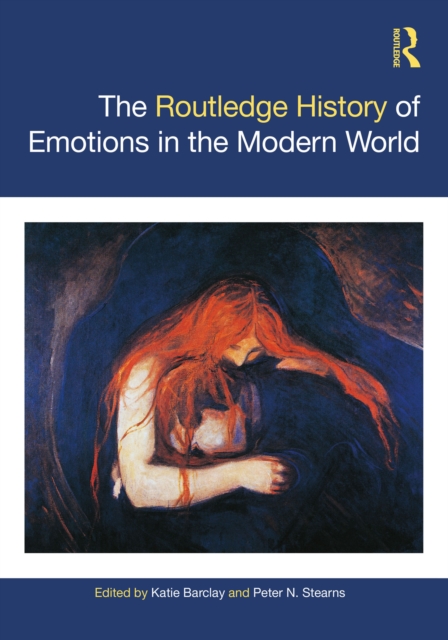
The Routledge History of Emotions in the Modern World
The Routledge History of Emotions in the Modern World brings together a diverse array of scholars to offer an overview of the current and emerging scholarship of emotions in the modern world. Across 36 chapters, this work enters the field of emotion from a range of angles.Named emotions - love, anger, fear - highlight how particular categories have been deployed to make sense of feeling and their evolution over time. Geographical perspectives provide access to the historiographies of regions that are less well-covered by English-language sources, opening up global perspectives and new literatures Key thematic sections are designed to intersect with critical historiographies, demonstrating the value of an emotions perspective to a range of areas. Topical sections direct attention to the role of emotions in power, to intimate lives and histories of place, as products of exchanges across groups, and as deployed by new technologies and media. The concepts of globalisation and modernity run through the volume, acting as foils for comparison and analytical tools.The Routledge History of Emotions in the Modern World is the perfect resource for all students and scholars interested in the history of emotions across the world from 1700.
eBook

Special Issue: Caring for Children Outside the Home – From Institutions to Nations
This special issue began its life in 2015 in a series of workshops funded by the University of Adelaide that ran under the theme ‘Dis/located Children: Children in/and Care’. The goal of the workshops was to take seriously the concept of ‘care’ as it applied to the lives of children. The workshops had a particular focus on childhoods that were in some sense beyond the normative, whether that was migrant or refugee children adapting to a new culture, children who lived outside the nuclear household, or children whose identities marked them as ‘different’. They were underpinned by developments in both childhood and emotions studies that seek to destabilise the ‘naturalness’ of both childhood and emotion by exploring the ways that both are contingent, shaped by culture, and situated in historical time (Davin, 1999; Rosenwein, 2010). Over four events, the workshops brought together over 40 scholars and practitioners from a variety of disciplines, including history, literature, gender studies, law, education, social work, and psychology. The articles brought together in this special issue reflect this diversity of disciplinary approach.
Journal Article
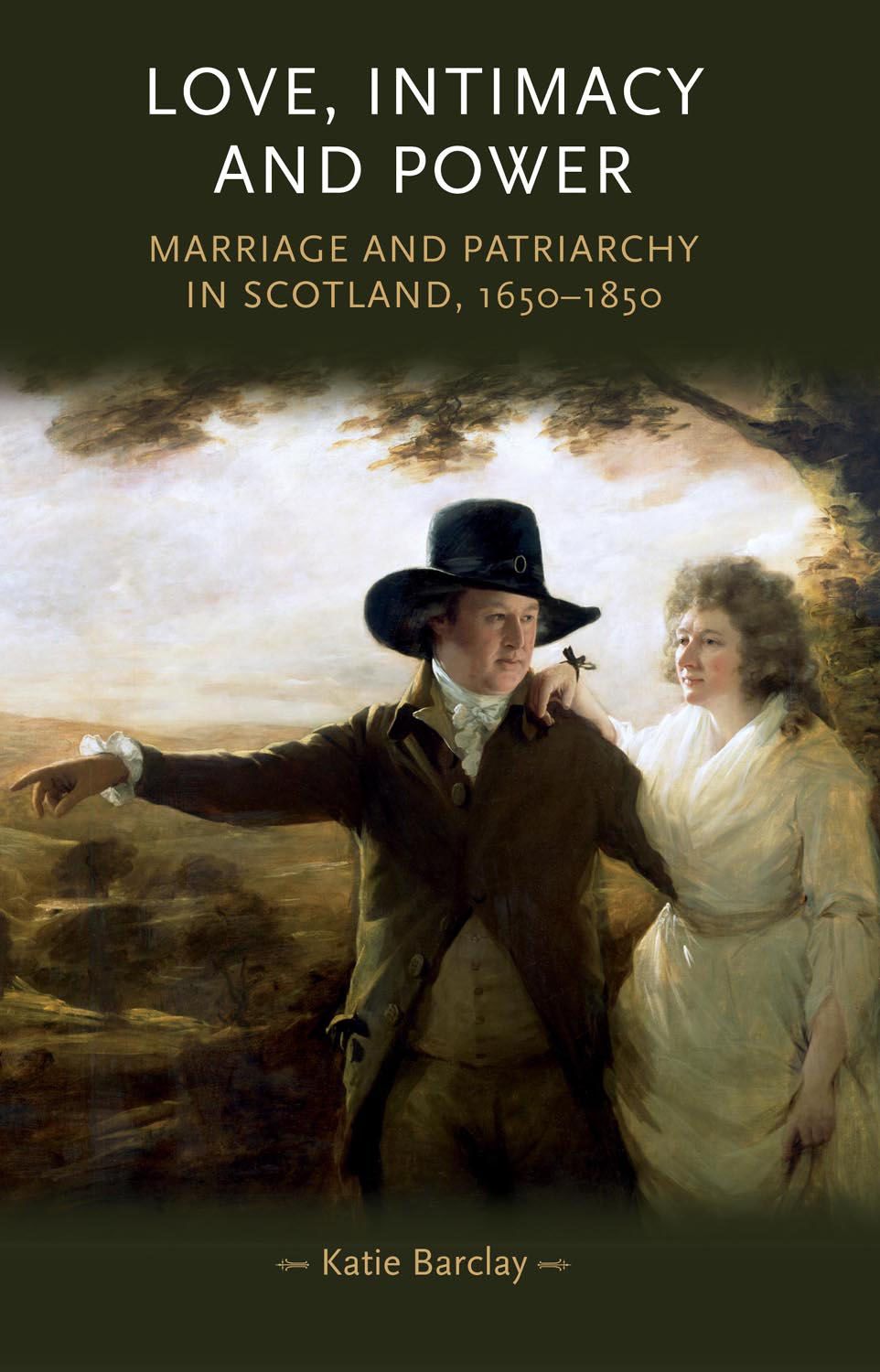
Love, Intimacy and Power
Through an analysis of the correspondence of over one hundred couples from the Scottish elites across the seventeenth to nineteenth centuries, this book explores how ideas around the nature of emotional intimacy, love, and friendship within marriage adapted to a modernising economy and society. Patriarchy continued to be the central model for marriage across the period and as a result, women found spaces to hold power within the family, but could not translate it to power beyond the household. Comparing the Scottish experience to that across Europe and North America, Barclay shows that throughout the eighteenth-century, far from being a side-note in European history, Scottish ideas about gender and marriage became culturally dominant. This book will be vital to those studying and teaching Scottish social history, and those interested in the history of marriage and gender. It will also appeal to feminists interested in the history of patriarchy.
eBook


The Sound of Politics in Early Nineteenth-Century Ireland
In the early 1800s, Jonah Barrington, an Irish judge, bemoaned that the air chosen as the march for the Irish Volunteer Movement had “no merit whatever, being neither grand, nor martial, nor animating,” contrasting it with the zeal of French revolutionary music. The emotional impact of music might be a matter of taste, but such a statement is suggestive of an aesthetics, where political music, or music used for political purposes, should have specific qualities that could be identified and judged by listeners. This article explores how people in late eighteenth- and early nineteenth-century Ireland identified music as political, using theories of the effects and affects of sound during the period and a corpus of Irish political music as an access point into historical experiences of musical enjoyment. While the impacts of music on the body are challenging for historians to retrieve, scholarship from the history of emotions highlights the important role of normative frameworks of emotion in accessing embodied experience. Working from this perspective, this article argues that we can begin to access the sound of politics for audiences of this period, contributing to our understanding of the role of music in political life.
Journal Article

Performing Emotion and Reading the Male Body in the Irish Court, c. 1800–1845
Justice in the early nineteenth-century Irish court was shaped by the bodies of men. Physical appearance was understood to provide information about a person’s social background, character, sense of guilt, and honesty; it was available to be read by others in the court when interpreting events during trial. As well as making judgements based on clothing and the appearance of the body, how court actors performed emotion was central to discussions of how their bodies, and so their character, should be read. Such readings of emotion on the male body were heavily shaped by the science of physiognomy that provided a model for interpreting often complex, ambiguous, and individualized displays of emotion. This article uses evidence provided in newspaper reporting of criminal trials in early nineteenth-century Ireland to explore how performances of emotion were used and interpreted as a form of evidence in the courtroom. It demonstrates that emotion and “emotional dispositions” were central to determining a man’s character, affecting how their evidence was viewed and whether they received justice. As importantly, displays of emotion in court were involved in the shaping of courtroom dynamics. In both cases, emotion became implicated in the making of justice.
Journal Article