
Catalogue Search | MBRL


Are you sure you want to remove the book from the shelf?

{{itemTitle}}
9
result(s) for
"Barker, Stephen Francis"
Sort by:


Lewis on Implication
The explanation he gave in Chapter I of the Principia was that if \"notp or q\" is true and p is also true, then q must be true; thus \"notp or q\" enables us to deduce q from p, and in this sense it and its horseshoe version mean that p implies q. Here it seems that Russell was regarding this specific truth-functional compound as unique in its ability to make possible the inferring of q from p; apparently he was thinking that proofs in general have the form \"p, p â q, so q.\" Also we should note that in this passage Russell was abiding by the familiar verbal usage of logicians who identify the deducibility of q from p with the implication of q by p. Modal logic has not come to play as central a role in mathematical logic as Lewis thought it would have, but the systems of modal logic Lewis constructed have turned out to be challenging, with properties very worthy of study by able logicians.10 This is Lewis's legacy as regards implication, and it is a valuable one.
Journal Article

Testing the Limit
Through three different versions of phenomenological discourse (Derrida, Henry, and Levinas), this book explores the notions of excess and the excess of excess relative to conceptions of the self.
eBook

Mechanisms of resistance to trastuzumab emtansine (T-DM1) in HER2-positive breast cancer
The HER2-targeted antibody–drug conjugate trastuzumab emtansine (T-DM1) is approved for the treatment of metastatic, HER2-positive breast cancer after prior trastuzumab and taxane therapy, and has also demonstrated efficacy in the adjuvant setting in incomplete responders to neoadjuvant therapy. Despite its objective activity, intrinsic and acquired resistance to T-DM1 remains a major clinical challenge. T-DM1 mediates its activity in a number of ways, encompassing HER2 signalling blockade, Fc-mediated immune response and payload-mediated microtubule poisoning. Resistance mechanisms relating to each of these features have been demonstrated, and we outline the findings of these studies in this review. In our overview of the substantial literature on T-DM1 activity and resistance, we conclude that the T-DM1 resistance mechanisms most strongly supported by the experimental data relate to dysfunctional intracellular metabolism of the construct and subversion of DM1-mediated cell killing. Loss of dependence on signalling initiated by HER2–HER2 homodimers is not substantiated as a resistance mechanism by clinical or experimental studies, and the impact of EGFR expression and tumour immunological status requires further investigation. These findings are instructive with respect to strategies that might overcome T-DM1 resistance, including the use of second-generation anti-HER2 antibody–drug conjugates that deploy alternative linker-payload chemistries.
Journal Article

Genotype-targeted local therapy of glioma
Aggressive neurosurgical resection to achieve sustained local control is essential for prolonging survival in patients with lower-grade glioma. However, progression in many of these patients is characterized by local regrowth. Most lower-grade gliomas harbor isocitrate dehydrogenase 1 (IDH1) or IDH2 mutations, which sensitize to metabolism-altering agents. To improve local control of IDH mutant gliomas while avoiding systemic toxicity associated with metabolic therapies, we developed a precision intraoperative treatment that couples a rapid multiplexed genotyping tool with a sustained release microparticle (MP) drug delivery system containing an IDH-directed nicotinamide phosphoribosyltransferase (NAMPT) inhibitor (GMX-1778). We validated our genetic diagnostic tool on clinically annotated tumor specimens. GMX-1778 MPs showed mutant IDH genotype-specific toxicity in vitro and in vivo, inducing regression of orthotopic IDH mutant glioma murine models. Our strategy enables immediate intraoperative genotyping and local application of a genotype-specific treatment in surgical scenarios where local tumor control is paramount and systemic toxicity is therapeutically limiting.
Journal Article
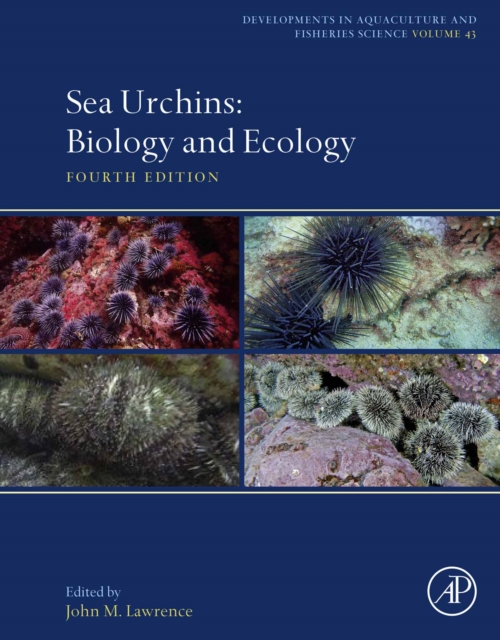
Sea urchins : biology and ecology
Sea Urchins: Biology and Ecology, Fourth Edition, Volume 43 expands its coverage to include the entire class of Echinoidea, making this new edition an authoritative reference of the entire class of species.
eBook
Magnetic phases of skyrmion-hosting GaV\\(_4\\)S\\(_{8-y}\\)Se\\(_{y}\\) (\\(y = 0, 2, 4, 8\\)) probed with muon spectroscopy
We present the results of a muon-spin spectroscopy investigation of GaV\\(_4\\)S\\(_{8-y}\\)Se\\(_{y}\\) with \\(y=0, 2, 4\\) and 8. Zero-field measurements suggest that GaV\\(_{4}\\)Se\\(_{8}\\) and GaV\\(_{4}\\)S\\(_{8}\\) have distinct magnetic ground states, with the latter material showing an anomalous temperature-dependence of the local magnetic field. It is not possible to evolve the magnetic state continuously between these two systems, with the intermediate \\(y=2\\) and \\(4\\) materials showing glassy magnetic behaviour at low temperature. The skyrmion lattice (SkL) phase is evident in the \\(y=0\\) and 8 materials through an enhanced response of the muon-spin relaxation to the emergent dynamics that accompany the SkL. For our polycrystalline samples of GaV\\(_4\\)Se\\(_{8}\\), this enhanced dynamic response is confined to a smaller region of the magnetic field-temperature phase diagram than the previous reports of the SkL in single crystals.
Paper
