
Catalogue Search | MBRL


Are you sure you want to remove the book from the shelf?

{{itemTitle}}
39,699
result(s) for
"Baron, S"
Sort by:


Whole-organism clone tracing using single-cell sequencing
A single-cell sequencing method is developed that uses transcriptomics and CRISPR–Cas9 technology to investigate clonal relationships in cells present in different zebrafish tissues.
Tracing single cells from embryo to adult
Determining the adult fate of progenitor cells present during embryonic development is a challenging task because it requires simultaneous knowledge about the lineage and identity of the cells at a single-cell level. Alexander van Oudenaarden and colleagues have developed a new method to tackle this challenge. ScarTrace relies on single-cell transcriptome sequencing and barcodes ('scars') introduced by CRISPR–Cas9 in individual progenitor cells. The authors use ScarTrace to investigate lineage relationships in cells present in different zebrafish tissues. In the future, such a method could make it possible to match all embryonic cell types to all adult cell types, and to reconstruct how the body emerges from a single cell.
Embryonic development is a crucial period in the life of a multicellular organism, during which limited sets of embryonic progenitors produce all cells in the adult body. Determining which fate these progenitors acquire in adult tissues requires the simultaneous measurement of clonal history and cell identity at single-cell resolution, which has been a major challenge. Clonal history has traditionally been investigated by microscopically tracking cells during development
1
,
2
, monitoring the heritable expression of genetically encoded fluorescent proteins
3
and, more recently, using next-generation sequencing technologies that exploit somatic mutations
4
, microsatellite instability
5
, transposon tagging
6
, viral barcoding
7
, CRISPR–Cas9 genome editing
8
,
9
,
10
,
11
,
12
,
13
and Cre–
loxP
recombination
14
. Single-cell transcriptomics
15
provides a powerful platform for unbiased cell-type classification. Here we present ScarTrace, a single-cell sequencing strategy that enables the simultaneous quantification of clonal history and cell type for thousands of cells obtained from different organs of the adult zebrafish. Using ScarTrace, we show that a small set of multipotent embryonic progenitors generate all haematopoietic cells in the kidney marrow, and that many progenitors produce specific cell types in the eyes and brain. In addition, we study when embryonic progenitors commit to the left or right eye. ScarTrace reveals that epidermal and mesenchymal cells in the caudal fin arise from the same progenitors, and that osteoblast-restricted precursors can produce mesenchymal cells during regeneration. Furthermore, we identify resident immune cells in the fin with a distinct clonal origin from other blood cell types. We envision that similar approaches will have major applications in other experimental systems, in which the matching of embryonic clonal origin to adult cell type will ultimately allow reconstruction of how the adult body is built from a single cell.
Journal Article

Who wrote this? : how AI and the lure of efficiency threaten human writing
\"Would you read this book if a computer wrote it? Would you even know? And why would it matter? Today's eerily impressive artificial intelligence writing tools present us with a crucial challenge: As writers, do we unthinkingly adopt AI's time-saving advantages or do we stop to weigh what we gain and lose when heeding their siren call? To understand how AI is redefining what it means to write and think, linguist and educator Naomi Baron leads us on a journey connecting the dots between human literacy and today's technology. From nineteenth century lessons in composition, to mathematician Alan Turing's work creating a machine for deciphering war-time messages, to contemporary engines like ChatGPT, Baron gives readers a spirited overview of the emergence of both literacy and AI, and a glimpse of their possible future. As the technology becomes increasingly sophisticated and fluent, it's tempting to take the easy way out and let AI do the work for us. Baron cautions that such efficiency isn't always in our interest. As AI plies us with suggestions or full-blown text, we risk losing not just our technical skills but the power of writing as a springboard for personal reflection and unique expression. Funny, informed, and conversational, Who Wrote This? urges us as individuals and as communities to make conscious choices about the extent to which we collaborate with AI. The technology is here to stay. Baron shows us how to work with AI and how to spot where it risks diminishing the valuable cognitive and social benefits of being literate\"-- Provided by publisher.
Book

Unravelling cellular relationships during development and regeneration using genetic lineage tracing
Tracking the progeny of single cells is necessary for building lineage trees that recapitulate processes such as embryonic development and stem cell differentiation. In classical lineage tracing experiments, cells are fluorescently labelled to allow identification by microscopy of a limited number of cell clones. To track a larger number of clones in complex tissues, fluorescent proteins are now replaced by heritable DNA barcodes that are read using next-generation sequencing. In prospective lineage tracing, unique DNA barcodes are introduced into single cells through genetic manipulation (using, for example, Cre-mediated recombination or CRISPR–Cas9-mediated editing) and tracked over time. Alternatively, in retrospective lineage tracing, naturally occurring somatic mutations can be used as endogenous DNA barcodes. Finally, single-cell mRNA-sequencing datasets that capture different cell states within a developmental or differentiation trajectory can be used to recapitulate lineages. In this Review, we discuss methods for prospective or retrospective lineage tracing and demonstrate how trajectory reconstruction algorithms can be applied to single-cell mRNA-sequencing datasets to infer developmental or differentiation tracks. We discuss how these approaches are used to understand cell fate during embryogenesis, cell differentiation and tissue regeneration.
Journal Article
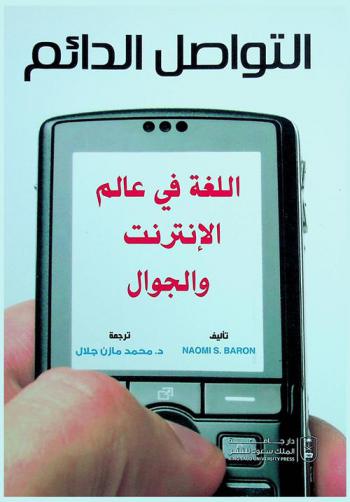
التواصل الدائم : اللغة في عالم الإنترنت والجوال
يتميز الكتاب بثراء كبير في موضوعاته وفي منهجه، ويعد الكتاب ذا فائدة كبيرة للمكتبة العربية إذ إنه يجلي العلاقة بين اللغة ووسائل الاتصال الحديثة مثل الإنترنت والجوال، وهي من القضايا المعاصرة والتي لم تدرس بالعمق الكافي في العالم العربي، ويقدم الكتاب كذلك أساليب منهجية متعددة لإدارة البحث حول قضية اللغة والتقنية، سواء من الناحية الكمية المتعلقة بتجميع البيانات ووسائلها أم فيما يتعلق بالوسائل الكيفية في التفسير والتعليل واستنباط القواعد فضلاً عن ذلك، يعزز الكتاب اتجاه التفكير الناقد من خلال تمحيصه لبعض الأفكار التقليدية حول علاقة اللغة بالتقنية.
BOOK
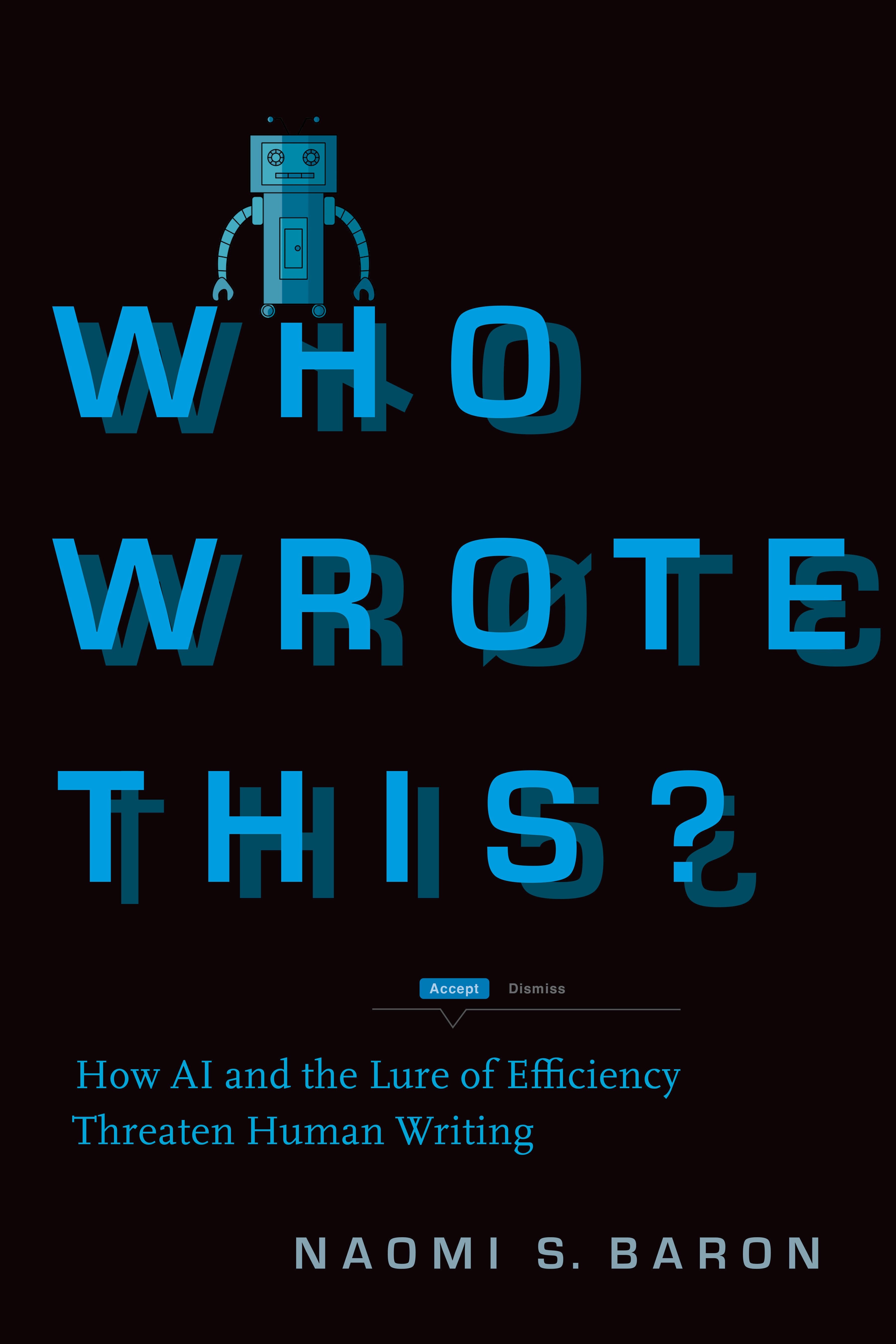
Who Wrote This?
Would you read this book if a computer wrote it? Would you even know? And why would it matter?
Today's eerily impressive artificial intelligence writing tools present us with a crucial challenge: As writers, do we unthinkingly adopt AI's time-saving advantages or do we stop to weigh what we gain and lose when heeding its siren call? To understand how AI is redefining what it means to write and think, linguist and educator Naomi S. Baron leads us on a journey connecting the dots between human literacy and today's technology. From nineteenth-century lessons in composition, to mathematician Alan Turing's work creating a machine for deciphering war-time messages, to contemporary engines like ChatGPT, Baron gives readers a spirited overview of the emergence of both literacy and AI, and a glimpse of their possible future. As the technology becomes increasingly sophisticated and fluent, it's tempting to take the easy way out and let AI do the work for us. Baron cautions that such efficiency isn't always in our interest. As AI plies us with suggestions or full-blown text, we risk losing not just our technical skills but the power of writing as a springboard for personal reflection and unique expression.
Funny, informed, and conversational, Who Wrote This? urges us as individuals and as communities to make conscious choices about the extent to which we collaborate with AI. The technology is here to stay. Baron shows us how to work with AI and how to spot where it risks diminishing the valuable cognitive and social benefits of being literate.
eBook

Batman by Grant Morrison omnibus
\"One of the greatest storytellers of his generation, Grant Morrison's arrival onto the Dark Knight was one of the most hyped debuts in industry history. This collection includes time-spanning epic graphic novels featuring the cataclysmic events of FINAL CRISIS and the introduction of Batman's son, Damian Wayne! These blockbuster stories featured a deconstruction of super hero comics like never before, with challenging, thought-provoking takes on the modern, four-color icons.\"-- Provided by publisher.
Book


Sequencing metabolically labeled transcripts in single cells reveals mRNA turnover strategies
The regulation of messenger RNA levels in mammalian cells can be achieved by the modulation of synthesis and degradation rates. Metabolic RNA-labeling experiments in bulk have quantified these rates using relatively homogeneous cell populations. However, to determine these rates during complex dynamical processes, for instance during cellular differentiation, single-cell resolution is required. Therefore, we developed a method that simultaneously quantifies metabolically labeled and preexisting unlabeled transcripts in thousands of individual cells. We determined synthesis and degradation rates during the cell cycle and during differentiation of intestinal stem cells, revealing major regulatory strategies. These strategies have distinct consequences for controlling the dynamic range and precision of gene expression. These findings advance our understanding of how individual cells in heterogeneous populations shape their gene expression dynamics.
Journal Article

Cryo-EM of prion strains from the same genotype of host identifies conformational determinants
Prion strains in a given type of mammalian host are distinguished by differences in clinical presentation, neuropathological lesions, survival time, and characteristics of the infecting prion protein (PrP) assemblies. Near-atomic structures of prions from two host species with different PrP sequences have been determined but comparisons of distinct prion strains of the same amino acid sequence are needed to identify purely conformational determinants of prion strain characteristics. Here we report a 3.2 Å resolution cryogenic electron microscopy-based structure of the 22L prion strain purified from the brains of mice engineered to express only PrP lacking glycophosphatidylinositol anchors [anchorless (a) 22L]. Comparison of this near-atomic structure to our recently determined structure of the aRML strain propagated in the same inbred mouse reveals that these two mouse prion strains have distinct conformational templates for growth via incorporation of PrP molecules of the same sequence. Both a22L and aRML are assembled as stacks of PrP molecules forming parallel in-register intermolecular β-sheets and intervening loops, with single monomers spanning the ordered fibril core. Each monomer shares an N-terminal steric zipper, three major arches, and an overall V-shape, but the details of these and other conformational features differ markedly. Thus, variations in shared conformational motifs within a parallel in-register β-stack fibril architecture provide a structural basis for prion strain differentiation within a single host genotype.
Journal Article