
Catalogue Search | MBRL


Are you sure you want to remove the book from the shelf?

{{itemTitle}}
40
result(s) for
"Basu, Anustup"
Sort by:


Orientalism’s Hinduism, Orientalism’s Islam, and the Twilight of the Subcontinental Imagination
Using the figure of the ethnic Pathan/Pashtun as a trope in South Asian culture, this essay provides a genealogical account of the modern emergence of Hindu–Muslim “religious” conflicts played along the lines of nation-thinking in the Indian subcontinent. This modern phenomenon begins in the late 18th century, with the orientalist transcriptions of a vast conglomerate of diverse Indic faiths into a Brahminical–Sanskritic Hinduism and a similar telescoping of complex Islamic intellectual traditions into what we can call a “Mohammedanism” overdetermined by Islamic law. As such, both these transcriptions had to fulfill certain Christological expectations of western anthropology in order to emerge as “religions” and “world religions”, that is, when, as Talal Asad has shown, “religion” was constructed as an anthropological category within the parameters of European secular introspection and the modern expansion of empire. Both Hinduism and Islam therefore had to have a book, a prophetic figure, a doctrinal core, and a singular compendium of laws. Upper caste Sanskritic traditions therefore dominated Hinduism, and a legal supremacist position dominated the modern reckoning of Islam at the expense of philosophy, metaphysics, poesis, and varieties of artistic self-making. Together, the two phenomena also created the historical illusion (now industrialized) that Brahminism always defined Hindu societies and the Sharia was always a total fact of Islam.
Journal Article

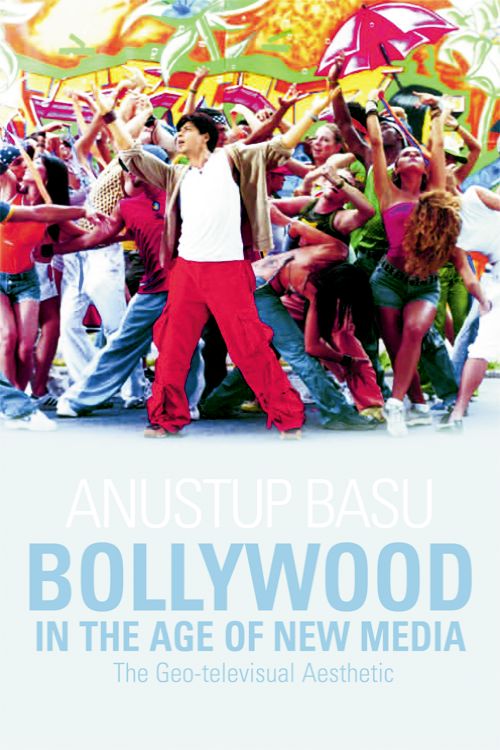
Bollywood in the age of new media
Focusing on popular Indian cinema's phenomenal output between 1991 and 2004, Anustup Basu considers the influence of globalization, new media, and metropolitan Hindu fundamentalism on the rise of Bollywood. Beginning in the early nineties, popular Hindi cinema evolved a spectacular style inspired by liberalizing trends and the inauguration of a planetary media ecology. Films increasingly featured transformed bodies, fashions, lifestyles, commodities, gadgets, and spaces, often in nonlinear, \"window-shopping\" ways; in other words, without any obligation to narrative. The unbounded flow of deisre, affect, and aspiration transcended the limits of story and milieu. Haqeeqat (1995) features poor, working-class characters, but through the magic of a music and dance sequence, these downtrodden souls become transported to the streets of Switzerland, redressed and remade in new designer suits. Basu calls this cinematic-cultural ecology the \"geo-televisual aesthetic\" and connects it to the uneven processes of globalization transforming India in this period.
eBook

Islam and the Orientalist Vision in Padmaavat
This essay argues that Sanjay Leela Bhansali’s 2018 Bollywood historical film Padmaavat is part of a wider media-informational atmospherics of contemporary Hindu pride and Islamophobia, drawing on advertised energies of disaffection and ethnological stereotyping around the figure of the Muslim. In the process, it constructs a “double shift” Orientalist prism of race perception to view a splendid “Aryan” Hindu past as well as a dark interval of Islamic rule in India marked by a Semitic, Turko-Arabic pathology. The film is part of an overall Hindu nationalist project of constructing a moral memory (contra history) in the era of the digital image that can not only reinvent the past, but also re-texture and re-canvas it, making purported pictures of a glorious Hindu bygone appearing asnot just nove, but also tactile and sensuous.
Journal Article