
Catalogue Search | MBRL


Are you sure you want to remove the book from the shelf?

{{itemTitle}}
3
result(s) for
"Basu Thakur, Gautam, author"
Sort by:

Postcolonial theory and Avatar
\"An explanation of postcolonial film theory and how it explicates James Cameron's film\"-- Provided by publisher.
Book

Postcolonial Theory and Avatar
The Film Theory in Practice series fills a gaping hole in the world of film theory. By marrying the explanation of a film theory with the interpretation of a film, the volumes provide discrete examples of how film theory can serve as the basis for textual analysis. The second book in the series, Postcolonial Theory and Avatar offers a concise introduction to postcolonial theory in jargon-free language and shows how this theory can be deployed to interpret James Cameron’s high-grossing, immensely popular, and critically acclaimed 2009 film. Avatar is widely celebrated for its politically and culturally sensitive critique of the “West’s” neocolonial wars and exploitation of the “global south” – an allegory for (neo)colonialism – and for highlighting the plight of tribal communities throughout the world (for instance, the case of the Dongriah Kondh tribe of India). At the same time, it has been also criticized for repeating the colonialist fantasy of saving natives doomed by imperialist aggression. Intervening in this debate over how to read the film, Basu Thakur focuses on issues of representations, discourse, subalternity, and subjectivity, all of which have been central to postcolonial theory and postcolonial analyses of culture. This history will help students and scholars who are eager to learn more about this important area of theory and bring the concepts of postcolonial theory into practice through a detailed interpretation of the film.
eBook
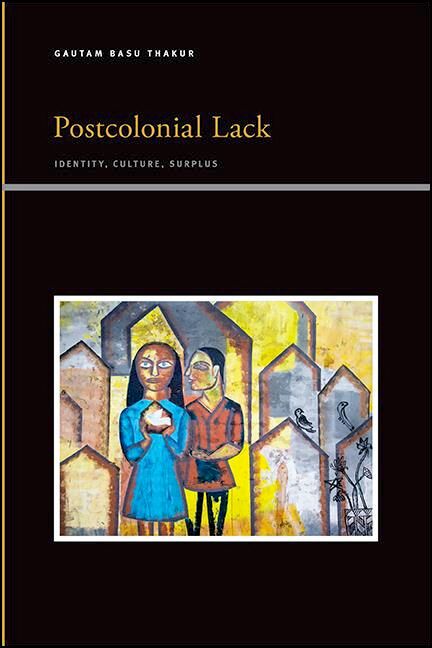
Postcolonial Lack
Postcolonial Lack reconvenes dialogue between Lacanian
psychoanalysis and postcolonial theory in order to expand the range
of cultural analyses of the former and make the latter
theoretically relevant to the demands of contemporary narratives of
othering, exclusion, and cultural appropriation. Seeking to resolve
the mutual suspicion between the disciplines, Gautam Basu Thakur
draws out the connections existing between Lacan's teachings on
subjectivity and otherness and writings of postcolonial and
decolonial theorists such as Gayatri Spivak, Frantz Fanon, and Homi
Bhabha. By developing new readings of the marginalized other as
radical impasse and pushing the envelope on neoliberal identity
politics, the book moves postcolonial studies away from the
perennial topic of identity and difference and into examining the
form and function of the other as excess-surplus and/or lack-in
colonial and postcolonial literature, film, and social discourse.
Looking at writings by Mahasweta Devi, Amitav Ghosh, Leila
Aboulela, Narayan Gangopadhyay, Katherine Boo, and films by Gillo
Pontecorvo , Clint Eastwood, Ryan Coogler ( Black Panther ),
and Tony Gatlif, Basu Thakur highlights a new set of ethical and
political considerations emerging as a direct result of this shift
and stakes a fundamental rethinking of postcoloniality through what
he calls the \"politics of ontological discordance.\"
eBook