
Catalogue Search | MBRL


Are you sure you want to remove the book from the shelf?

{{itemTitle}}
7
result(s) for
"Batchelor, Bob, author"
Sort by:


Mad Men
From the opening credits that feature a silhouette falling among skyscrapers, Mad Men transcended its role as a series about the Madison Avenue advertising industry to become a modern classic. For seven seasons, Mad Men asked viewers to contemplate the 1960s anew, reassessing the tumultuous era’s stance on women’s rights, race, war, politics, and family relationships that comprise the American Dream. Set in the heart of the twentieth century, the show brought to light how deeply we still are connected to that age. The result is a show that continually asks us to rethink our own families, lives, work, and ethical beliefs as we strive for a better world. In Mad Men: A Cultural History, M. Keith Booker and Bob Batchelor offer an engaging analysis of the series, providing in-depth examinations of its many themes and nostalgic portrayals of the years from Camelot to Vietnam and beyond. Highly regarded cultural scholars and critics, Booker and Batchelor examine the show in its entirety, presenting readers with a deep but accessible exploration of the series, as well as look at its larger meanings and implications. This cultural history perspective reveals Mad Men’s critical importance as a TV series, as well as its role as a tool for helping viewers understand how they are shaped by history and culture. As a showcase in America’s new “golden age of television,” Mad Men reveals the deep hold history and nostalgia have on viewers, particularly when combined with stunning visuals and intricate writing and storylines. With this volume as their guide, readers will enjoy contemplating the show’s place among the most lauded popular culture touchstones of the twenty-first century. As it engages with ideas central to the American experience—from the evolution of gender roles to family dynamics and workplace relationships—Mad Men: A Cultural History brings to life the significance of this profound yet entertaining series.
eBook
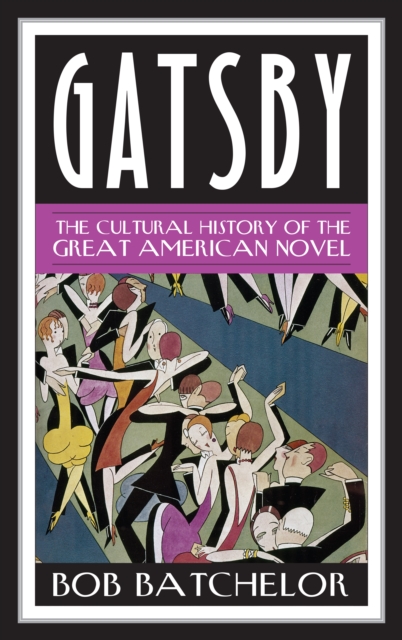
Gatsby
In 1925, F. Scott Fitzgerald produced his third novel, a slim work for which he had high expectations. Despite such hopes, the novel received mixed reviews and lackluster sales. Over the decades, however, the reputation of The Great Gatsby has grown and millions of copies have been sold. One of the bestselling novels of all time, it is also considered one of the most significant achievements in twentieth-century fiction. But what makes Gatsby great? Why do we still care about this book more than eighty-five years after it was published? And how does Gatsby help us make sense of our own lives and times? In Gatsby: The Cultural History of the Great American Novel, Bob Batchelor explores the birth, life, and enduring influence of The Great Gatsby—from the book’s publication in 1925 through today’s headlines filled with celebrity intrigue, corporate greed, and a roller-coaster economy. A cultural historian, Batchelor explains why and how the novel has become part of the fiber of the American ethos and an important tool in helping readers to better comprehend their lives and the broader world around them. A “biography” of F. Scott Fitzgerald’s masterpiece, this book examines The Great Gatsby’s evolution from a nearly-forgotten 1920s time capsule to a revered cultural touchstone. Batchelor explores how this embodiment of the American Dream has become an iconic part of our national folklore, how the central themes and ideas emerging from the book—from the fulfillment of the American Dream to the role of wealth in society—resonate with contemporary readers who struggle with similar uncertainties today. By exploring the timeless elements of reinvention, romanticism, and relentless pursuit of the unattainable, Batchelor confirms the novel’s status as “The Great American Novel” and, more importantly, explains to students, scholars, and fans alike what makes Gatsby so great.
eBook

Michael Chabon's America
Author Michael Chabon is acutely attuned to life in contemporary America, providing insight into the history of the late twentieth and early twenty-first centuries in novels such as The Mysteries of Pittsburgh (1988), Wonder Boys (1995), and Telegraph Avenue (2012).
eBook

Basketball in America
Examine the social and cultural impact of basketball on America at the amateur and professional levels!
Basketball in America: From the Playgrounds to Jordan's Game and Beyond is a pioneering analysis of the history of basketball and its effect on popular culture from the 1970s to today. The popularity of basketball is undeniable, and the subject allows for such a broad range of interpretations in popular culture. It cuts across economic, racial, and social boundaries, and its major stars cross over into other forms of popular entertainment more than any other professional sport. This book examines the entire scope of modern basketball history, from the playgrounds, where people first learn the fundamentals, to the college and professional levels.
Basketball in America is a collection of essays that explores the intersection of basketball and popular culture in America. The contributors are an eclectic mix of writers, scholars, journalists, former players, coaches, and sports enthusiasts who all share an undying love for the game of basketball. The authors analyze the sport from a cross-cultural and historical perspective-digging deep into the profound popular cultural influences of basketball and exploring the scope and depth of its influence. This is the first book that examines the social and cultural impact of basketball on American society to reveal how tightly it is woven into America's cultural fabric. Also included are photographs and tables to enhance your understanding of the material.
Topics covered in Basketball in America include:
Elgin Baylor-the first modern basketball player
Chocolate Thunder and Short Shorts: The NBA in the 1970s
Dr. J, Bird, Magic, Jordan, and the Bad Boys: The NBA in the 1980s
The Jordan Era: The NBA in the 1990s
LeBron James and the future of the NBA
the Nike brand and popular culture
lesso
eBook

The fiction of Junot Díaz
This book looks at the work of acclaimed author Junot Diaz, closely examining the linguistic, popular culture, and literary references that are woven throughout his work. Ostman also considers Diaz's work as it relates to issues of identity, citizenship, culture, language, class, gender, and race.
eBook

Rock brands
Rock Brands: Selling Sound in a Media Saturated Culture, edited by Elizabeth Barfoot Christian, is an edited collection that explores how different genres of popular music are branded and marketed today. The book's core objectives are addressed over three sections. In the first part of Rock Brands, the authors examine how established mainstream artists/bands are continuing to market themselves in an ever-changing technological world, and how bands can use integrated marketing communication to effectively \"brand\" themselves. This branding is intended as a protection so that technology and delivery changes don't stifle the bands' success. KISS, AC/DC, Ozzy Osbourne, Phish, and Miley Cyrus are all popular musical influences considered in this part of the analysis. In the second section, the authors explore how some musicians effectively use attention-grabbing issues such as politics (for example, Kanye West and countless country musicians) and religion (such as with Christian heavy metal bands and Bon Jovi) in their lyrics, and also how imagery is utilized by artists such as Marilyn Manson to gain a fan base. Finally, the book will explore specific changes in the media available to market music today (see M.I.A. and her use of new media) and, similarly, how these resources can benefit music icons even after they are long gone, as with Elvis and Michael Jackson. Rock Brands further examines gaming, reality television, and social networking sites as new outlets for marketing and otherwise experiencing popular music. What makes some bands stand out and succeed when so many fail? How does one find a niche that isn't just kitsch and can stand the test of time, allowing the musician to grow as an artist as well as grow a substantial fan base? Elizabeth Barfoot Christian and the book's contributors expertly navigate these questions and more in Rock Brands: Selling Sound in a Media Saturated Culture.
eBook