
Catalogue Search | MBRL


Are you sure you want to remove the book from the shelf?

{{itemTitle}}
66
result(s) for
"Battles, Matthew"
Sort by:


László Moholy-Nagy’s Light Prop as Design Fiction
Light Prop for an Electric Stage was presented in 1930 as a prototype for a new kind of mechanical theater that was meant to spark future partnerships between art and industry. Although it was never put into industrial production, Light Prop circulated as an early example of kinetic sculpture, as documented in a highly composed film, in photographs and in textual accounts. In 2016, the Harvard Art Museums and metaLAB (at) Harvard filmed Light Prop and its 2006 replica under highly controlled conditions. The resulting comparative media reveals how László Moholy-Nagy’s film served as the “design fiction” guiding the replication and conservation of Light Prop.
Journal Article

Special section : in focus : László Moholy-Nagy : László Moholy-Nagy's \Light prop\ as design fiction : perspectives on conservation and replication
\"Light prop for an electric stage\" was presented in 1930 as a prototype for a new kind of mechanical theater that was meant to spark future partnerships between art and industry. Although it was never put into industrial production, \"Light prop\" circulated as an early example of kinetic sculpture, as documented in a highly composed film, in photographs and in textual accounts. In 2016, the Harvard Art Museums and metaLAB (at) Harvard filmed \"Light prop\" and its 2006 replica under highly controlled conditions. The resulting comparative media reveals how László Moholy-Nagy's film served as the \"design fiction\" guiding the replication and conservation of \"Light prop.\" [Publication Abstract]
Journal Article
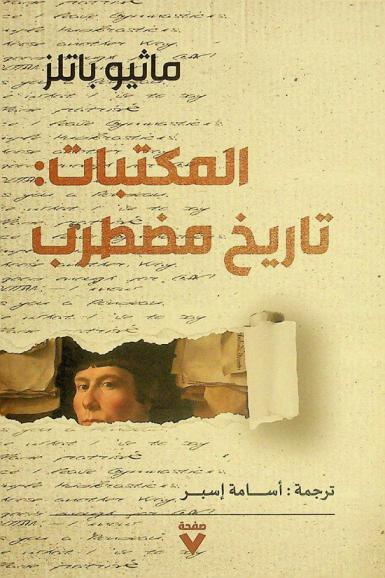
المكتبات : تاريخ مضطرب
\"المكتبات : تاريخ مضطرب\" بقلم ماثيو باتلز، كتاب يروي قصة نشوء المكتبات تاريخيا بدءا من المكتبات المبكرة التي حفظت الألواح الطينية في بلاد ما بين النهرين ثم في الصين وفي عهد الدولتين الأموية والعباسية، والتحولات التي طرأت على شكل الكتب منذ الكتابة على الطين واللفائف والمخطوطات انتهاء بالأقراص المدمجة الرقمية. تبدأ قصة المكتبات، بشكل أو بآخر، في مدينة الإسكندرية حوالي عام 283 قبل الميلاد، عندما أسس الإسكندر الأكبر مكتبة الإسكندرية، التي تم توسيع محتوياتها عن طريق تفتيش كل السفن التي ترسو في ميناء المدينة، ومصادرة جميع الكتب التي تحملها بغرض نسخها، قبل إعادتها إلى أصحابها مرة أخرى. على مر العصور، لم تقم المكتبات بتجميع المعرفة والحفاظ عليها فحسب، بل قامت أيضا بتشكيل المعرفة. في هذا الكتاب يأخذنا باتلز، أمين مكتبة الكتب النادرة السابق، من بوسطن إلى بغداد، ومن النسخ الكلاسيكية إلى أديرة القرون الوسطى وإلى عصر المعلومات؛ لاستكشاف كيفية بناء المكتبات وكيف تم تدميرها، منذ حرق المخطوطات في الصين القديمة، إلى حرق المكتبات في أوروبا والبوسنة، وصولا إلى آخر الاضطرابات الثورية في العصر الرقمي.
Book

Occasioned by Fire
Perched atop a promontory of volcanic rock, its close-packed multistory tenements rising beneath the spires of Castle Rock and Tron Kirk, the central district of Old Town has been a vertical neighborhood since the sixteenth century. Like other nineteenth-century penny prints of fires and public spectacles, they seem to strive for a kind of \"pantemporaneousness\"; each print makes a smear of time, scrambling together a panoply of narrative elements. [...]do so many nineteenth-century images of fires depict the ignition, the work of the fire brigades with their wild-eyed horses and rattling, plunging pumps, and the gathered crowd ogling the terrible scene. When the broken arches are black in night, And each shafted oriel glimmers white; When the cold light's uncertain shower Streams on the ruin'd central tower; When buttress and buttress, alternately, seem framed of ebon and ivory; When silver edges the imagery, And the scrolls that teach thee to live and die; When distant Tweed is heard to rave, And the owlet to hoot o'er the dead man's grave, Then go-but go alone the while- Then view St. David's ruin'd pile; And, home returning, soothly swear, Was never scene so sad and fair! James Hall's Grand Tour journal is wonderfully described by lain Gordon Brown in his essay \"Intimacy & Immediacy: James Hall's Journals in Italy and Germany 1821-22,\" in Britannia Italia Germania: Taste & Travel in the Nineteenth Century, edited by Carol Richardson and Graham Smith and published by Varie in 2001. lain Gordon Brown also wrote the entry on James Hall in the Oxford Dictionary of National Biography; Jennifer Melville's DNB entry on William Home Lizars provided crucial information on the world of the Edinburgh printers.
Journal Article


CLICK HERE -- YOU JUST TRANSLATED A BOOK! - Millions of people are deciphering vintage texts without knowing it - and forging a new path for computing
(The \"Turing test\" refers to mathematician Alan Turing, who in 1950 proposed a simple way to measure the success of artificial intelligence in computers.) Since appearing on the Alta Vista search engine in 1997, the technique has become nearly ubiquitous on the Web; according to von Ahn's Science paper, people solve about 100 million captchas per day.
Newspaper Article