
Catalogue Search | MBRL


Are you sure you want to remove the book from the shelf?

{{itemTitle}}
12
result(s) for
"Baxter, Denise Amy"
Sort by:

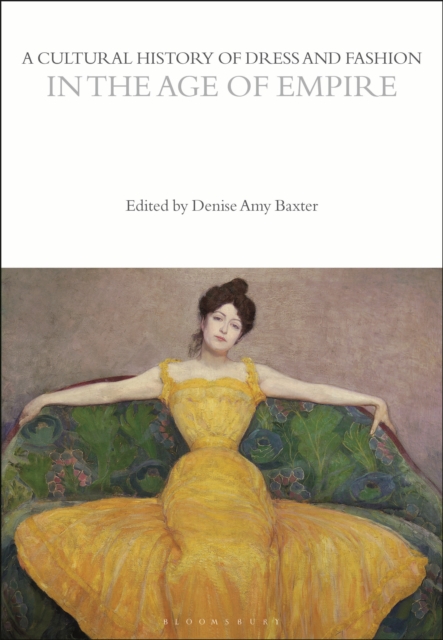
A Cultural History of Dress and Fashion in the Age of Empire
During the nineteenth and early twentieth centuries the production of dress shifted dramatically from being predominantly hand-crafted in small quantities to machine-manufactured in bulk. The increasing democratization of appearances made new fashions more widely available, but at the same time made the need to differentiate social rank seem more pressing. In this age of empire, the coding of class, gender and race was frequently negotiated through dress in complex ways, from fashionable dress which restricted or exaggerated the female body to liberating reform dress, from self-defining black dandies to the oppressions and resistances of slave dress. Richly illustrated with over 100 images and drawing on a plethora of visual, textual and object sources, A Cultural History of Dress and Fashion in the Age of Empire presents essays on textiles, production and distribution, the body, belief, gender and sexuality, status, ethnicity, and visual and literary representations to illustrate the diversity and cultural significance of dress and fashion in the period.
eBook

A cultural history of dress and fashion
A cultural history of dress and fashion' presents an authoritative survey from ancient times to the present. This set of six volumes covers over 2,500 years of dress and fashion. Volume 1: Antiquity (500BCE-800AD), edited by Mary Harlow; Volume 2: The Medieval Age (800-1450), edited by Sarah-Grace Heller; Volume 3: The Renaissance (1450-1650), edited by Elizabeth Currie; Volume 4: The Age of Enlightenment (1650-1800), edited by Peter McNeil; Volume 5: The Age of Empire (1800-1920), edited by Denise Amy Baxter; Volume 6: The Modern Age (1920-2000+), edited by Alexandra Palmer. Each volume discusses the same key themes in its chapters: 1. Textiles 2. Production and Distribution 3. The Body 4. Belief 5. Gender and Sexuality 6. Status 7. Ethnicity 8. Visual Representations 9. Literary Representations. This structure means readers can either have a broad overview of a period by reading a volume or follow a theme through history by reading the relevant chapter in each volume. Superbly illustrated, the full six volume set combines to present the most authoritative and comprehensive survey available on dress and fashion through history.
Book


Fashions of sociability in Jean-François de Troy's tableaux de mode, 1725–1738
Jean-François de Troy created a series of approximately thirty small-scale, lovingly detailed depictions of polite society, the tableaux de mode, during his early career in Paris (1725–1738). These paintings provide crucial opportunities to examine how novel forms of fashion and sociability combined with the rise of a new social and economic class in Paris to form a modern sensibility. The tableaux de mode both expressed and shaped the sensibilities of the new mixture of aristocratic and non-aristocratic elites formed in the 1720s–30s as a consequence of important shifts in finance and politics, specifically the boon in speculative land investments during the Mississippi Bubble. I contend that this group's particular assertion of identity and status was expressed through cultural production and the consumption of luxury goods. Moreover, de Troy's exacting depiction of luxury commodities—and the consumption of them—prefigures, and perhaps inaugurates, the emergence of a modern sensibility in French painting, a development customarily associated with the 19th century. The first chapter defines the tableau de mode as a genre characterized by their meticulous, luxurious, intimate, and modish qualities. Chapter two examines the social and political contexts of de Troy's work and focuses on how a state-sponsored stock scheme transformed social relations between the nobility (de l'épée, de la robe) and wealthy groups with no claim to noble lineage, while the third chapter investigates the case of Germain-Louis de Chauvelin as a collector of the genre. The fourth and final chapter examines the afterlife of the tableaux de mode in paintings and prints in order to trace their founding importance for the subsequent history of the representation of polite society. Exploring the tableaux de mode in their specific historic, social, and economic contexts, I will illuminate a neglected, pre-Revolutionary source of modern aesthetics. More broadly, I will examine how the modern receptivity to commodity culture and its attendant promise of self-fashioning emerges in the objects and gestures of de Troy's tableaux de mode.
Dissertation


The Interdisciplinary Century: Tensions and Convergences in Eighteenth-Century Art, History, and Literature
Tensions and Convergences in Eighteenth- Century Art, History, and Literature, Julia V. Douthwaite, Professor of French at the University of Notre Dame, Mary Vidal, an art historian in the Department of Visual Arts at the University of California at San Diego, and their fine American, French, and British contributors work toward definitions of this oft-used term, its implications for contemporary scholarship, and its origins in eighteenth-century intellectual practices. Taking as their premise that interdisciplinary approaches to the eighteenth century are \"desirable, necessary, and inevitable,\" Douthwaite, Vidal, and the scholars from the fields of literature, history, and art history who were ultimately commissioned to participate in the volume demonstrate in various ways that the eighteenth century or, more broadly speaking, the Enlightenment era-long perceived of as the originating site of the division of knowledge that would develop into disciplinary practices, the whipping boy of Postmodernism-was truly itself an \"interdisciplinary century\" (xiv).
Book Review