
Catalogue Search | MBRL


Are you sure you want to remove the book from the shelf?

{{itemTitle}}
74
result(s) for
"Bay, Mia"
Sort by:


The Revolution in Black and White
The American Revolution in Black and White compares Black and white responses to the American colonists’ struggle for freedom from British domination. Focused on colonists who rallied in support of independence, it contends that although Americans on both sides of the color line mobilized around natural rights ideology, Black and white patriots were far too divided by race and class to understand the revolutionary rhetoric they embraced the same way. While Jefferson and other slave-holding patriot leaders saw declaring independence as a natter of state-making, Black patriots such as New Englander Lemuel Haynes pushed for a more expansive understanding of the colonist’s struggle for political freedom, and read the Declaration of Independence as a liberty-making document.
Journal Article
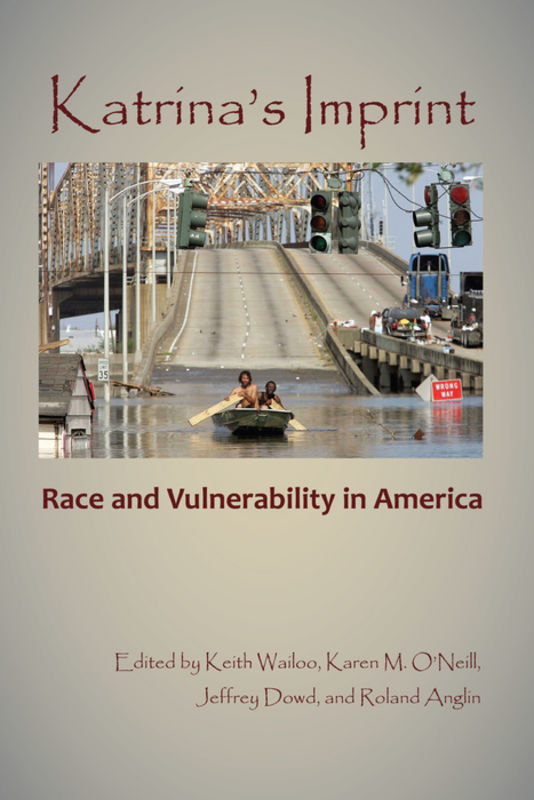
Katrina's Imprint
Katrina's Imprinthighlights the power of this sentinel American event and its continuing reverberations in contemporary politics, culture, and public policy. Published on the fifth anniversary of Hurricane Katrina, the multidisciplinary volume reflects on how history, location, access to transportation, health care, and social position feed resilience, recovery, and prospects for the future of New Orleans and the Gulf region. Essays examine the intersecting vulnerabilities that gave rise to the disaster, explore the cultural and psychic legacies of the storm, reveal how the process of rebuilding and starting over replicates past vulnerabilities, and analyze Katrina's imprint alongside American's myths of self-sufficiency. A case study of new weaknesses that have emerged in our era, this book offers an argument for why we cannot wait for the next disaster before we apply the lessons that should be learned from Katrina.
eBook

Race and Retail
Race has long shaped shopping experiences for many Americans. Retail exchanges and establishments have made headlines as flashpoints for conflict not only between blacks and whites, but also between whites, Mexicans, Asian Americans, and a wide variety of other ethnic groups, who have at times found themselves unwelcome at white-owned businesses.
Race and Retaildocuments the extent to which retail establishments, both past and present, have often catered to specific ethnic and racial groups. Using an interdisciplinary approach, the original essays collected here explore selling and buying practices of nonwhite populations around the world and the barriers that shape these habits, such as racial discrimination, food deserts, and gentrification. The contributors highlight more contemporary issues by raising questions about how race informs business owners' ideas about consumer demand, resulting in substandard quality and higher prices for minorities than in predominantly white neighborhoods. In a wide-ranging exploration of the subject, they also address revitalization and gentrification in South Korean and Latino neighborhoods in California, Arab and Turkish coffeehouses and hookah lounges in South Paterson, New Jersey, and tourist capoeira consumption in Brazil.
Race and Retaililluminates the complex play of forces at work in racialized retail markets and the everyday impact of those forces on minority consumers. The essays demonstrate how past practice remains in force in subtle and not-so-subtle ways.
eBook
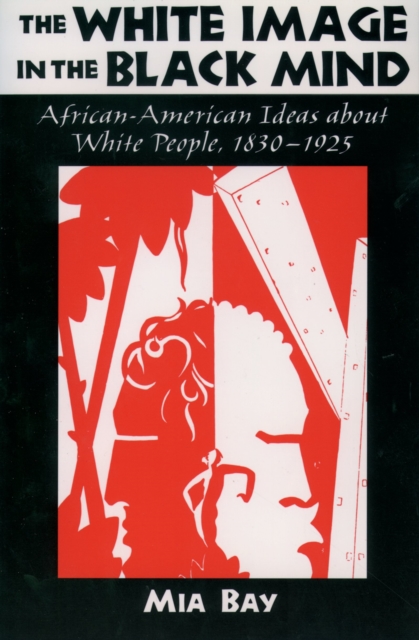
The white image in the black mind : African-American ideas about white people, 1830-1925
How did African-American slaves view their white masters? As demons, deities or another race entirely? When nineteenth-century white Americans proclaimed their innate superiority, did blacks agree? If not, why not? How did blacks assess the status of the white race? Mia Bay traces African-American perceptions of whites between 1830 and 1925 to depict America’s shifting attitudes about race in a period that saw slavery, emancipation, Reconstruction, and urban migration. Much has been written about how the whites of this time viewed blacks, and about how blacks viewed themselves. By contrast, the ways in which blacks saw whites have remained a historical and intellectual mystery. Reversing the focus of such fundamental studies as George Fredrickson’s The Black Image in the White Mind, Bay investigates this mystery. In doing so, she uncovers and elucidates the racial thought of a wide range of nineteenth-century African-Americans--educated and unlettered, male and female, free and enslaved.
eBook

White Image in the Black Mind, The
Introduction: 1. Desegregating American Racial Thought2. OverviewPart I: White People in Black Ethnology Chapter 1: \"Of One Blood God Created All The Nations Of Men\": African-Americans Respond to the Rise of Ideological Racism, 1789-1830Chapter 2: The Redeemer Race and the Angry Saxon: Race, Gender, and White People in Antebellum Black EthnologyChapter 3: \"What Shall We Do With The White People?\": Whites in Postbellum Black ThoughtPart II: The Racial Thought of the Slaves Introduction to Part IIChapter 4: \"Us Is Human Flesh\": The Racial Thought of the SlavesChapter 5: \"Devils and Good People Walking De Road At De Same Time\": White People in Black Folk ThoughtPart III: New Negroes, New Whites: Black Racial Thought in the Twentieth Century Chapter 6: \"A New Negro For A New Country\": Black Racial Ideology, 1900-1925ConclusionNotesIndex.
eBook

\IF IOLA WERE A MAN\: GENDER, JIM CROW AND PUBLIC PROTEST IN THE WORK OF IDA B. WELLS
[...]white supremacy confronted black men and women differently, launching Wells into a public career that would not have been the same \"if loia were a man\". Far from inarticulate, these women wrote poems, letters, essays, speeches, fiction, and autobiographies. [...]these educated black women were acquainted with then male contemporaries' ideas about race. Assumed to be lascivious by nature, even after slavery ended black women still received no protection against sexual assault in Southern courts - which remained almost exclusively under white control even during Reconstruction. [...]Southern whites also went out of their way to demonstrate that they considered black women unworthy of the courtesy and respect their society accorded to white women - as Wells would find out. By the end of the 1890s it became clear that her case had been one of many State level steps on the road to Plessey v. Ferguson, the famous 1896 Supreme Court Case ruling that blacks could be relegated to separate but equal accommodation. [...]for Wells, a child of the Civil War era, the case helped signal the death of Reconstruction.
Journal Article

In Search of Sally Hemings in the Post-DNA Era
Sally Hemings remains an interpretive conundrum in part because her life falls between social and political historiographies--two literatures rarely in dialogue with each other. Bay argues that the Hemings side of the story requires attention from historians with expertise on the experiences of black women in slavery, as well as Jefferson scholars, if academics are to achieve any consideration of Sally Hemings within a historical context not limited to the life of a founding father. Such work is unlikely to settle debates over Hemings, since this very preliminary attempt to place her within the context of the historiography on slave women suggests that new approaches may only multiply the conflicts around the Jefferson-Hemings relationship. Hemings's life looks quite different when understood with reference to the historiography and historical evidence on slavery and black women. Although such scholarship cannot provide any new hard evidence on Sally Hemings, it does call into question many Jefferson scholars' basic assumptions about Hemings and Jefferson--both past and present.
Journal Article
LOOKING BACKWARD IN ORDER TO GO FORWARD
One of the reasons why it is hard for me to explain how I came to be a historian of African American history is that I did not grow up in the United States. My family moved to Canada when I was five years old, and I lived there, and at times in Northern Europe, until I was twenty-five and returned to the United States to pursue a Ph.D. in history at Yale University. My years in junior high school, high school, and college (known in Canada as university) took place in the polyglot multiethnic world of Toronto, where neither
Book Chapter