
Catalogue Search | MBRL


Are you sure you want to remove the book from the shelf?

{{itemTitle}}
72
result(s) for
"Beaven, Brad"
Sort by:

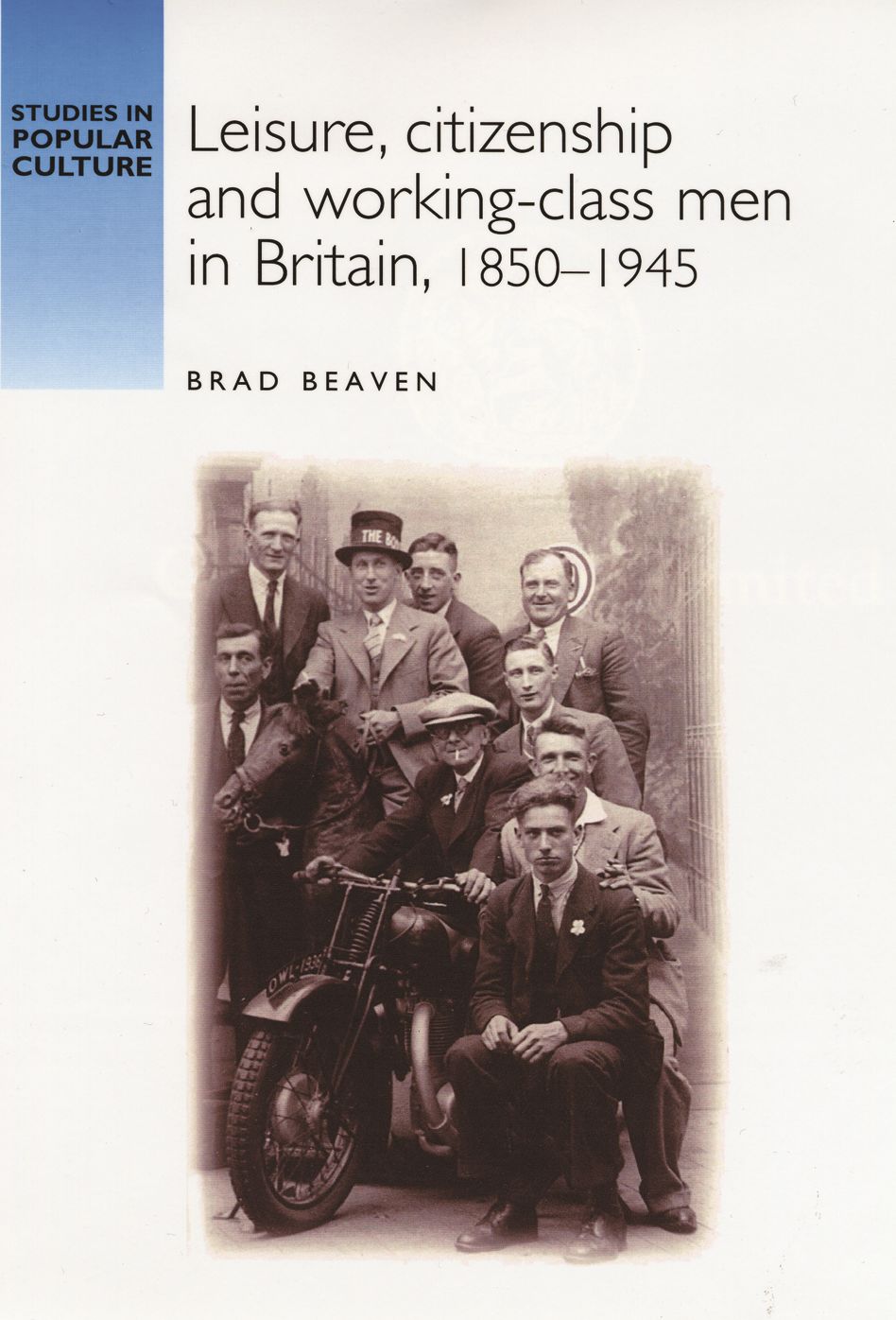
Leisure, citizenship and working–class men in Britain, 1850–1940
From the bawdy audience of a Victorian Penny Gaff to the excitable crowd of an early twentieth century football match, working-class male leisure proved to be a contentious issue for contemporary observers. For middle-class social reformers from across the political spectrum, the spectacle of popular leisure offered a view of working-class habits, and a means by which lifestyles and behaviour could be assessed. For the mid-Victorians, gingerly stepping into a new mass democratic age, the desire to create a bond between the recently enfranchised male worker and the nation was more important than ever. This trend continued as those in governance perceived that 'good' leisure and citizenship could fend off challenges to social stability such as imperial decline, the mass degenerate city, hooliganism, civic and voter apathy and fascism. Thus, between 1850 and 1945 the issue of male leisure became enmeshed with changing contemporary debates on the encroaching mass society and its implications for good citizenry. Working-class culture has often been depicted as an atomised and fragmented entity lacking any significant cultural contestation. Drawing on a wealth of primary and secondary source material, this book powerfully challenges these recent assumptions and places social class centre stage once more. Arguing that there was a remarkable continuity in male working-class culture between 1850 and 1945, Beaven contends that despite changing socio-economic contexts, male working-class culture continued to draw from a tradition of active participation and cultural contestation that was both class and gender exclusive. This lively and readable book draws from fascinating accounts from those who participated in and observed contemporary popular leisure making it of importance to students and teachers of social history, popular culture, urban history, historical geography, historical sociology and cultural studies.
eBook

Port towns and urban cultures : international histories of the waterfront, c.1700-2000
This book offers innovative and challenging perspectives on the cultural histories of ports, ranging from eighteenth-century Africa to twentieth-century Australasia and Europe. The essays in this collection explore two key themes: the nature and character of \"sailortown\" culture and port-town life, and the representations of port towns that were forged both within and beyond urban-maritime communities.
Book

Leisure, citizenship and working-class men in Britain, 1850-1940
From the bawdy audience of a Victorian Penny Gaff to the excitable crowd of an early twentieth century football match, working-class male leisure proved to be a contentious issue for contemporary observers. For middle-class social reformers from across the political spectrum, the spectacle of popular leisure offered a view of working-class habits, and a means by which lifestyles and behaviour could be assessed. For the mid-Victorians, gingerly stepping into a new mass democratic age, the desire to create a bond between the recently enfranchised male worker and the nation was more important than ever. This trend continued as those in governance perceived that 'good' leisure and citizenship could fend off challenges to social stability such as imperial decline, the mass degenerate city, hooliganism, civic and voter apathy and fascism. Thus, between 1850 and 1945 the issue of male leisure became enmeshed with changing contemporary debates on the encroaching mass society and its implications for good citizenry. Working-class culture has often been depicted as an atomised and fragmented entity lacking any significant cultural contestation. Drawing on a wealth of primary and secondary source material, this book powerfully challenges these recent assumptions and places social class centre stage once more. Arguing that there was a remarkable continuity in male working-class culture between 1850 and 1945, Beaven contends that despite changing socio-economic contexts, male working-class culture continued to draw from a tradition of active participation and cultural contestation that was both class and gender exclusive. This lively and readable book draws from fascinating accounts from those who participated in and observed contemporary popular leisure making it of importance to students and teachers of social history, popular culture, urban history, historical geography, historical sociology and cultural studies.
eBook


Leisure, citizenship and working-class men in Britain, 1850-1945
From the bawdy audience of a Victorian Penny Gaff to the excitable crowd of an early twentieth century football match, working-class male leisure proved to be a contentious issue for contemporary observers. For middle-class social reformers from across the political spectrum, the spectacle of popular leisure offered a view of working-class habits, and a means by which lifestyles and behaviour could be assessed. For the mid-Victorians, gingerly stepping into a new mass democratic age, the desire to create a bond between the recently enfranchised male worker and the nation was more important than ever. This trend continued as those in governance perceived that 'good' leisure and citizenship could fend off challenges to social stability such as imperial decline, the mass degenerate city, hooliganism, civic and voter apathy and fascism. Thus, between 1850 and 1945 the issue of male leisure became enmeshed with changing contemporary debates on the encroaching mass society and its implications for good citizenry. Working-class culture has often been depicted as an atomised and fragmented entity lacking any significant cultural contestation. Drawing on a wealth of primary and secondary source material, this book powerfully challenges these recent assumptions and places social class centre stage once more. Arguing that there was a remarkable continuity in male working-class culture between 1850 and 1945, Beaven contends that despite changing socio-economic contexts, male working-class culture continued to draw from a tradition of active participation and cultural contestation that was both class and gender exclusive. This lively and readable book draws from fascinating accounts from those who participated in and observed contemporary popular leisure making it of importance to students and teachers of social history, popular culture, urban history, historical geography, historical sociology and cultural studies.
eBook

The resilience of sailortown culture in English naval ports, c. 1820–1900
Sailortowns were districts in ports where sailors visited, often lived and were entertained. However, while historians have made significant strides in exploring sailors in merchant ports, naval sailortowns have largely been overlooked. It will be argued here that in the English naval towns of Portsmouth and Plymouth, sailortown exhibited a sense of ‘Otherness’ and a subaltern resilience to the cultural hegemony of civic progress and modernity during the second half of the nineteenth century. Those living in naval sailortowns were geographically and culturally marginalized from the centres of economic and political power and their relationship with the civic and naval authorities was one which varied between compromise and resistance.
Journal Article


Leisure, Citizenship and Working-Class Men in Britain, 1850-1940
No detailed description available for \"Leisure, citizenship and working-class men in Britain, 1850-1940\".
eBook