
Catalogue Search | MBRL


Are you sure you want to remove the book from the shelf?

{{itemTitle}}
726
result(s) for
"Becker, Lisa"
Sort by:

This is my continent
A young narrator learns about continents! This book explores what a continent is, looks at differences in geographical features and climates, and provides examples of different cultures.
Book

Endothelial cell plasticity at the single-cell level
The vascular endothelium is characterized by a remarkable level of plasticity, which is the driving force not only of physiological repair/remodeling of adult tissues but also of pathological angiogenesis. The resulting heterogeneity of endothelial cells (ECs) makes targeting the endothelium challenging, no less because many EC phenotypes are yet to be identified and functionally inventorized. Efforts to map the vasculature at the single-cell level have been instrumental to capture the diversity of EC types and states at a remarkable depth in both normal and pathological states. Here, we discuss new EC subtypes and functions emerging from recent single-cell studies in health and disease. Interestingly, such studies revealed distinct metabolic gene signatures in different EC phenotypes, which deserve further consideration for therapy. We highlight how this metabolic targeting strategy could potentially be used to promote (for tissue repair) or block (in tumor) angiogenesis in a tissue or even vascular bed-specific manner.
Journal Article

Who works at Hannah's school?
\"Hannah wants to get all the grown-ups who work at her school to sign her cast! Join her as she gets to know the school principal, the crossing guard, the librarian, and other helpers at her school.\"--Amazon.com.
Book

Heterogeneous antibodies against SARS-CoV-2 spike receptor binding domain and nucleocapsid with implications for COVID-19 immunity
Evaluation of potential immunity against the novel severe acute respiratory syndrome (SARS) coronavirus that emerged in 2019 (SARS-CoV-2) is essential for health, as well as social and economic recovery. Generation of antibody response to SARS-CoV-2 (seroconversion) may inform on acquired immunity from prior exposure, and antibodies against the SARS-CoV-2 spike protein receptor binding domain (S-RBD) are speculated to neutralize virus infection. Some serology assays rely solely on SARS-CoV-2 nucleocapsid protein (N-protein) as the antibody detection antigen; however, whether such immune responses correlate with S-RBD response and COVID-19 immunity remains unknown. Here, we generated a quantitative serological ELISA using recombinant S-RBD and N-protein for the detection of circulating antibodies in 138 serial serum samples from 30 reverse transcription PCR-confirmed, SARS-CoV-2-hospitalized patients, as well as 464 healthy and non-COVID-19 serum samples that were collected between June 2017 and June 2020. Quantitative detection of IgG antibodies against the 2 different viral proteins showed a moderate correlation. Antibodies against N-protein were detected at a rate of 3.6% in healthy and non-COVID-19 sera collected during the pandemic in 2020, whereas 1.9% of these sera were positive for S-RBD. Approximately 86% of individuals positive for S-RBD-binding antibodies exhibited neutralizing capacity, but only 74% of N-protein-positive individuals exhibited neutralizing capacity. Collectively, our studies show that detection of N-protein-binding antibodies does not always correlate with presence of S-RBD-neutralizing antibodies and caution against the extensive use of N-protein-based serology testing for determination of potential COVID-19 immunity.
Journal Article
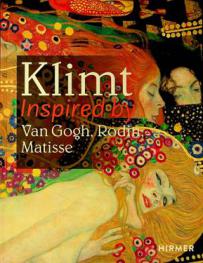
Klimt : inspired by Van Gogh, Rodin, Matisse
\"Gustav Klimt (1862-1918) is renowned for his two-dimensional, ornamental works, which made him famous worldwide as the most important representative of Viennese Art Nouveau. This volume provides insight into the artistic influences of the great artists of Modernism who helped to form his remarkable oeuvre. Vienna in 1900 - the Vienna Secession, galleries, private art collectors and art magazines - introduced the art of the European avant-garde into Gustav Klimt's surroundings. The Viennese artist was open to the pictorial language of his contemporaries including Alma-Tadema, Minne, Rodin, Toorop, Hodler, Van Gogh, Monet, Khnopff, Toulouse-Lautrec, Whistler, Matisse and many others, and adapted elements from a variety of styles. The publication presents in large-format illustrations the works of Klimt and artists who were close to him, revealing significant and often surprising parallels.\" -- Provided by publisher.
Book

Client's understanding of instructions for small animals in a veterinary neurological referral center
Abstract
Background
It is not known how much information clients retrieve from discharge instructions.
Objective
To investigate client's understanding of discharge instructions and influencing factors.
Animals
Dogs and cats being hospitalized for neurological diseases.
Methods
Clients were presented questionnaires regarding their pet's disease, diagnostics, treatments, prognosis and discharge instructions at time of discharge and 2 weeks later. The same questions were answered by discharging veterinarians at time of discharge. Clients answered additional questions regarding the subjective feelings during discharge conversation. Data collected included: data describing discharging veterinarian (age, gender, years of clinical experience, specialist status), data describing the client (age, gender, educational status). Raw percentage of agreement (RPA) between answers of clinicians and clients as well as factors potentially influencing the RPA were evaluated.
Results
Of 230 clients being approached 151 (65.7%) and 70 (30.4%) clients responded to the first and second questionnaire, respectively (130 dog and 30 cat owners). The general RPA between clinician's and client's responses over all questions together was 68.9% and 66.8% at the 2 time points. Questions regarding adverse effects of medication (29.0%), residual clinical signs (35.8%), and confinement instructions (36.8%) had the lowest RPAs at the first time point. The age of clients (P = .008) negatively influenced RPAs, with clients older than 50 years having lower RPA.
Conclusions and Clinical Importance
Clients can only partially reproduce information provided at discharge. Only clients' increasing age influenced recall of information. Instructions deemed to be important should be specifically stressed during discharge.
Journal Article

Integrated Multidimensional Sustainability Assessment of Energy System Transformation Pathways
Sustainable development embraces a broad spectrum of social, economic and ecological aspects. Thus, a sustainable transformation process of energy systems is inevitably multidimensional and needs to go beyond climate impact and cost considerations. An approach for an integrated and interdisciplinary sustainability assessment of energy system transformation pathways is presented here. It first integrates energy system modeling with a multidimensional impact assessment that focuses on life cycle-based environmental and macroeconomic impacts. Then, stakeholders’ preferences with respect to defined sustainability indicators are inquired, which are finally integrated into a comparative scenario evaluation through a multi-criteria decision analysis (MCDA), all in one consistent assessment framework. As an illustrative example, this holistic approach is applied to the sustainability assessment of ten different transformation strategies for Germany. Applying multi-criteria decision analysis reveals that both ambitious (80%) and highly ambitious (95%) carbon reduction scenarios can achieve top sustainability ranks, depending on the underlying energy transformation pathways and respective scores in other sustainability dimensions. Furthermore, this research highlights an increasingly dominant contribution of energy systems’ upstream chains on total environmental impacts, reveals rather small differences in macroeconomic effects between different scenarios and identifies the transition among societal segments and climate impact minimization as the most important stakeholder preferences.
Journal Article

Endothelial metabolism going single
Endothelial cell migration is indispensable for (tumour) angiogenesis and is fuelled by glycolysis. The metabolic underpinnings have been only partially unravelled to date, partly because of the lack of appropriate tools to analyse metabolic flux at the single-cell level. In this issue, Wu et al. introduce a novel imaging assay to capture glycolytic flux during motion in single endothelial cells. With this new tool, the authors uncovered a glycolysis-driven cytoskeletal remodelling apparatus that propels endothelial cell motility.
Journal Article

Comparison of macroeconomic developments in ten scenarios of energy system transformation in Germany: National and regional results
Background
Different strategies have been proposed for transforming the energy system in Germany. To evaluate their sustainability, it is necessary to analyze their macroeconomic and distributional effects. An approach to do this analysis in an integrated consistent framework is presented here.
Methods
Comparing ten energy transition scenarios with emission reduction targets by 2050 of 80% or 95%, respectively, allows evaluating a broad range of energy system transformation strategies with respect to the future technology and energy carrier mix. For this purpose, an energy system model and a macroeconometric model are combined, thus re-modeling the unified scenarios. An important extension of the model was concerned with the integration of synthetic fuels into the energy-economy model. One focus besides the overall macroeconomic assessment is the regional analysis. For this purpose, own assumptions on the regional distribution of the expansion of renewable energies were developed.
Results
The effects on gross domestic product (GDP) and employment are similar on average from 2030 to 2050 across the scenarios, with most of the more ambitious scenarios showing slightly higher values for the socioeconomic variables. Employment in the construction sector shows the largest effects in most scenarios, while in the energy sector employment is lower in scenarios with high energy imports. At the regional level, the differences between scenarios are larger than at the national level. There is no clear or stable regional pattern of relative loss and profit from the very ambitious transformation, as not only renewable energy expansion varies, and hydrogen strategies enter the scene approaching 2050.
Conclusions
From the relatively small differences between the scenarios, it can be concluded that, from a macroeconomic perspective, it is not decisive for the overall economy which (supply side) strategy is chosen for the transformation of the energy system. More effort needs to be put into improving assumptions and modeling approaches related to strategies for achieving the final 20% CO
2
reduction, for example the increasing use of hydrogen.
Journal Article

The effect of phenobarbital treatment on behavioral comorbidities and on the composition and function of the fecal microbiome in dogs with idiopathic epilepsy
Phenobarbital (PB) is one of the most important antiseizure drugs (ASDs) to treat canine idiopathic epilepsy (IE). The effect of PB on the taxonomic changes in gastrointestinal microbiota (GIM) and their functions is less known, which may explain parts of its pharmacokinetic and pharmacodynamic properties, especially its antiseizure effect and drug responsiveness or drug resistance as well as its effect on behavioral comorbidities. Fecal samples of 12 dogs with IE were collected prior to the initiation of PB treatment and 90 days after oral PB treatment. The fecal samples were analyzed using shallow DNA shotgun sequencing, real-time polymerase chain reaction (qPCR)-based dysbiosis index (DI), and quantification of short-chain fatty acids (SCFAs). Behavioral comorbidities were evaluated using standardized online questionnaires, namely, a canine behavioral assessment and research questionnaire (cBARQ), canine cognitive dysfunction rating scale (CCDR), and an attention deficit hyperactivity disorder (ADHD) questionnaire. The results revealed no significant changes in alpha and beta diversity or in the DI, whereas only the abundance of Clostridiales was significantly decreased after PB treatment. Fecal SCFA measurement showed a significant increase in total fecal SCFA concentration and the concentrations of propionate and butyrate, while acetate concentrations revealed an upward trend after 90 days of treatment. In addition, the PB-Responder (PB-R) group had significantly higher butyrate levels compared to the PB-Non-Responder (PB-NR) group. Metagenomics of functional pathway genes demonstrated a significant increase in genes in trehalose biosynthesis, ribosomal synthesis, and gluconeogenesis, but a decrease in V-ATPase-related oxidative phosphorylation. For behavioral assessment, cBARQ analysis showed improvement in stranger-directed fear, non-social fear, and trainability, while there were no differences in ADHD-like behavior and canine cognitive dysfunction (CCD) scores after 90 days of PB treatment. While only very minor shifts in bacterial taxonomy were detected, the higher SCFA concentrations after PB treatment could be one of the key differences between PB-R and PB-NR. These results suggest functional changes in GIM in canine IE treatment.
Journal Article